Quick answer: the labor is short and the paperwork is long. Book 2 to 4 hours of electrician time for an attached garage on a panel with room to spare, then expect the permit and inspection to stretch the project across days or weeks. If you want the shortest install day, the plug-in Autel MaxiCharger turns the charger into an accessory on a finished receptacle. The hardwired Wallbox Pulsar Plus and Tesla Universal Wall Connector both make the unit part of the circuit, which is more labor at the wall and a cleaner permanent result.
The Short Version of Your Install Day
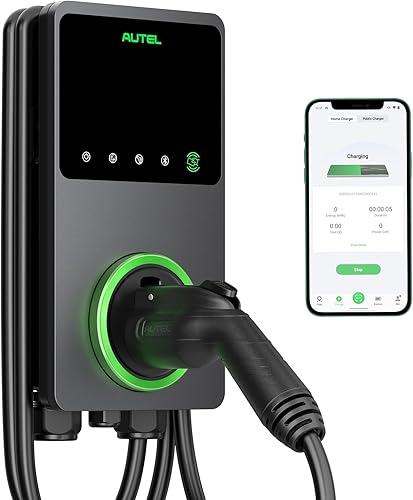
Autel MaxiCharger
A 16-40A adjustable J1772 unit on a NEMA 14-50 plug. The electrician installs a receptacle, you hang the charger, and the mounting bracket comes off the wall again if you move. Premium tier, and the install labor is the smallest of the three.
See it on Amazon →
Wallbox Pulsar Plus
48A hardwire-only with a NEMA Type 4 enclosure and a 25 ft cable. The body is landed on conduit at its final height, which is an hour or so more wall work and the reason outdoor installs usually go this way.
Check it on Amazon →Tesla Universal Wall Connector
A NACS handle with a built-in J1772 adapter that pivots out, so one hardwired box serves a Tesla and a J1772 car without an adapter living in a trunk. Also hardwire-only, so budget the same wall time as the Wallbox.
See it on Amazon →Install Profile of Each Charger
| Charger | Amps | Connector | Mounting | Cable | Price |
|---|---|---|---|---|---|
| Autel MaxiCharger | 16-40A adjustable | J1772 | NEMA 14-50 plug-in | 25 ft | $$$$ |
| Wallbox Pulsar Plus | 48A | J1772 | Hardwire only | 25 ft | $$$$ |
| Tesla Universal Wall Connector | 48A | NACS plus built-in J1772 adapter | Hardwire only | 24 ft | $$$$ |
Price tiers are approximate. $ = under $50, $$ = $50 to 150, $$$ = $150 to 300, $$$$ = over $300. Tap any link for the current Amazon price.
Four Stages, and Only One of Them Is Loud
An install is really four separate clocks, and people quote wildly different timelines because they are each measuring a different one.
Stage one is the survey. A good electrician wants photos of the panel's dead front, the breaker layout, and the wall where the charger goes, or they want a short site visit. Fifteen minutes here decides whether the job is a half day or a two-day project, because it is where a full panel or a 90-foot run gets discovered. Skipping it is how a scheduled install turns into a rescheduled one.
Stage two is the permit. This is paperwork time, not work time, and it is the stage that actually sets your calendar. Some jurisdictions run an online EV-charger permit that closes in a day; others take four to six weeks. Our guide to EV charger permits covers who pulls it and what the application usually asks for.
Stage three is the electrical work. For an attached garage, a panel with a spare double-pole slot, and a run under about 25 feet, this is 2 to 4 hours: mount a breaker, run conduit or cable, land the receptacle or the charger, torque and test. A panel that is already full adds a load calculation and often a subpanel, and a service upgrade is a separate job of roughly 4 to 8 hours on its own day.
Stage four is inspection. The inspector comes after the work, on the building department's schedule, and signs off the circuit. It is usually a short visit, but it can sit a week or more behind the install itself.
The useful mental model: the charger you choose moves stage three by an hour, and nothing you buy moves stage two at all.
Where the Hours Actually Go
Nobody spends four hours mounting a charger. In a typical garage job the breakdown runs roughly like this: 20 to 30 minutes on the panel, an hour or more pulling and securing the circuit, 30 to 45 minutes on the device itself, and the rest on testing, labeling, and cleanup.
Distance is the single biggest multiplier. Conduit along one open garage wall is fast. The same circuit fished through a finished basement ceiling, around HVAC trunk lines, or out to a detached structure is a different job entirely, and a trenched run to a separate building can add a full day on its own. Voltage drop pushes the wire gauge up on long runs too, which makes the pull heavier and slower.
The second multiplier is the panel. If there is no spare double-pole space, the electrician's options are a tandem shuffle, a subpanel, or a service upgrade, and each one adds labor and often its own inspection item. A 48A charger needs a 60A circuit, which is where tight panels run out of headroom first; our breaker sizing guide walks through the 125% continuous-load math that drives it. The alternative is buying down: a 40A unit on a 50A breaker is a meaningfully easier ask of an older panel, and the charging difference over an overnight session is small.
One install note that spec sheets never mention: ask where the cable will hang before the charger goes up. A 25 ft cable mounted on the wrong side of a two-car garage gets dragged across a parked car every night, and moving a hardwired unit later means new conduit. Park both cars, open the charge port, and mark the wall before anyone drills.
Plug-In vs Hardwired: the One-Hour Difference
A NEMA 14-50 receptacle is a single device the electrician terminates, torques, and tests. The charger then hangs on a bracket and plugs in, which takes minutes and does not need a licensed trade. That is why the plug-in Autel MaxiCharger is the shortest day of the three here, and why renters and anyone who expects to move tend to go this route.
A hardwired charger is part of the circuit. The body is mounted at its final height, opened, landed on conduit, closed, and tested in place, so the unit is in the electrician's hands for the whole job instead of being an accessory bolted on afterward. Both the Wallbox Pulsar Plus and the Tesla Universal Wall Connector are hardwire-only, and at 48A that is not optional: there is no 50A plug rated to carry a 48A continuous load. The full plug-in versus hardwire comparison covers the code and cost side of that choice.
The trade is durability against flexibility. A receptacle is one more set of contacts that heat-cycles every night, and a cheap one is a known failure point on a 40A continuous load. Hardwiring removes that connection entirely, which is why outdoor and wet-location installs usually go hardwired, and why the NEMA Type 4 Wallbox body is the one to pick if the charger lives on an exterior wall.
Do Smart Features Add Install Time?
Barely, and the minutes they add are yours rather than the electrician's. WiFi setup on the Autel and the Wallbox is a phone pairing done after the circuit is live, and the common snag is signal strength rather than wiring: a detached garage or a steel-sided shop is where a charger's radio gives up. Walk out and check your phone's signal at the mounting spot before install day, because moving a hardwired unit later is real work.
Load management is the exception that saves calendar time rather than spending it. On a panel without room for a full 60A circuit, a charger that can throttle against the house load can be the difference between a straightforward install and a service upgrade, and a service upgrade is weeks, not hours. That is a conversation to have with the electrician during the survey, not after the permit is filed.
The Tesla Universal Wall Connector ties into the Tesla app for scheduling and power sharing across multiple connectors. Its app side is built around Tesla vehicles, so a J1772 car charges normally but is controlled from the car or by amperage limit rather than by car-aware automation.
Permits and Inspection: the Long Pole
Electrical work on a new 240V branch circuit is permitted work in most of the United States, and the rules trace back to the National Electrical Code, published as NFPA 70 and adopted with local amendments. Article 625 is the EV-specific part, and your inspector works from whichever code cycle your state has adopted, which is why two neighbors in different counties get different answers.
Timelines vary more than any other part of this project. Some cities run an express online path for residential EV chargers and turn a permit around in a day; smaller and rural jurisdictions commonly take four to six weeks, and inspection is scheduled after that. The US Department of Energy's home charging overview is a useful neutral starting point before you call your building department.
Two practical notes. First, most electricians will pull the permit for you and schedule the inspection, and the ones who refuse to are worth a second look. Second, starting the work before approval is treated as work without a permit in most jurisdictions, which can mean opening the install back up for inspection. The paperwork is slow, but it is slower to do twice.
Rebates have their own queue. The federal 30C credit was terminated for property placed in service after June 30, 2026, so a new install today is pointed at state and utility programs instead, and some of those require pre-approval before work starts. If you are chasing one, file it before the electrician does, and see our installation cost by state breakdown for what the labor side typically runs.
What Buyers Report About Install Day
Verified-buyer feedback on the Autel MaxiCharger repeatedly describes the plug-in setup as the easy part of the project, with the adjustable 16-40A range letting people match an existing 50A circuit instead of pulling a new one. The recurring complaint is the same one every plug-in charger collects: an aging or builder-grade NEMA 14-50 receptacle that was never meant for nightly continuous load.
Wallbox Pulsar Plus buyers point to the 25-foot cord and the NEMA Type 4 sealing as the reasons they accepted the hardwire. The common theme in their notes is that the install needed a licensed electrician and no plug shortcut was available, which is accurate for a 48A unit and worth planning into the budget rather than discovering on the day.
For the Tesla Universal Wall Connector, the thread that comes up most is the pivot-out J1772 adapter removing the need to decide between standards at install time, which matters in a household that expects to replace one car before the other.
Jacob’s read on install timing
Reading through spec sheets and permit portals side by side, the pattern is that buyers optimize the wrong clock. People will spend a week choosing between 40A and 48A, a difference of maybe an hour of overnight charging they will never be awake for, and spend fifteen minutes on the panel question that decides whether this is a half-day job or a month-long one. If I were sequencing it, the order would be: photograph the panel, call the building department and ask only how long residential EV permits are taking right now, then pick the charger. The answer to that second question is what tells you whether a plug-in unit on an existing circuit is worth considering at all.
Which Charger Shortens Your Timeline
If a correctly rated 240V receptacle already exists in the garage, the plug-in Autel MaxiCharger can turn the whole thing into an afternoon, assuming your jurisdiction does not require a permit for using an existing circuit. Confirm that with the building department rather than assuming it.
If the circuit is new anyway and the charger is going on one wall for good, the extra hour of hardwire labor is already priced into the job, and the Wallbox Pulsar Plus is the better long-term mount: Type 4 sealing, full 48A, no receptacle to heat-cycle. If the garage holds a Tesla alongside a J1772 car, the Tesla Universal Wall Connector covers both from one box.
If the panel is full, stop shopping for chargers and get the load calculation done first. That single answer determines whether you are looking at a half day or a service upgrade, and it is the one piece of information no product page can give you. The full installation guide covers what that calculation involves.
Common Questions
How many hours does an electrician need to install a Level 2 charger?
Plan on 2 to 4 hours of labor for a straightforward job: an attached garage, a panel with spare capacity, and a short conduit run. A panel that is already full adds a load calculation and often a subpanel or a service upgrade, which is a separate project of roughly 4 to 8 hours on its own day.
Does a plug-in charger install faster than a hardwired one?
Usually, yes. A NEMA 14-50 receptacle is one device the electrician terminates and tests, and the charger then hangs on the wall and plugs in, so the unit itself takes minutes. A hardwired charger has to be mounted, opened, and landed on conduit at its final position, so the charger body is part of the electrical work rather than an accessory bolted on afterward.
Why does the permit take longer than the install?
The electrical work is a half-day of one person's time, while the permit is queue time in a building department you do not control. Review can close in a day in a city with an online EV permit path and run four to six weeks in a small or rural jurisdiction. Inspection is then scheduled after the work is done, which adds its own wait before the circuit is signed off.
Can I charge the car before the inspector signs off?
That depends on your jurisdiction, and the question belongs to your electrician rather than to the internet. Many areas allow the circuit to be energized once the rough and final electrical work passes, and some require the final inspection first. Starting the work before the permit is approved is a separate problem: most building departments treat it as work without a permit and can require the install to be opened back up.
What makes an install run long?
Distance and panel capacity, in that order. A detached garage or a run across a finished basement turns a one-room job into a trenching or fishing job, and a panel with no spare double-pole space forces a load calculation, a breaker shuffle, or a subpanel. Both are known before the truck arrives if the electrician does a site visit or a photo survey first.
How This Timeline Was Built
Install-time figures here are ranges drawn from electrician and utility guidance rather than a single quoted job, because the labor is dominated by site conditions that no national average captures. Charger specs come from manufacturer documentation: the Autel MaxiCharger's adjustable range and NEMA 14-50 plug, the Wallbox Pulsar Plus 48A hardwire-only Type 4 body, and the Tesla Universal Wall Connector's NACS handle with its built-in J1772 adapter. Nothing on this page is a measured install we performed. Price tiers are durable brackets rather than live prices, re-checked on a scheduled audit cycle, and our methodology page covers the pick criteria. Permit and inspection timelines vary by jurisdiction and change without notice; your building department is the authority for your address.
Prices and availability reflect Amazon listings at time of writing. Confirm on the product page before purchase.