Quick answer: the mistake that costs real money here is ordering the 48A Wallbox Pulsar Plus expecting to plug it into the 240V outlet already in the garage. That model is hardwire-only, so it brings conduit, a 60A circuit and an electrician with it. If you have a working NEMA 14-50 outlet and want to charge tonight, the Grizzl-E Classic is the one that does that; if an electrician is coming anyway and you want scheduling and a wide amperage range, the Pulsar Plus earns the trip.
Steel Box or Smart Box: The Short Version
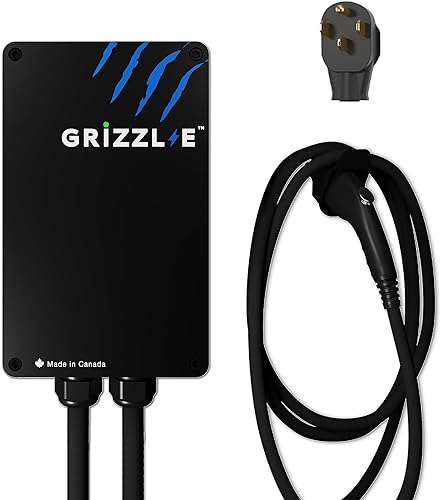
Grizzl-E Classic
40A and 9.6 kW through a J1772 handle on a 24-foot cable, a NEMA 14-50 plug on the other end, and current set by switches inside the case. Nothing to pair, nothing to update, a 4.6-star verified-buyer average. Premium tier, so check the current price.
See it on Amazon →
Wallbox Pulsar Plus 48A
48A and 11.5 kW, adjustable down to 6A at commissioning, J1772, NEMA Type 4 under UL 50E, and the myWallbox app over Wi-Fi or Bluetooth. Hardwire-only, 4.3-star verified-buyer average, and also premium tier.
Check it on Amazon →Classic and Pulsar Plus, Spec Sheet to Spec Sheet
Both end in a J1772 connector, so both fit every non-Tesla EV sold in North America, and a Tesla charges from either one using the J1772 adapter that came with the car. The rows that actually separate them are the connection method and how you set the current.
| Charger | Max Amps | Power | Connection | Amp Setting | App | Price | Link |
|---|---|---|---|---|---|---|---|
| Grizzl-E Classic | 40A | 9.6 kW | NEMA 14-50 plug-in | Internal switches: 16 / 24 / 32 / 40A | None (switch-set, no radio) | $$$$ | View |
| Wallbox Pulsar Plus 48A | 48A | 11.5 kW | Hardwire only | App, 6A to 48A | myWallbox, Wi-Fi + Bluetooth | $$$$ | View |
Price tiers are approximate. $ = under $50, $$ = $50 to 150, $$$ = $150 to 300, $$$$ = over $300. Tap any link for the current Amazon price.
The Outlet You Already Have Decides This
Start at the panel, because that is where the real cost difference lives. The Grizzl-E Classic ships with a NEMA 14-50 plug, which is the same receptacle an electric range or a dryer-style 240V circuit uses. If that outlet is already in the garage and it is on a 50A breaker with the right wire behind it, this charger is a hang-and-plug job you can finish in an evening.
The 48A Pulsar Plus has no plug. It is built to be hardwired, which means conduit from the panel, a 60A two-pole breaker, 6 AWG copper in most residential runs, and in nearly every jurisdiction a permit and an inspection. The Pulsar Plus family does include a plug-in version, but that is the 40A model, and it is the single most common mix-up buyers make with this lineup. If you are weighing the two connection methods in general rather than these two units, our breakdown of a 14-50 outlet against a hardwired circuit covers the code and cost side in more detail.
One install detail that does not show up on either spec sheet: set the Grizzl-E's amperage before you bolt it to the wall. Current is selected with physical switches inside the case, and Grizzl-E pairs each setting with a circuit size: 40A output belongs on a 50A circuit, 32A on a 40A circuit, 24A on a 30A circuit, 16A on a 20A circuit. The unit leaves the factory at 40A. If your circuit is smaller than 50A and you discover that after mounting, you are killing the breaker and opening a case that is already on the wall at head height. The Pulsar Plus avoids that entirely because the installer dials the current in the app at commissioning, and you can change it later from the phone.
What Eight Amps Buys You Overnight
The Pulsar Plus pushes 11.5 kW at 48A, the Classic 9.6 kW at 40A. On a car that averages about three miles per kWh that is roughly 35 miles of range per hour against 30. Across an eight-hour overnight window the gap comes to something like 40 miles, which is less than most people drive in a day and far less than either charger replaces while you sleep.
Two things shrink that gap further. The first is your car: plenty of EVs cap their onboard charger at 7.2 kW or 9.6 kW, and on those the 48A unit delivers exactly what the 40A unit does. The second is the circuit. Running 48A continuously requires a 60A circuit under the 80 percent continuous-load rule, and if your panel cannot spare that, the Pulsar Plus gets dialed down to fit, at which point you paid for headroom you are not using. Our breaker sizing guide for a 48A charger walks through that math before you commit to the higher-output unit.
Where 48A genuinely pays off: two EVs sharing one charger on a schedule, a long commute that needs a deep refill in a four-hour window, or a household planning for a bigger battery in a year or two.
One Has an App, One Has Switches
Wallbox runs the Pulsar Plus through myWallbox over Wi-Fi or Bluetooth, with scheduling, session history, energy tracking and voice control through Alexa and Google. The Bluetooth path is worth more than it sounds: a charger you can reach locally still takes a schedule change when the router is down or the garage sits at the edge of coverage. Dynamic load management, the feature that trims charging current when the rest of the house draws hard, needs Wallbox's separate power-meter accessory, so treat it as an upgrade path rather than something in the box.
The Grizzl-E Classic has no radio at all, and on this ASIN that is a design decision rather than a gap. There is no account to create, no firmware to update and no app outage to wait out. It charges when the car is plugged in and stops when the car is full. The cost is real though: no off-peak scheduling unless your utility rate plan is handled by the car's own timer, which most modern EVs do perfectly well, and no energy reporting. If the switch-free approach is what appeals to you, we round up the rest of the category in our guide to chargers that skip the app entirely.
Note the newer sibling here, because the names confuse people: the Grizzl-E Classic Connect adds optional Wi-Fi to the same hardware family. The Classic covered on this page is the switch-set unit.
Enclosures, Cables and Outdoor Mounting
Both are rated for outdoor life. Grizzl-E publishes a NEMA 4 rating for the Classic's sealed cast-aluminum case, and Wallbox rates the Pulsar Plus 48A at NEMA Type 4 under UL 50E. Type 4 adds windblown dust and hose-directed water to plain falling rain, which is the rating you want on an exposed wall rather than under a deep soffit.
The difference outdoors is the plug, not the box. A plug-in Grizzl-E on an exterior wall also needs a weatherproof 14-50 receptacle with an in-use cover, and that receptacle, not the charger, is the part that fails first when driving rain hits it year after year. A hardwired Pulsar Plus has no outlet to protect. On cable, the Classic's standard cord is 24 feet and the Pulsar Plus is a touch longer at 25, so either reaches a second parking spot in a typical two-car garage. The Classic is the heavier, bulkier body; the Pulsar Plus is the compact one, which matters in a tight utility closet.
What Owners Report After a Year on the Wall
Spec sheets only tell half the story. Here is what shows up repeatedly in verified-purchase feedback for these two units, retold in our own words rather than quoted.
Grizzl-E Classic (4.6-star verified-buyer average)
Owner write-ups read like a hardware review: buyers describe a heavy steel-and-aluminum box that stays cool pulling its full 40A, and multi-year owners keep returning to words like simple and durable for a charger with no software to maintain. The recurring gripes are physical rather than electrical, namely the weight of the unit and the stiffness of the cold-weather cable, and a handful of owners wish the amperage switches were reachable without opening the case.
Wallbox Pulsar Plus 48A (4.3-star verified-buyer average)
Praise clusters around how little wall the unit takes up for a 48A charger and the wide adjustable range when a panel is tight. The complaints cluster around commissioning rather than charging: owners describe an app setup that wants patience, and some report a second attempt to get the charger onto home Wi-Fi. Across both units the stories that end badly are almost always install faults, undersized wire or a loose lug, not the charger.
Jacob’s read on this pair
The pattern in long-term owner reports is that the connection method outlives the feature list. Plug-in Grizzl-E units show up in reviews from people who carried them to a second house; hardwired units stay on the wall when the house sells. If you rent, or you suspect you will reorganize that garage within a few years, the removable charger is worth more than scheduling you will configure once and forget. If the panel is being touched anyway, and especially if the run is long, hardwiring is cleaner, loses nothing to a worn receptacle, and leaves one less connection point to overheat.
Which One Goes On Your Wall
Buy the Grizzl-E Classic if there is already a 240V outlet in the garage, if you rent or expect to move, or if you simply want charging hardware with no account, no pairing and no firmware. Set the switches to match your circuit before mounting and it is done.
Buy the Wallbox Pulsar Plus 48A if an electrician is already running a new circuit, if your car can use the full 11.5 kW, or if you want app scheduling, session tracking and a current range that drops to 6A for a strained panel. It is also the better fit for a compact mounting spot.
If neither answer feels obvious, the tiebreaker is the panel, not the app. A charger you can actually energize this month beats a faster one waiting on a permit.
FAQ
How This Duel Was Verified
Each unit's claims were checked against its own manufacturer documentation rather than against the other product's marketing: the Grizzl-E Classic manual and brand spec sheet for the switch settings, circuit pairings, cable length and enclosure rating, and Wallbox's published specifications for the 48A model's hardwire requirement, current range and UL 50E Type 4 rating. Listing details and price tiers were re-checked on 2026-10-14. Where sources disagreed, such as the warranty term resellers advertise for the Classic, the claim was left out rather than guessed. Star ratings quoted here are verified-buyer averages from the live Amazon listings, not our own scores.
No manufacturer pays for placement here and we do not accept review units, so the recommendation follows the panel math and the owner record, not a brand's preference.
Prices and availability reflect Amazon listings at time of writing. Confirm on the product page before purchase.