Quick answer: the expensive mistake here is buying the handle your garage will not have in five years. Count the connectors that park in it. If every car is a Tesla or a NACS-port EV and the unit is going on a dedicated hardwired circuit, the Tesla Wall Connector is the cleaner install and the only one of the two that splits amps across a second unit. Mixed driveway, or a plug you want to be able to unplug? The Emporia Pro Level 2 ends in J1772, which any EV on the road can accept today, a Tesla included once you use the adapter that comes with the car.
The Two-Minute Verdict on This Pair
Emporia Pro Level 2
The J1772 handle is the whole argument. It fits every EV sold in the United States today, and a Tesla takes it through the adapter that ships with the car. You also get a choice of install paths instead of one, plus charging data broken out by session and cost. ENERGY STAR certification is a nice tiebreaker if your utility rebates certified units.
See it on Amazon →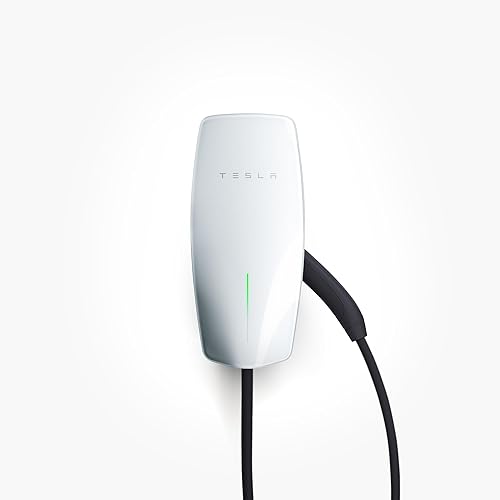
Tesla Wall Connector
If the handle matches your car, this is the tidier piece of hardware: no adapter dangling off the plug, a four-year residential warranty rather than three, and power sharing that lets a second unit live on the same circuit. The catch is that it commits you to NACS and to a hardwired install, with no plug-in escape hatch.
Check it on Amazon →Tesla and Emporia, Claim by Claim
Every cell below comes from the manufacturer's own published specification for these exact units. Note that the Emporia's amperage ceiling moves with the install method, which is why it occupies two lines in the amps column.
| Charger | Max amps | Connector | Install | Cable | Enclosure | Warranty | Price | Link |
|---|---|---|---|---|---|---|---|---|
| Emporia Pro Level 2 | 48A hardwired / 40A plug-in | J1772 | Hardwire or NEMA 14-50 | 25 ft | NEMA Type 4 | 3-year | $$$$ | Amazon |
| Tesla Wall Connector | 48A (adjustable 12A to 48A) | NACS | Hardwire | 24 ft | NEMA 3R | 4-year residential | $$$$ | Amazon |
Price tiers are approximate. $ = under $50, $$ = $50 to 150, $$$ = $150 to 300, $$$$ = over $300. Tap any link for the current Amazon price.
Both units land in the same price tier, so cost is not the deciding factor between them. The deciding factors are the handle on the end of the cable and whether your install is hardwired or plug-in.
What Long-Term Owners Keep Flagging
Specification sheets describe the hardware on day one. The patterns below are the themes that recur across verified-purchase feedback for these two units, paraphrased in our own words rather than quoted.
Emporia Pro Level 2 (4.8-star verified-buyer average)
Owners consistently describe the install as a short afternoon job rather than a project, and the app's per-session energy breakdown is the feature people say they actually keep using after the novelty wears off. The recurring complaint is physical: the power cord is stiff, heavy-gauge wire, and buyers who mounted the unit in a tight corner wish they had left more room to route it. Measure the clearance before you drill.
Tesla Wall Connector (4.8-star verified-buyer average)
Owners consistently report that it disappears into the routine, which is the highest compliment a charger gets: plug in at night, full in the morning, nothing to manage. The friction shows up around the network side rather than the charging side, with owners describing fiddly initial Wi-Fi setup through the commissioning page and occasional firmware updates that arrive on Tesla's schedule rather than theirs. Owners of non-Tesla EVs who bought it expecting J1772 compatibility are the loudest unhappy group, which is a buying mistake rather than a hardware fault.
Jacob’s read on this category
The connector landscape is mid-shift, and that argues for thinking about the next car and not just the current one. Most non-Tesla brands have committed to NACS ports on new models, so a garage that is J1772 today may be mixed tomorrow, and a NACS-only wall unit may be the better long-term bet for a household that replaces cars often. The hedge that costs the least is cable length and circuit capacity, not the handle: pull wire for 60A even if you set the charger to 40A, mount where a 24- or 25-foot cable reaches two parking spots, and either handle becomes a cheap part to change later. The thing you cannot cheaply change is the conduit run.
The Connector Question Comes First
This comparison starts and often ends with the plug. The Tesla Wall Connector under this listing terminates in a NACS handle, and no J1772 car can accept it without a separate adapter. That is not a knock on the hardware; it is a compatibility boundary worth being blunt about, because it is the single most common return reason for this product. If you need Tesla-built hardware that also serves a J1772 car, the Tesla Universal Wall Connector carries both handles and is the right unit for that job.
The Emporia goes the other direction. Its 25-foot cable ends in SAE J1772, which is the standard fitted to every non-Tesla EV sold in the United States for the last decade, and Tesla owners bridge the gap with the J1772 adapter supplied with the car. One handle, one adapter in the glovebox, every car in the driveway covered.
The wrinkle is that the industry is moving. New models from most major brands are shipping with NACS ports, so the adapter question will eventually invert: a J1772 wall unit will be the one that needs an adapter for a new car. Neither choice is future-proof on a ten-year view, which is a reason to weigh the install cost more heavily than the handle.
The Eight Amps Most Plug-In Buyers Lose
Both units are rated at 48A and 11.5 kW, which works out to roughly 35 to 40 miles of range added per hour on a car whose onboard charger can take it. At that rate either one refills a normal day's driving several times over while you sleep, so raw speed is a tie on the spec sheet.
It is not a tie in practice, because the Emporia only reaches 48A when it is hardwired. Use its NEMA 14-50 plug instead and the ceiling drops to 40A, or 9.6 kW. That is a code limit rather than a hardware limit: a 50A receptacle is only rated for a 40A continuous load, so the charger derates itself to stay legal. Plenty of buyers order a "48A charger," have an electrician drop in a 14-50 outlet, and never understand why the app reports 9.6 kW. If you want the full 48A you need a 60A circuit and a hardwired connection, which is the same requirement the Tesla unit imposes from the start. Our breakdown of plug-in versus hardwired installs walks through the trade-off in detail, and the breaker sizing math for a 48A charger is worth reading before you call an electrician.
The honest conclusion: if your panel cannot support a 60A circuit, the 8-amp difference is academic, and both chargers will spend their lives dialed down to whatever your service can carry.
Two Different Ideas of What "Smart" Means
Both units are Wi-Fi connected, but they use the connection for different purposes, and that difference tracks who built them.
Emporia treats the charger as an energy device. The app schedules charging for off-peak hours, reports how much electricity each session consumed, and ties into the company's home energy monitoring line so charging shows up alongside the rest of the house's load. If you are on a time-of-use rate and want to see the bill impact rather than guess at it, that is the more useful feature set of the two.
Tesla treats the connection as infrastructure. Wi-Fi exists for over-the-air firmware updates, remote diagnostics, and access control, and the standout capability is power sharing: up to six Wall Connectors can be linked and will divide the available current between them. For a two-EV household on a panel that cannot spare a second 60A circuit, that is a genuine problem solved rather than a dashboard feature, and nothing in the Emporia's single-unit design matches it.
One note on utility programs: ENERGY STAR certification shows up in the Emporia's published specifications, and some utility rebate programs require a certified charger. Check your own utility's list before assuming either unit qualifies.
Installation and the Enclosure Detail Worth Knowing
The Tesla unit is hardwired. There is no plug-in configuration, so an electrician and a permit are part of the purchase whether you planned for them or not. The Emporia supports either path: hardwired on a 60A or larger breaker for the full 48A, or plugged into a NEMA 14-50 on a 50A or larger breaker at 40A. If you already have a 14-50 outlet in the garage, that flexibility can save you an electrician visit entirely, and it means the charger can move with you to a rental.
The enclosure ratings differ in a way the marketing copy glosses over. Emporia publishes a NEMA Type 4 rating for its unit; Tesla publishes NEMA 3R for the Wall Connector. Both are outdoor-rated, but 3R covers rain, sleet, and snow while Type 4 adds protection against hose-directed water. On a sheltered garage wall this never matters. On an exposed carport wall that catches sideways rain, or anywhere the unit might get hit by a pressure washer while you clean the siding, Type 4 is the more conservative specification. Tesla's unit is rated to operate from minus 22 to 122 degrees Fahrenheit, which covers nearly any North American climate, so the difference is about water ingress rather than temperature.
Cable length is close to a wash, 24 feet on the Tesla and 25 on the Emporia, which in practice reaches across a two-car garage if you mount centrally. Plan the mounting position around where the car's port sits rather than where the conduit is easiest to run, because a charge port on the wrong corner of the car turns 24 feet into 10.
Picking Between Them
Work through it in this order and the answer falls out quickly.
Every car in the garage takes NACS, and you are hardwiring anyway. Buy the Tesla Wall Connector. You get the longer warranty, no adapter in the chain, and the option to add a second linked unit later without a second circuit. If you specifically want a Tesla-focused shortlist with more than two options, our guide to the best chargers for Tesla owners covers the rest of the field.
Any non-Tesla EV parks there now or might soon. Buy the Emporia. One J1772 handle serves everything, including the Tesla with its included adapter, and you keep the plug-in option.
You have an existing NEMA 14-50 outlet and no appetite for electrical work. Buy the Emporia and accept 40A. It is the only one of the two that can be installed without an electrician, and 40A is still a full overnight refill for any commute.
Two EVs, one constrained panel. If both are NACS, the Tesla Wall Connector and its power sharing is the cheaper total solution even at a higher hardware cost, because the alternative is paying for a panel upgrade. If the two cars use different handles, go Emporia and share one charger by swapping the plug overnight.
FAQ
How This Head-to-Head Was Checked
Each unit was checked against its own manufacturer documentation rather than against the other's marketing: amperage ceilings, connector standard, install method, cable length, enclosure rating, and warranty term were all read off the published specification for the exact listing linked on this page on 2026-10-07. Where a capability belongs to a different model in the same family, such as the dual-handle Universal Wall Connector or Emporia's separate home energy monitor, it is named as a different product rather than credited to the units compared here. Price tiers were assigned from the current listing bracket, not from a cached figure.
No manufacturer pays for placement here and we do not accept review units; the picks come from manufacturer spec sheets, certification listings, and the recurring themes in verified-buyer reviews.
Prices and availability reflect Amazon listings at time of writing. Confirm on the product page before purchase.