Quick answer: two EVs on one circuit is a load-management problem first. Two Wallbox Pulsar Plus (Power Sharing) units split a single feed automatically, which is why that setup leads this page. An all-Tesla household gets the same trick from Two Tesla Wall Connectors (Power Sharing), and the budget path is One Emporia + Existing NEMA 14-50: one charger, two cars, rotate the plug overnight.
Our Take on Each Setup

Two Wallbox Pulsar Plus (Power Sharing)
Two Wallbox Pulsar Plus units on a single 60A circuit, automatically load-sharing via OCPP. Both cars plug in nightly, the chargers split power dynamically.
Check it on Amazon →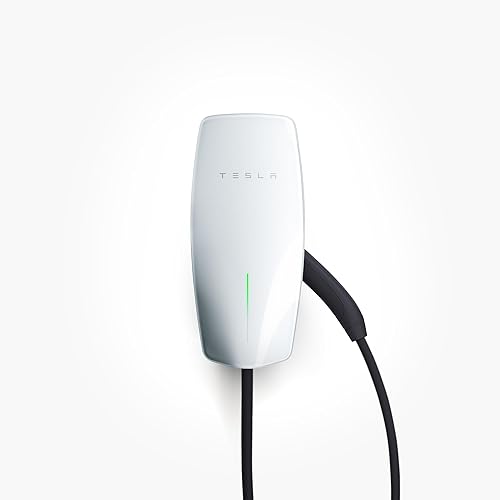
Two Tesla Wall Connectors (Power Sharing)
Tesla's built-in Power Sharing lets up to 4 Wall Connectors share a single circuit. Same dynamic split as Wallbox but native NACS for Tesla owners.
View on Amazon →One Emporia + Existing NEMA 14-50
One Emporia at 48A on a dedicated 60A circuit for the daily-use car, plus a $0 existing NEMA 14-50 (with Tesla Mobile Connector or generic portable) for the second car. Total spend: the smart charger plus a budget portable for the second car.
See it on Amazon →Dual-Charging Setups Compared
Three approaches: one smart charger with two cables, two separate chargers with load sharing, or one charger plus a NEMA outlet for the second car. Each has a different cost and convenience profile.
| Approach | Amps | Both Cars Charge? | Smart | Price | Rating | Link |
|---|---|---|---|---|---|---|
| Two Wallbox Pulsar Plus (Power Sharing) | 48A total (24/24) | J1772 | Yes (alternating) | $$$$ | 4.1 | View |
| Two Tesla Wall Connectors (Power Sharing) | 48A total split | NACS | Yes (dynamic) | $$$$ | 4.8 | View |
| One Emporia + Existing NEMA 14-50 | 48A + 32A | J1772 + NEMA 14-50 | Partial | $$$$ | 4.7 | View |
Price tiers are approximate. $ = under $50, $$ = $50 to 150, $$$ = $150 to 300, $$$$ = over $300. Tap any link for the current Amazon price.
Feedback From Two-EV Households
Pulled from verified-purchase Amazon reviews as of 2026-05-27.
Two Wallbox Pulsar Plus (Power Sharing) (4.3-star verified-buyer average)
Two-Wallbox Power Sharing is the cleanest dual-EV solution that doesn't require running a second 60A circuit. The Wallboxes auto-coordinate via OCPP so when only one car is plugged in it gets full 48A; when both are plugged in they get 24A each. App shows per-car kWh and per-car cost.
Two Tesla Wall Connectors (Power Sharing) (4.8-star verified-buyer average)
Tesla households running 2+ Teslas universally cite the Power Sharing feature as the reason to stay all-Tesla. Install two Wall Connectors on the same 60A circuit, pair them in the app, done. No third-party power-sharing accessory needed.
One Emporia + Existing NEMA 14-50 (4.8-star verified-buyer average)
The budget two-car setup that most owners actually do. Daily-driver gets the full smart charger; weekend car gets the slower NEMA 14-50 plug-in. Real-world cost is one-third the dual-smart-charger setup with no meaningful day-to-day downside if the second car doesn't deplete daily.
Jacob’s read on this category
Two-EV households overbuy more than anyone else I hear from. The load-sharing pairs above look expensive next to a single charger, but they are cheap next to the second 60A circuit and possible panel upgrade that full-speed simultaneous charging demands, and the cars rarely need it: two EVs arriving home at half charge and splitting one circuit at 24A each are both full by morning. Treat power sharing as the default and the second dedicated circuit as the exception you justify with real odometer data. And if one car is a short-commute runabout, the Emporia-on-existing-14-50 route costs nothing in new wiring at all.
How Load Sharing Actually Works
Load sharing means two chargers on a single circuit dynamically split the available power based on how many cars are plugged in. Wallbox and Tesla both support this natively; ChargePoint and Emporia do not.
On a 60A circuit (48A continuous), two load-sharing chargers split as 24A/24A when both cars are charging, and 48A/0A when only one is. This is much cheaper than running two separate 60A circuits.
Most US homes can fit one 60A breaker without a panel upgrade. Two separate 60A circuits often requires the panel upgrade ($1,500-$3,000), which is what kills the dual-charger-without-load-sharing math.
Worked example: both cars arrive at 20%
A 75 kWh crossover and a 60 kWh sedan, both at 20% with an 80% nightly limit, need 45 and 36 kWh. Sharing a 60A circuit, each draws 24A, 5.8 kW at the wall and about 5.2 kW into the pack after typical 10% onboard-charger losses. The sedan finishes in just under 7 hours, the pair shifts the full 48A to the crossover, and its last 9 kWh land at 10.4 kW: 7.8 hours total, both done by 6am from a 10pm plug-in. A fixed 24A/24A split would hold the crossover at 24A all night, stretching it to 8.7 hours.
Power management vs dumb splitting
Three ways to share one circuit:
- Dynamic power sharing (Wallbox, Tesla): units reallocate within seconds; a lone car always gets the full 48A. NEC 625.42 recognizes this as an energy management system, letting an electrician sign off on two chargers behind one 60A breaker.
- Fixed current caps: two ordinary chargers each app-limited to 24A. A lone car never exceeds 24A, and one cap nudged to 40A puts 64A on a 60A breaker.
- Alternating splitters: receptacle devices that charge car A to full, then switch to car B. The second car may not start until 2am, colliding with the end of most off-peak windows.
The failure mode: pairs depend on their link (Wi-Fi for Tesla, a direct connection for Wallbox). Per both makers' install documentation, a dropped link triggers a fail-safe drop to a low preset current; both cars crawling at single-digit amps traces to the link, not the breaker.
vs Running a Second Circuit
Running a second 60A circuit (so both cars charge at full 48A simultaneously) costs $400-$1,400 in additional install if the panel can accept it, plus $1,500-$3,000 if a panel upgrade is needed.
The benefit: both cars charge at full speed every night instead of alternating or splitting.
For 99% of two-EV households, the alternating / splitting approach is fine because the cars don't deplete to zero daily. Both partners arriving home with 50% battery, plugging in for an 8-hour overnight at 24A each, gets both cars to 100% by morning.
Panel Upgrade or Second Circuit: The Decision Math
Start with a load calculation, not a product page. NEC 220.83 totals an existing dwelling's load; NEC 220.87 substitutes a year of actual metered demand, often uncovering headroom the paper calc hides. Typical result: 200A service accepts one 60A EV circuit; 100A often cannot. Three paths:
- Load-sharing pair, one 60A circuit. Two charger units plus a single-circuit install at $400-$1,400. No panel work on most 200A services. The default.
- Second 60A circuit, no upgrade. Another $400-$1,400 if the panel has headroom. Buys simultaneous full-speed charging you probably will not use (math below).
- Panel upgrade plus circuits. $1,500-$3,000 for a 200A panel swap, more if the service drop or meter base needs replacing too.
When does the roughly $2,000 panel upgrade beat a second circuit? Distance, mainly. A detached garage 80 feet out can cost more in trenching, conduit, and copper than the panel swap, and two branch circuits pay that run twice. One upgraded panel feeding a garage subpanel covers both chargers, plus a future heat pump, for one trench. It also wins if more electrification is coming: one permit, one electrician visit.
When is it wasted? Shared 48A across a 10-hour night delivers about 115 kWh at the wall, roughly 104 kWh into batteries: 340 combined miles at 3.3 mi/kWh. Households driving under 300 combined miles a day never touch dual 48A capacity. Our installation guide covers the load calc and circuit sizing.
Time-of-Use Scheduling for Two EVs
Two-EV households save the most on time-of-use rates and lose the most when scheduling slips: the kWh volume doubles. With off-peak around $0.12/kWh (often midnight to 6am) and peak around $0.42/kWh, replenishing 26 kWh a night (about 80 combined miles) runs roughly $94 a month off-peak versus $328 at peak. Run your own rates through our charging cost calculator.
Check the window length, though. A 6-hour window at a shared 48A moves about 69 kWh at the wall, roughly 62 kWh into the packs: around 205 combined miles. Plenty for routine days, not for a road-trip return with both cars near empty; those nights, start the more depleted car during the evening shoulder rate.
Two rules from owner reports:
- One source of truth. Schedule in the vehicle or the charger, never both, or you get the standoff: charger waits for midnight, car waits for the charger, nothing starts. Tesla's documentation points Wall Connector owners to the vehicle's scheduled charging; Wallbox schedules from its app. Pick one per car, disable the other.
- Stagger the budget setup. Emporia plus NEMA 14-50 means two independent circuits and no shared management. Both starting at midnight stacks 48A plus 32A of continuous draw: fine on 200A service, marginal on 100A, so on a small panel, give the portable car the window's first half, the Emporia the second.
FAQ
How These Setups Were Chosen
Two-car setups add a variable single-charger roundups skip: load-sharing behavior. We compared each manufacturer's power-sharing documentation against the circuit sizes those setups genuinely require, then confirmed the underlying listings (brand, amperage, connector) and their Amazon price tiers during the August 2, 2026 re-verification. No manufacturer had input, and none supplied hardware. Read the full research methodology.