Quick answer: Both are capable smart chargers, so the real decision is install flexibility. Pick the ChargePoint Home Flex for a plug-in or hardwire install you can move later (adjustable 16A to 50A, app with cost tracking, Alexa and Siri); pick the Wallbox Pulsar Plus for a clean permanent hardwired setup or running two EVs on one circuit (adjustable up to 48A, myWallbox app with Power Sharing, Alexa and Google Home).
The Deciding Factors
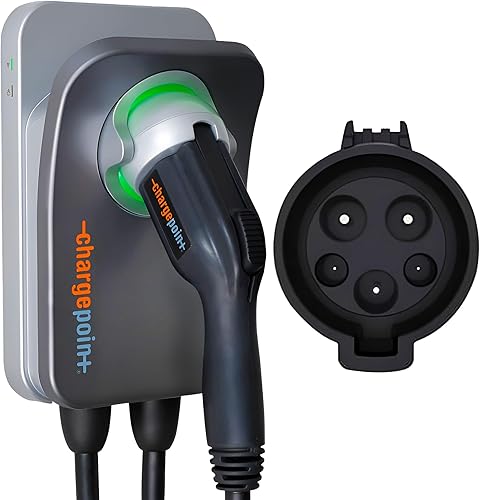
ChargePoint Home Flex
You can dial the amperage down in the app if your panel is tight, swap between plug and hardwire, and your teenage kid can track charging sessions on their phone. If you think your electrical setup might change or you care about smart home integration, this is the safer pick.
Check it on Amazon →
Wallbox Pulsar Plus 48A
You install it once, hardwired into a dedicated circuit, and it delivers up to 48A every time you plug in. The myWallbox app adds scheduling and Power Sharing if you ever add a second charger, and verified owners consistently call it durable and straightforward. Pick this if you want a clean permanent install and your electrical panel can handle a dedicated 48A hardwire.
Check it on Amazon →Pulsar Plus vs Home Flex on Paper
Both chargers use the J1772 connector and work with any EV in North America. The key difference is installation flexibility and smart features.
| Charger | Amps | Installation | Smart Features | Portable | Price | Link |
|---|---|---|---|---|---|---|
| ChargePoint Home Flex | 16–50A adjustable | Plug or hardwire | WiFi, app, Alexa, Siri | Yes (plug version) | $$$$ | View |
| Wallbox Pulsar Plus 48A | 16–48A adjustable | Hardwire only | WiFi, app, Alexa, Google Home | No | $$$$ | View |
Price tiers are approximate. $ = under $50, $$ = $50 to 150, $$$ = $150 to 300, $$$$ = over $300. Tap any link for the current Amazon price.
Charging Speed & Power Delivery
On raw power, these two chargers are nearly identical. The Wallbox tops out at 48A; the ChargePoint goes up to 50A. (For the Wallbox against a non-smart unit, see Grizzl-E Classic vs Wallbox Pulsar Plus; against Tesla's unit, Tesla Wall Connector vs Wallbox.) In real-world use, that difference is negligible: most vehicles cap out at 48A or less anyway, so both will deliver the same charging speed for a Tesla Model 3, Chevy Bolt, Hyundai Ioniq 5, or any other common EV.
Both adjust their output in the app: the ChargePoint from 16A to 50A, the Wallbox from 16A to 48A. If your panel is tight or you're sharing electrical capacity with other circuits, either one can be dialed down without calling an electrician. The ChargePoint's only edge here is the slightly higher 50A ceiling, which most EVs never use anyway.
For most homes with a dedicated 240V circuit and 60A or larger service panel, both will charge at their rated speed and refill an EV battery overnight with room to spare.
Installation & Portability
The Wallbox Pulsar Plus is hardwire-only. An electrician runs a dedicated 240V line from your panel to the charging location, wires the Wallbox directly to that circuit (no outlet in between), and that's it. Once installed, it never moves. You can't take it to a rental, and you'll need another electrician if you want to relocate it. Installation typically costs $300 to $800 depending on distance and labor rates.
The ChargePoint Home Flex offers two install paths. Option one: hardwire it exactly like the Wallbox. Option two: plug it into an existing NEMA 14-50 outlet (the same outlet that fits an electric dryer). The outlet approach means you can unplug it, take it to a different house, and plug it in again. You're not trapped by the installation.
Practically speaking, that flexibility matters. If you're leasing your home, planning to move, or think you might want a different charger someday, the ChargePoint's ability to use an existing outlet is worth planning for. The Wallbox is the better pick if you're building a custom garage or know you'll live in one place for a decade.
Smart Features & Control
The Wallbox Pulsar Plus connects over WiFi and Bluetooth to the myWallbox app. You get scheduled charging, session statistics, lock and unlock, and Power Sharing, which lets up to three Wallbox units split one circuit if you charge more than one EV at home. It also works with Amazon Alexa and Google Home for voice control.
The ChargePoint Home Flex includes a mobile app with scheduling, session history, and per-session cost tracking, plus integration with Amazon Alexa and Apple Siri. ChargePoint does not currently support Google Home, so an Alexa or Apple household is the better fit. You can tell Alexa to start or stop charging, or set the app to charge only during low-rate hours if your utility supports it. The app is polished and the integrations work well according to verified reviews.
The deciding detail is ecosystem, not whether a charger is smart. The ChargePoint leans toward Alexa, Siri, and detailed cost reports, while the Wallbox is the one that fits a Google Home setup or a two-EV garage that needs Power Sharing.
Durability & Build Quality
Both chargers are industrial-grade and made to survive weather and heavy use. The Wallbox carries a reputation for no-nonsense European engineering: owners on Amazon report that it runs hot under max load but doesn't degrade, and the industrial enclosure shrugs off rain and snow. It's essentially an appliance like a furnace - you install it and it works for years.
The ChargePoint is equally durable from a hardware standpoint. Both chargers rely on an app and WiFi, but in verified reviews ChargePoint owners more often mention connectivity hiccups or firmware updates that required troubleshooting. Hardware failures are rare on either unit; if you want the least software fuss, the Wallbox has the simpler reputation.
Which Charger Should You Buy
Buy the ChargePoint Home Flex if: You're renting, might move, want to adjust amperage without an electrician, care about smart home features, or expect to own multiple EVs. It's the safer all-around pick for most households.
Buy the Wallbox Pulsar Plus if: You have a dedicated 48A circuit ready to go, want a clean permanent hardwired install, prefer the Google Home ecosystem, or might add a second EV and want Power Sharing. It's the pick for a set-and-forget hardwired garage.
If your electrical panel is close to capacity or you're not sure whether you can support a dedicated 48A line, the ChargePoint's dial-down feature might save you from an expensive rewire.
FAQ
The Fact Base for This Comparison
We checked both chargers against their published specifications: installation method, amperage, smart feature set, and connectivity. Amazon prices and verified-buyer ratings were pulled on October 17, 2026. Each charger was cross-checked against the top-helpful reviews on its own product page to verify the claims about durability, app stability, and real-world performance.
This comparison reflects what we would recommend to friends who asked us which one to install in their own garage.
Prices and availability reflect Amazon listings at time of writing. Confirm on the product page before purchase.