Quick answer: true solar-following charging needs a charger that can throttle itself, and the Wallbox Pulsar Plus with Eco-Smart mode does exactly that, matching amperage to surplus production. Homes already running Emporia Vue monitoring should stay in that ecosystem with the Emporia Pro Level 2, and Powerwall households get the tightest fit from the Tesla Wall Connector.
Solar Verdicts

Wallbox Pulsar Plus
Eco-Smart mode dynamically matches charger amperage to surplus solar production. Pairs with Wallbox Power Meter for true follow-the-sun charging.
Check it on Amazon →Emporia Pro Level 2
If you already own the Emporia Vue 2 whole-home energy monitor, the Pro Level 2 integrates natively for solar-aware scheduling.
See it on Amazon →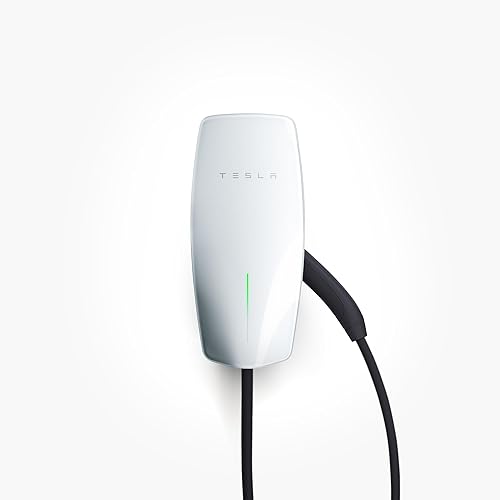
Tesla Wall Connector
Native integration with Tesla Powerwall and the Tesla app. Charges from solar surplus first, grid second. The simplest solar integration if your inverter is also Tesla.
View on Amazon →Solar-Ready Specs Compared
All three deliver Level 2 power. Differentiation is in how they integrate with home solar production data.
| Charger | Amps | Solar Integration | Smart | Price | Rating | Link |
|---|---|---|---|---|---|---|
| Wallbox Pulsar Plus | 48A | Eco-Smart, dynamic match | WiFi, app | $$$$ | 4.1 | View |
| Emporia Pro Level 2 | 48A | Native with Emporia Vue | WiFi, app | $$$$ | 4.8 | View |
| Tesla Wall Connector | 48A | Native with Powerwall | Tesla app | $$$$ | 4.8 | View |
Price tiers are approximate. $ = under $50, $$ = $50 to 150, $$$ = $150 to 300, $$$$ = over $300. Tap any link for the current Amazon price.
Solar Households on Daily Use
Pulled from verified-purchase Amazon reviews as of 2026-05-27.
Wallbox Pulsar Plus (4.3-star verified-buyer average)
Solar-home owners praise the Eco-Smart mode as the only true follow-the-sun integration in the category. When your panels produce 4 kW of surplus, the charger draws exactly 4 kW. Requires the Wallbox Power Meter accessory to read your home's net export. Without the meter, the charger acts like a normal smart unit.
Emporia Pro Level 2 (4.8-star verified-buyer average)
Owners who already have the Emporia Vue 2 monitor report the easiest solar integration in the category. The two devices share a single app and the charger can be set to draw only during solar production hours. Owners without the Vue 2 lose this integration entirely.
Tesla Wall Connector (4.8-star verified-buyer average)
Tesla Powerwall + Tesla Wall Connector + Tesla EV is the tightest-integrated ecosystem play. The car charges from Powerwall surplus during the day and switches to grid only when battery state-of-charge drops below user-set threshold. Owners with non-Tesla solar (Enphase, SolarEdge) get less of the integration.
Jacob’s read on this category
Solar charging only pays once you run your own tariff math. Under California’s NEM 3.0, midday exports credit around 4 cents per kWh while off-peak grid charging costs around 16, so steering surplus into the car with dynamic load matching captures real money; on legacy 1:1 net metering, the same hardware is mostly a comfort feature. That is the lens for these three: the Wallbox justifies its complexity in export-capped markets, the Emporia paired with its Vue meter reads net export and adjusts to match for less, and the Wall Connector is the no-pretense pick that simply charges off-peak. Buy the integration level your utility rate sheet justifies, not the one the brochure renders.
Three Levels of Solar Integration
Dumb charger + scheduled charging: any Level 2 charger plus the car's scheduling feature to charge only during sunny midday hours. Cheapest and most flexible. Works with any solar setup.
Smart charger + whole-home energy monitor: Wallbox Pulsar Plus + Power Meter, or Emporia Pro Level 2 + Emporia Vue. The monitor reads net export from your meter and tells the charger to draw exactly the surplus. True follow-the-sun.
Ecosystem play: Tesla Wall Connector + Powerwall + Tesla solar/Tesla EV. All four products from one vendor with native integration. Tightest fit but vendor-locked.
How PV-Aware Charging Actually Works
The follow-the-sun pitch hides a plumbing question: how does the charger know what your panels are producing? Two architectures, and they fail differently.
CT clamp at the meter is what both the Wallbox and Emporia systems use. A current transformer clipped around your service conductors measures net flow at the grid connection point: when the house exports 3 kW, the charger ramps to draw 3 kW. Per Wallbox's installation manual, the Power Meter talks to the Pulsar Plus over a wired RS485 pair; Emporia's Vue 2 reports over WiFi through Emporia's cloud, updating about once per second per Emporia's documentation. Because the reading happens at the meter, the clamp neither knows nor cares which inverter brand sits behind it.
Inverter API integration is the other architecture, used by inverter-brand chargers like Enphase's IQ EV Charger and SolarEdge's own unit: the charger polls the inverter vendor's cloud for production data. The dashboards are prettier, but cloud polling lags real conditions by 5 to 15 minutes, and the integration only lives as long as the vendor maintains the API. None of the three chargers here rely on it, which is mostly a point in their favor.
The 6-amp floor. Level 2 pilot signaling bottoms out at 6A, about 1.4 kW at 240V. When surplus drops below that (a cloud bank, the AC compressor kicking on), the charger cannot throttle lower; it either pauses or tops up from grid. Wallbox exposes the choice as two Eco-Smart modes: Full Green pauses below the floor, Eco blends grid power to keep the session alive. Pick deliberately, because Full Green on a partly cloudy day produces a stop-start session some EVs log as repeated charge interruptions.
Failure modes to plan for, from install documentation and owner reports: a CT clamp installed backwards reads export as import, so the charger never ramps (the fix is flipping the clamp; our installation guide covers the commissioning checklist). A WiFi outage breaks Emporia's surplus loop because the signal routes through the cloud, while Wallbox's wired meter link keeps matching offline. Fast-moving clouds cause visible hunt-and-settle oscillation in the charge rate; that is normal, not a defect.
Inverter-brand gotchas for these three chargers
- Enphase: CT-based matching works fine until you add an IQ Battery, which chases the same surplus. Set a schedule or priority in one of the apps, or the battery wins and the car gets nothing.
- SolarEdge: no conflict at the meter, but SolarEdge's consumption meter does not feed either charger, so you end up with two independent sets of CTs in a crowded panel gutter. Harmless, but it can stretch a one-hour install into two.
- Tesla: Charge on Solar in the Tesla app requires a Powerwall (or Tesla solar) plus a Tesla vehicle, per Tesla's support documentation. A Wall Connector next to an Enphase or SolarEdge array without a Powerwall gets scheduled charging only.
- Meter-collar and line-side-tap solar (ConnectDER-style installs): the array backfeeds upstream of your main panel, so CTs inside the panel never see production. The clamps must land on the service-entrance conductors, which on some meter configurations requires utility coordination.
Export Limiting and Net Metering
Some utilities have moved off 1:1 net metering toward export caps or time-of-use export rates. In those markets, dynamic load matching (sending surplus directly to the EV instead of exporting) becomes a real money saver.
California's NEM 3.0 is the most-cited example: export credits are ~4 cents/kWh during midday, but charging the EV from grid at off-peak rates costs ~16 cents/kWh. Diverting surplus to the EV saves the round-trip and captures the full midday production value.
For NEM 1.0 / 2.0 markets where export is paid at retail rates, the dynamic-match math is less compelling but still positive if you want the EV charged for free.
Sizing Solar for a Daily EV Commute
The commute math. A 40-mile round trip at 3.5 mi/kWh needs about 11.5 kWh into the battery; add roughly 10% for AC charging losses and you need about 12.5 kWh per day from the array. Each kW of DC panel capacity yields around 4 kWh per day averaged across the year in most of the US (closer to 5 in the Southwest, 3.5 in the Northeast, per NREL PVWatts-style estimates), so the commute consumes the output of roughly 3 to 3.5 kW of array on top of whatever the house already uses. With a 1 kW midday baseline load, true solar-only charging needs 4.5 kW or more of capacity.
The constraint nobody mentions: the car has to be home. Surplus matching only works while the EV is plugged in during production hours; a commuter who leaves at 8 am and returns at 6 pm cannot follow the sun Monday through Friday. Count your parked-at-home daylight days per week: at 0 or 1, skip the meter accessory and charge off-peak; at 2 or 3, run your tariff numbers first; at 4 or more (remote work, a two-car household where one car stays home), the matching hardware earns its keep.
Payback under NEM 3.0-style rates. Each diverted kWh is worth the spread between your off-peak grid rate and your export credit, about 12 cents in the California example above. At 12.5 kWh per day across four home days a week, that is roughly 50 kWh, or $6 per week, around $300 per year. The Wallbox Power Meter is a $$ to $$$ accessory plus about an hour of electrician time ($150 to $300 in most metros), so it pays for itself in roughly a year to eighteen months. Under legacy 1:1 net metering the spread is zero; buy on features there, not payback. Our charging cost calculator runs the same spread math with your own utility's rates.
Charge-rate reality check. All three chargers here can deliver 48A, which is 11.5 kW at 240V. A typical 7.6 kW residential inverter with 2 kW of midday house load leaves at most about 5.5 kW of surplus, roughly 23A, adding about 19 miles of range per hour at 3.5 mi/kWh. You will never see the charger's full rate on sunlight alone, and that is fine: wiring for the full 48A (a 60A breaker and hardwiring under NEC 625's 125% continuous-load rule) still makes sense, because grid top-ups on rainy weeks will use every amp.
V2H / V2G: Not Yet Mainstream
Vehicle-to-home and vehicle-to-grid (using the EV's battery as a backup or grid buffer) is real but still niche in 2026. The only widely-shipping bidirectional Level 2 home charger is the Wallbox Quasar 2 (a premium unit that also needs a required permit), and only certain Ford F-150 Lightning and Kia EV9 trims support it.
For most solar-EV households, V2H is 2-3 years away from being a buying-decision factor. If your EV doesn't support it (most don't yet), don't pay extra for V2H-ready hardware.
FAQ
Our Solar-Pairing Research
Solar-pairing claims are marketing-heavy, so this guide went documentation-first: each pick's solar or load-management feature was confirmed in the manufacturer's own manual rather than a press release. Amazon listings and price tiers were re-verified on October 17, 2026. We hold no relationship with any charger or inverter brand, and placement is never paid. Read the full research methodology.