Quick answer: the NexCyber Level 2 48A is the top pick that actually stays under $300: 48A, a NEMA 14-50 plug, and WiFi scheduling. The bokman Portable Level 2 & Level 1 is the rock-bottom budget pick, while the Grizzl-E Classic and the Emporia Pro Level 2 are both disclosed over-budget options now: the Grizzl-E moved above the $300 line in September 2026 and stays here only as the app-free hardware benchmark.
The Podium Under $300
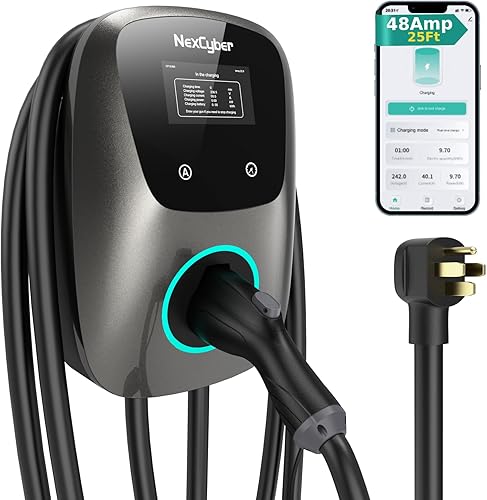
NexCyber Level 2 48A
48A from a NEMA 14-50 plug, a 25-foot cable, ETL certification, and an IP65 rating, with an on-unit touchscreen that sets amperage from 16A to 48A and a WiFi app for scheduling. The one charger that delivers real 48A hardware inside this budget, which is why it takes the top slot now that the Grizzl-E Classic has priced itself out of the bracket.
See it on Amazon →Emporia Pro Level 2
48A output, WiFi, app scheduling, Alexa and Google support. A strong smart charger, but be clear-eyed: it now sits well above the $300 line, so it belongs in this article only as the stretch option.
See it on Amazon →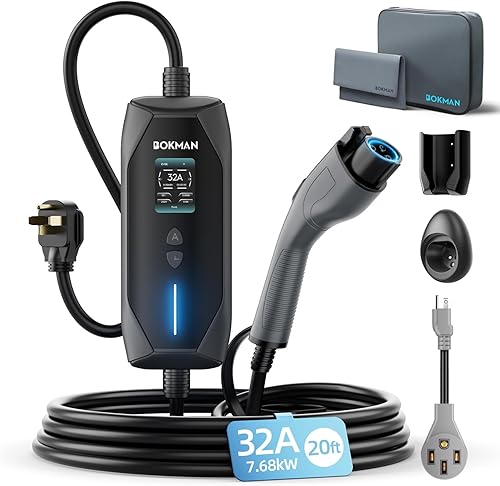
bokman Portable Level 2 & Level 1
Dual-voltage flexibility. 32A Level 2 from a 240V outlet, 16A Level 1 from 120V, both adapters in the box. Adjustable amperage, IP65 rated. Hard to argue with the price.
Check price on Amazon →What You Get Under $300
The budget EV charger market has changed a lot in a short time. Two years ago, anything under $300 meant a slow box with questionable build quality. Today the bracket holds a 48A charger with WiFi scheduling (the NexCyber, which also leads our cheapest 48A charger ranking) and a dual-voltage portable (the bokman). We cover the strictly sub-$300 options below, and include two clearly flagged over-budget options: the Grizzl-E Classic, the rugged app-free 40A unit that moved above the $300 line in September 2026, and the Emporia Pro Level 2 for anyone willing to spend meaningfully more for a slicker app.
Here's what sub-$300 chargers give you today:
- 32A to 40A charging. That's 25 to 30 miles of range per hour on a 240V circuit. Enough to fully charge almost any EV overnight, even from near-empty.
- NEMA 14-50 plug-in compatibility. Every charger on this list plugs into a standard 240V outlet. If you already have one in the garage, no electrician needed.
- J1772 connectors. Universal with non-Tesla EVs, and works with Tesla using the small adapter that ships in every Tesla trunk.
- Smart features on select models. The Emporia and the NexCyber 48A include WiFi scheduling and energy monitoring that used to be locked behind the premium chargers (see the full Level 2 field for what those premium units still add).
Honest version: for the average EV driver who drives under 60 miles a day and charges overnight, a sub-$300 charger does 95% of what a flagship ChargePoint costing twice as much does. The other 5% is polish, warranty length, and brand reputation.
The Sub-$300 Field Compared
Click any column header to sort. Highlighted cells show the best value in that category. The Emporia Pro Level 2 appears last as a disclosed stretch option; it sits well above the $300 threshold.
| Charger | Amps | Speed | Smart | Price | Link |
|---|---|---|---|---|---|
| Grizzl-E Classic (over $300) | 40A | 30 mi/hr | None (DIP switches) | $$$$ | View |
| NexCyber Level 2 48A | 48A | 36 mi/hr | WiFi app + touchscreen | $$$ | View |
| Emporia Pro Level 2 (over $300) | 48A | 36 mi/hr | WiFi, App, Alexa, Google | $$$$ | View |
| bokman Portable L2 & L1 | 32A | 25 mi/hr | None | $$$ | View |
Price tiers are approximate. $ = under $50, $$ = $50 to 150, $$$ = $150 to 300, $$$$ = over $300. Tap any link for the current Amazon price.
Budget Buyers' Long-Term Feedback
Budget chargers live or die on whether they hold up after month two. Here's what recurs across the top-helpful verified Amazon reviews for the picks in our table, in our own words.
Grizzl-E Classic (4.6-star verified-buyer average)
The steady theme is a budget charger that doesn't feel budget: a heavy steel case that stays cool at its full 40A rating, and multi-year owners who report nothing has ever needed updating because there's nothing on board to update. For this bracket, where corner-cutting is the fear, that track record is the selling point.
NexCyber Level 2 48A (4.6-star verified-buyer average)
Reach comes up more than anything else: owners with the unit mounted inside the garage report the 25-foot cable comfortably serving a car parked outside. The app draws no complaints for the basics, with verified buyers using it for status checks and off-peak charge timers.
bokman Portable L2 & L1
The bokman holds a 4.8-star verified-buyer average. Its dual-voltage plug kit makes it a flexible pick for buyers who split time between Level 1 and Level 2 charging.
Emporia Pro Level 2 (4.8-star verified-buyer average)
Verified buyers describe wiring it in and charging the same day, and several say they paid up specifically so a charger wouldn't die young, citing the warranty and build. The consistent caveat is a heavy-gauge, stiff inlet cord, so allow room at the plug. Remember it's the over-budget option here.
Jacob’s read on this category
Budget chargers do not fail more often so much as they fail less covered. The warranty column is the real risk story: Emporia matches ChargePoint’s 3-year coverage while the bokman runs 1 to 2, and a dead unit in year two is a repurchase, not a claim. That is why the in-budget value logic starts at the Grizzl-E Classic: steel-box durability with a 3-year warranty at a true sub-$300 price, with the NexCyber as the 48A-with-scheduling route. The Emporia buys name-brand smart polish, but it now costs well over the $300 line, so treat it as a deliberate upgrade rather than the default. Reach for the cheaper portables as a second unit or a renter setup, where mobility is the feature and a short warranty stings less.
What You Give Up at This Price
Let's be straight about where budget chargers cut corners. Pretending there are no tradeoffs would be dishonest.
Shorter warranties. Most sub-$300 chargers come with 2 to 3 year coverage. The ChargePoint Home Flex has a 3-year warranty from a company that has been around for ages. Emporia matches that, but the cheaper bokman runs 1 to 2 years. A failure at year two on a budget unit is annoying. A failure at year three on a premium unit is covered.
Build quality and looks. Premium chargers look like they belong in a modern house. Budget models like the bokman look industrial. If the charger hangs where guests see it, that matters. If it's tucked behind a trash can in your garage, it doesn't.
Adjustable amperage. The ChargePoint Home Flex lets you dial amperage from 16A to 50A. Handy when your electrical panel is near capacity, or when you want to future-proof. Budget chargers run at a fixed amperage, which is fine if your panel supports it but limits your flexibility later.
Cord length. Premium chargers ship with 23 to 25 feet of cable. Some budget models give you 20 feet or less. Measure from your outlet to where the charge port sits when you park. Running a cable tight around the bumper every night because you're two feet short gets old fast.
Customer support. ChargePoint and Tesla have full support teams, knowledge bases, and active user forums. Budget brands usually have email support and maybe a FAQ page. Something will go wrong eventually (these are outdoor electronics), and the support experience when it does is noticeably different.
None of these are dealbreakers for most people. But if long-term peace of mind matters more to you than saving $200 upfront, you should know where the corners got cut before you buy.
Smart vs Non-Smart at Budget Prices
This is the most important decision in the sub-$300 range, and it's not as clear-cut as "smart is always better."
The case for smart (Emporia, NexCyber 48A): If your electric utility charges different rates at different times of day (called time-of-use or TOU pricing), a smart charger pays for itself. Schedule all your charging between midnight and 6 AM when rates can run 50 to 70% cheaper than peak hours, and you'll save $20 to $50 a month without thinking about it. Over a year that's $240 to $600 in savings from a smart charger. The math isn't subtle.
You also get energy monitoring, so you know exactly what your EV costs to run per month. Alexa and Google Home work too if you're into that.
The case for basic (bokman): Here's what smart charger fans don't mention. Most EVs have charge scheduling built into the car's own app. Your Tesla, Ford, Chevy, or Hyundai app will happily schedule charging to start at midnight. You don't need a smart charger to do that for you.
Basic chargers also have fewer failure points. No WiFi module to disconnect. No cloud server to go down. No firmware updates that break things. You plug in, the car charges, you unplug in the morning. There's a real reliability argument for simplicity.
Our take: If you have TOU rates and your car's scheduling is clunky, the Emporia is the no-compromise smart pick, with the NexCyber 48A as a true sub-$300 smart alternative. If you pay a flat rate for electricity or your car already handles the schedule, save the money and grab the bokman. The electrons flow at the same speed either way.
Which Budget Charger Should You Get?
Staying inside the budget? Get the Grizzl-E Classic for durability or the NexCyber for 48A with scheduling. Willing to go well past $300 for a more polished app and energy tracking? That's the Emporia, and it's the only reason it appears here. On the tightest budget, the bokman gives you dual-voltage flexibility, adjustable 6-32A, and the lowest price in our comparison.
Real-World Charging: What These Numbers Actually Mean
Spec sheets are handy. Let's translate the numbers into daily life.
The average American drives 37 miles a day. A 40-amp charger at 240V adds about 30 miles of range per hour, so your daily commute gets put back in roughly 75 minutes. The 48-amp Emporia does it in about 60. Even the 32-amp bokman handles it in under two hours.
Put another way: plug in when you get home at 6 PM and every single charger on this list will have your car topped off well before midnight. The gap between 32A and 48A only matters in specific cases. Road trip recovery. A 90-mile commute. A large-battery truck that you drain deep every day.
Take a Ford F-150 Lightning with the extended range battery (131 kWh). A full charge from near-empty takes about 14 hours on a 40A charger versus 10.5 hours on the 48A Emporia. Both finish overnight. If you regularly drain more than 80% of that 131 kWh pack in a single day, honestly, you should be shopping in the premium charger category anyway.
The bottom line. For most EV drivers, the speed difference between a budget charger and a premium one is invisible in daily use. You're asleep while it charges. Whether it finishes at 11 PM or 1 AM doesn't change your morning.
Installation Tips for Budget Buyers
Every charger on this list uses a NEMA 14-50 plug, the same outlet your electric dryer and RV hookups use. If you already have one in the garage, installation is plugging it in. That's it.
Need a new NEMA 14-50 outlet? Expect $300 to $800 to the electrician, depending on how far your panel is from the garage and whether you need a panel upgrade. That install cost is the same whether you buy a budget charger or a premium one, which is another reason the budget option makes sense.
One important note: your breaker must be rated at 125% of the charger amperage. A 40A charger needs a 50A breaker. A 48A charger needs a 60A breaker. If your panel is already close to capacity, the 32A bokman (it only needs a 40A breaker) might be the practical choice even though it charges slower.
Check your state and utility for rebates. Plenty of utilities hand out $200 to $500 for Level 2 installs, which can make the charger effectively free after the incentive.
How We Research
For the sub-$300 cutoff we excluded anything sold as a marked-up bundle, double-checked each listing against CamelCamelCamel for historical price context, and re-checked Amazon stock and prices against the current listings on October 17, 2026. Chargers that have drifted above the line stay only as clearly disclosed stretch options, which is why the Emporia is labeled that way. We then read through the top-helpful verified Amazon reviews on each unit (summarized in our own words in the section above) and cross-checked spec sheet claims against what owners say happens after six to twelve months of daily use.
Nobody pays us to rank higher. If you click an Amazon link and buy, we earn a small commission, but that doesn't move a product up or down in our table. See something wrong? Let us know and we'll fix it.