Quick answer: buy the Grizzl-E Classic if 40A is the target; it delivers exactly that in a steel NEMA 4 enclosure with zero app dependencies. If you want scheduling and energy data anyway, the Emporia Pro Level 2 (set to 40A) adds both at a $$$$ price, plus bundled load management for a crowded panel, and the ChargePoint Home Flex pairs adjustable amperage with the most polished app of the three. The Grizzl-E and ChargePoint go head-to-head in Grizzl-E Classic vs ChargePoint Home Flex.
Verdicts Up Front
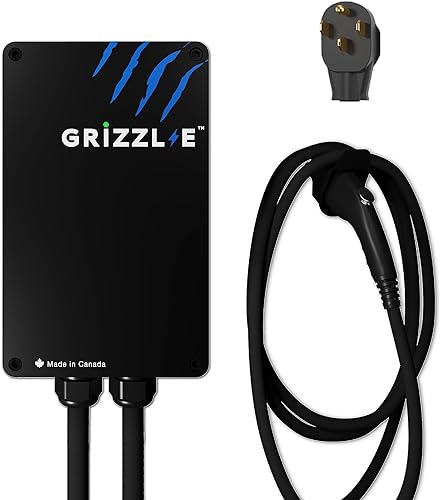
Grizzl-E Classic
40A J1772, solid-steel enclosure, NEMA Type 4 outdoor rated. No app, no scheduling. The most reliable plug-and-charge option in the 40A class.
See it on Amazon →Emporia Pro Level 2 (set to 40A)
48A native but configurable down to 40A. WiFi scheduling, per-session energy tracking, and 25 ft cord at the lowest smart-feature price in the category.
See it on Amazon →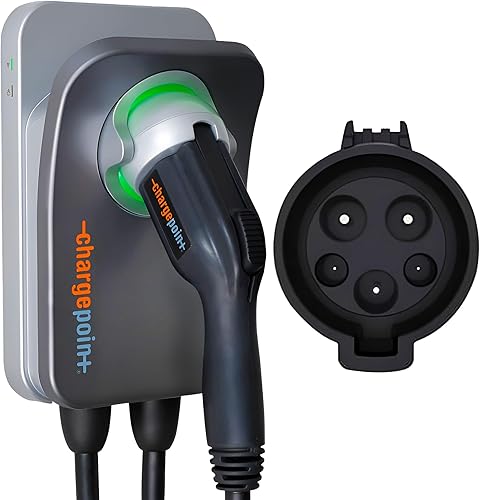
ChargePoint Home Flex
Configurable from 16A to 50A via app. Best app of any smart charger. Per-session cost tracking that exports to CSV. Pays back for the smart-home obsessive.
Check it on Amazon →The 40A Field, Spec by Spec
All three deliver 40A continuous on a 50A breaker. Speed and price differ on smart features, not raw power.
| Charger | Amps | Connector | Smart | Price | Rating | Link |
|---|---|---|---|---|---|---|
| Grizzl-E Classic | 40A | J1772 | None | $$$$ | 4.6 | View |
| Emporia Pro Level 2 (set to 40A) | 48A (40A mode) | J1772 | WiFi + app | $$$$ | 4.8 | View |
| ChargePoint Home Flex | 50A adjustable | J1772 | WiFi, Alexa, Google | $$$$ | 4.3 | View |
Price tiers are approximate. $ = under $50, $$ = $50 to 150, $$$ = $150 to 300, $$$$ = over $300. Tap any link for the current Amazon price.
Owner Feedback on the 40A Picks
Pulled from verified-purchase Amazon reviews as of 2026-05-27.
Grizzl-E Classic (4.6-star verified-buyer average)
Owners universally praise the build quality and predictability. The lack of an app is a feature, not a bug, for buyers who don't want firmware updates breaking their schedule. The only flag in 12+ month verified reviews is that the contactor click is loud, which matters if the charger is on a bedroom-adjacent wall.
Emporia Pro Level 2 (set to 40A) (4.8-star verified-buyer average)
Owners running this at 40A on a 50A breaker report identical reliability to its 48A mode, and the plug-in 40A Emporia against the Grizzl-E is exactly the matchup in Emporia Pro vs Grizzl-E Classic. The Emporia app is intuitive for off-peak scheduling and the 25 ft cord handles awkward garage layouts. A handful of users in apartments flag intermittent WiFi reconnects, mitigated by a 5GHz mesh extender.
ChargePoint Home Flex (4.3-star verified-buyer average)
The amperage adjustment is the standout feature for older panels: drop to 32A or 24A without rewiring if your panel can't sustain 50A. App is the deepest in the category. The 4.3-star rating reflects occasional WiFi reconnect complaints that are unique to this unit's connectivity stack.
Jacob’s read on this category
The case for 40A is the circuit, not the charger. A 50A breaker feeding a NEMA 14-50 receptacle is the cheapest dedicated EV circuit an electrician can quote (the 40A Autel MaxiCharger vs ChargePoint Home Flex and Autel vs Grizzl-E Classic matchups both turn on that circuit), while 48A drags you into a 60A hardwire and sometimes a panel upgrade for a speed bump most drivers never notice. Spend part of the savings on a spec-grade Hubbell or Bryant receptacle, because the cheap residential 14-50 is the component that actually fails under continuous 40A load. And favor adjustable hardware: the Emporia and ChargePoint set to 40A today can ride along to a bigger circuit later, so the box outlives your panel decisions.
Why 40A Is the Sweet Spot
A 40A continuous Level 2 charger runs on a 50A breaker. The National Electrical Code treats EV charging as a continuous load (Article 100: maximum current expected for 3 hours or more), and NEC 625.41 requires the circuit's overcurrent device to be rated at not less than 125 percent of the charger's maximum load. 40A times 1.25 equals a 50A breaker; in reverse, 80 percent of 50A is 40A. That is the "80 percent rule." The circuit uses a standard NEMA 14-50 receptacle and 6 AWG copper, and almost every existing panel fits a 50A double-pole breaker without an upgrade.
By comparison, a 48A continuous charger needs a 60A breaker, which often forces a panel upgrade for older homes with 100A or 125A service. The upgrade is $1,500-$3,000 in most metros. So in real-world dollars, 40A is dramatically cheaper to install for most owners.
The speed cost is minimal. A 40A charger delivers about 30 miles of range per hour to a typical EV, vs 36 mi/hr at 48A. Over an 8-hour overnight charge, that is 240 mi vs 288 mi added, which is moot for any commuter under 200 mi/day.
Recharge Math: What 9.6 kW Does Overnight
At 240V, 40A is 9.6 kW at the plug, the figure all three spec sheets list, so the variable is the car. AC charging loses roughly 10 to 12 percent in the onboard charger, so plan on about 8.5 kW reaching the pack; the onboard charger also sets a ceiling no wall unit can push past.
- Typical 75 to 85 kWh crossover (Model Y, Ioniq 5, Mach-E): a 20 to 80 percent refill is 48 kWh, about 5.5 to 6 hours, well inside any overnight window.
- Tesla Model S Plaid (roughly 100 kWh): 10 to 80 percent is 70 kWh, just over 8 hours. Workable, but a near-empty 10 pm arrival with a 6 am departure cuts it close.
- F-150 Lightning extended range (131 kWh usable per Ford's spec sheet): 20 to 90 percent is about 92 kWh, an 11-hour job. Fine occasionally; a work truck emptied daily is the clearest case for 48A or beyond.
- GMC Hummer EV (north of 200 kWh per GM documentation): a deep refill runs around 16 hours, the true 40A outlier.
The ceiling cuts the other way: a pre-2022 Chevrolet Bolt accepts 7.2 kW of AC charging per GM's spec sheet, so it pulls only 30A from a 40A unit and charges no faster than on a 32A circuit. If 32A is the most your panel or car can actually use, our 32-amp charger picks cover that tier specifically.
J1772 or NACS?
Every 40A charger in this comparison uses J1772. Every non-Tesla EV ships with a J1772 connector or comes with a NACS-to-J1772 adapter starting in 2024-2026 model years. So J1772 chargers work with every EV on the road.
Tesla owners can use any of these three chargers with the included J1772-to-NACS adapter that ships in the mobile connector bundle. The convenience hit is plugging the adapter in once, not every session.
Install Cost vs 48A
For a typical NEMA 14-50 receptacle install with a 50A circuit, a licensed electrician charges $400-$900 for new dedicated wiring from the panel. Add another $50-$150 for a spec-grade Hubbell or Bryant 14-50 receptacle (do not use a cheap residential-grade 14-50 for continuous 40A loads).
For a 60A hardwire to support 48A continuous, expect $600-$1,400 plus $1,500-$3,000 if a panel upgrade is required. The federal Section 30C credit is no longer part of this math: it ended for chargers placed in service after June 30, 2026. Installs finished by that deadline can still be claimed (30% of installed cost, up to $1,000), so the incentives worth chasing now are state and utility rebate programs.
The plug also buys portability: per their installation manuals, the Emporia and the Home Flex cap at 40A on their 14-50 plugs; 48A requires hardwiring. At 40A the charger stays an appliance; at 48A it becomes part of the house.
That matters twice. A landlord is far likelier to approve a generic 14-50 receptacle than a branded box screwed to the wall, and the charger leaves with you at lease end. At sale time, a hardwired unit is typically a fixture that conveys with the house unless the listing excludes it; a plug-in unit is personal property. Frequent movers pay $400 to $900 for a 14-50 circuit at each house and carry one charger along. Our NEMA 14-50 charger comparison covers receptacle-first setups.
If the Breaker Trips: Four Usual Suspects
A correct 40A circuit should never trip in normal use. When one does, support documentation and owner reports point to four causes.
1. The charger is set above 40A
The Emporia is 48A-native hardware and the Home Flex adjusts up to 50A. Left above 40A on a 50A breaker, the signature is a delayed trip 15 to 45 minutes in as the thermal element heats up, not an instant trip at plug-in. Set 40A in the app before the first full charge, then confirm the car's charging screen agrees.
2. An inherited range or dryer circuit
Old 240V garage circuits often sit on 40A or 30A breakers with 8 or 10 AWG wire. A charger set to 40A on a 40A breaker violates the 80 percent rule (the continuous limit there is 32A) and trips on thermal overload. Dial an adjustable charger down to 32A or pull new 6 AWG copper on a 50A breaker; our installation guide covers what a permitted 50A circuit includes.
3. Stacked ground-fault devices
The 2020 and newer NEC (210.8(F) and 625.54) requires a GFCI breaker on receptacle installs, and every unit here also carries internal CCID20 ground-fault electronics per its UL listing. Some breaker and charger pairings nuisance-trip seconds after plug-in. Do not remove the GFCI breaker; try a different breaker brand, or hardwire the unit, which removes the receptacle GFCI requirement.
4. The failure that trips nothing
A residential-grade 14-50 receptacle can run for months with loosening contacts, building heat at the blades without enough fault current to trip anything. Warning signs: a plug body too hot to hold after an hour, browning around the receptacle face, a warm electrical smell. The spec-grade Hubbell or Bryant receptacle is not an upsell; it is the part owner reports most often name as the point of failure.
FAQ
Research Notes for This Guide
This shortlist started from the site's verified charger pool: every 40A-capable unit we track. We read each manufacturer's install manual, confirmed the linked listing's brand, amperage, and connector against its spec sheet, and re-checked availability and price tiers on Amazon on October 17, 2026. Owner sentiment is paraphrased from recurring themes in verified-buyer reviews, never quoted or invented. No maker sends us units and none pays for placement. Read the full research methodology.