Quick answer: all three of these run from the same NEMA 14-50 outlet, so choose by what you want on top of the plug: the Emporia Pro Level 2 for the best spec-per-dollar, the ChargePoint Home Flex for the strongest app and adjustable amperage, or the Grizzl-E Classic for tough, app-free hardware.
Plug-In Verdicts
Emporia Pro Level 2
48A charging with WiFi scheduling and energy tracking. Swap it between outlets if you move, or upgrade later without rewiring your garage.
See it on Amazon →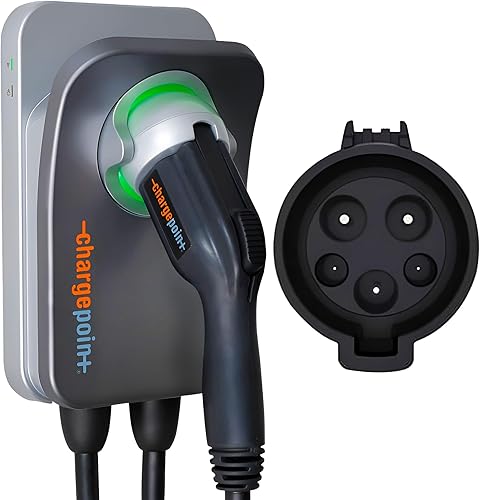
ChargePoint Home Flex
Dial your charging rate from 16A to 50A in the app to balance EV charging with other household loads. Best-in-class energy tracking and smart home tie-ins.
Check it on Amazon →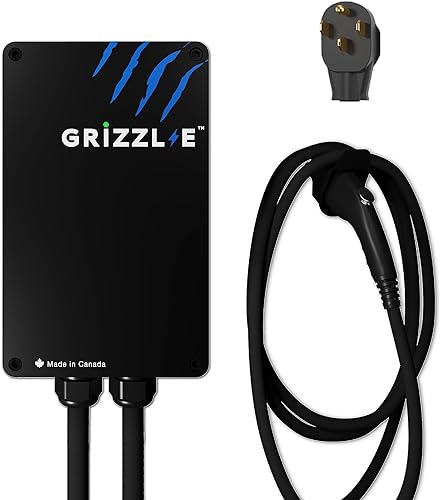
Grizzl-E Classic
40A charging. Steel enclosure, no smart features, built for garages where you just want plug-and-play reliability year-round.
See it on Amazon →14-50 Plug-Ins Compared
All three use NEMA 14-50 plugs and J1772 connectors, so they work with any EV except Tesla (which needs a NACS adapter or Tesla charger). Charging speed is paired with your vehicle's onboard charger limit.
| Charger | Amps | Cable Length | Smart Features | Outdoor Rating | Price | Link |
|---|---|---|---|---|---|---|
| Emporia Pro Level 2 | 48A | 25 ft | WiFi, App, Scheduling | NEMA 4 | $$$$ | View |
| ChargePoint Home Flex | 50A | 23 ft | WiFi, App, Alexa, Google, Energy Analytics | NEMA 3R | $$$$ | View |
| Grizzl-E Classic | 40A | 24 ft | None | NEMA 4 | $$$$ | View |
Price tiers are approximate. $ = under $50, $$ = $50 to 150, $$$ = $150 to 300, $$$$ = over $300. Tap any link for the current Amazon price.
Plug-In Owners' Recurring Themes
Owner feedback distilled from verified-purchase Amazon reviews, in our own words. These are the real-world observations that spec sheets miss.
Emporia Pro Level 2 (4.8-star verified-buyer average)
Install speed is the recurring theme, with verified buyers reporting the charger running the same morning it arrived. Long-term reviews rate it a dependable daily home charger, with the usual note that the supply cord is thick and takes planning around, so check your wall clearance before mounting. Apartment dwellers appreciate that NEMA 14-50 outlets in older buildings sometimes already exist.
ChargePoint Home Flex (4.3-star verified-buyer average)
An owner working in automotive rates the Flex as genuinely well-made hardware, and smart-home integration draws good reports. However, the negative reviews are vocal about firmware issues and connectivity dropouts, with the most visible complaints describing sustained WiFi trouble. The app itself is polished, but connectivity isn't bulletproof for all homes.
Grizzl-E Classic (4.6-star verified-buyer average)
Durability praise repeats across the reviews: a steel enclosure that runs cool at its full 40A rating, and multi-year owners who value having no Bluetooth, WiFi, or programming to maintain. This charger appeals to buyers who want zero smart-home complexity and maximum ruggedness.
Jacob’s read on this category
The appeal here is that the expensive half of EV charging, the dedicated 240V circuit, may already be on your wall. When the outlet exists, all three picks are a plug-in job, and the decision collapses to software: Emporia for energy tracking and bundled load management, ChargePoint for the most polished app, Grizzl-E for a sealed box with nothing to configure. One reality check before you chase amps: the car’s onboard charger sets the true ceiling, and an older 3.3 kW Leaf will add its 12 to 15 miles per hour regardless of the wallbox. Match the charger to the car in the driveway, not the one in the spec sheet.
What is a NEMA 14-50 Outlet?
A NEMA 14-50 is a 240-volt, 50-amp electrical outlet. You see them powering electric dryers, ranges, hot tubs, and now increasingly home EV chargers. The connector has four pins: two 120V live, one neutral, and one ground. Unlike hardwired chargers that bolt directly to your panel, NEMA 14-50 chargers use a cable and plug, which means you can unplug and move the charger if needed.
The abbreviation breaks down simply: NEMA is the National Electrical Manufacturers Association (sets the standard), 14 means 240 volts, and 50 is the amp rating. A NEMA 6-50 is also 50 amps but uses a different shape for industrial equipment, so don't confuse them. Residential EV charging uses NEMA 14-50.
You don't need to run a new circuit if your garage, driveway, or patio already has a NEMA 14-50 outlet. That's the big win. If it doesn't exist, the electrician installs a new dedicated 50-amp circuit, which typically costs $300 to $800 depending on panel distance and local labor rates.
Real Charging Speeds with NEMA 14-50
A 48A charger pulls 48 amps at 240 volts, delivering about 11.5 kilowatts. How much range that adds per hour depends on your EV's onboard charger. Most modern EVs accept between 6.6 and 11.5 kW, so a 48A charger pairs perfectly with vehicles like the Chevy Bolt (11.5 kW), Tesla Model 3 (with adapter), Hyundai Ioniq 5, or Kia EV6. You'll add roughly 25 to 35 miles of range per hour on these cars.
Older cars like the Nissan Leaf (3.3 kW) won't push all 48 amps into the battery. They'll charge at their own ceiling instead, typically adding 12 to 15 miles per hour. So the charger's amp rating matters most when buying for a newer EV. When a smaller breaker or an older car caps you lower, our 32-amp charger guide covers the best fixed and adjustable units for that limit. A 40A charger saves $100 to $150 but locks you into slower charging even on newer EVs, so the math usually favors going to 48A if you're keeping the car more than three years.
Smart Features and Energy Tracking
The Emporia and ChargePoint both offer WiFi scheduling, which lets you tell the charger to wait until off-peak hours (typically late night or early morning) before it pulls power. If your local utility offers lower rates during those windows, scheduled charging can cut your charging cost by 20 to 30 percent. Both apps also show energy used per session and cumulative weekly or monthly totals.
ChargePoint's app is notably deeper. It tracks cost per session if you feed in your utility rate, integrates with Alexa and Google Home, and offers time-of-use scheduling that syncs with your utility's actual rate schedule if they publish it. The Emporia app covers the essentials without the polish. It's faster to set up and works reliably for the average user.
The Grizzl-E Classic has no smart features at all. It charges whenever plugged in, and stops when the battery is full. For buyers who live in a flat-rate area, don't care about detailed energy tracking, or want maximum simplicity, that's fine. You save $100+ on the hardware and skip app troubleshooting.
Installation and Wall Mounting
If you already have a NEMA 14-50 outlet in your garage, installing one of these chargers is straightforward. You mount the cable reel or wall dock (typically 5 to 10 bolts into brick or siding), plug in, and go. No electrician needed. Installation takes an hour or less. If you don't have an outlet, call a licensed electrician to run a dedicated 50-amp circuit from your panel. The labor plus wire and breaker typically costs $300 to $800.
A word on the federal side: the Section 30C credit stopped applying to chargers placed in service after June 30, 2026, so a new outlet install no longer earns it. If your NEMA 14-50 circuit was finished before the cutoff, 30 percent of the charger-plus-labor cost (up to $1,000) can still be claimed. Going forward, state and utility rebates are where the savings live, and many treat plug-in and hardwired setups the same.
All three chargers in this comparison come with 24 to 25-foot cables, which is enough for most garage-to-car placements. Mount high on the wall so the cable hangs down without a kink that could trap water.
Which NEMA 14-50 Charger to Get
Get the Emporia Pro if you want the best price for full 48A charging, don't need bleeding-edge app polish, and want a charger that'll charge every EV at top speed. It's the simplest decision for most people buying a first home charger.
Get the ChargePoint Home Flex if you want the deepest energy analytics, smart-home tie-ins with Alexa or Google, or need the flexibility to dial down amperage when other high-power loads are running. The app is the best in the segment, but verify WiFi stability in your garage first.
Get the Grizzl-E Classic if you live in a flat-rate area, prize ruggedness over smart features, and want the lowest entry cost. Steel build, outdoor-rated, no software to troubleshoot. Just plug and charge.
FAQ
Where These Picks Come From
For this comparison we focused on widely available plug-in Level 2 chargers with NEMA 14-50 outlets and J1772 connectors. All three deliver between 40 and 50 amps, which covers the practical range where plug-in outlets make sense (lower than that, you lose too much speed; higher requires hardwiring). Amazon prices and stock were re-checked against the current listings on October 17, 2026, and each charger was checked against its top-helpful verified reviews on Amazon before it made the shortlist.
No manufacturer pays for placement here and we do not accept review units; the picks come from manufacturer spec sheets, certification listings, and the recurring themes in verified-buyer reviews.
Prices and availability reflect Amazon listings at time of writing. Confirm on the product page before purchase.