Quick answer: the NexCyber Level 2 48A is the cheapest route to real, adjustable 48A output with ETL certification. Pay more only when a specific feature earns it: the Emporia Pro Level 2 buys a deeper app, and the Wallbox Pulsar Plus 48A buys a purpose-built hardwire-only install.
The Budget 48A Verdict
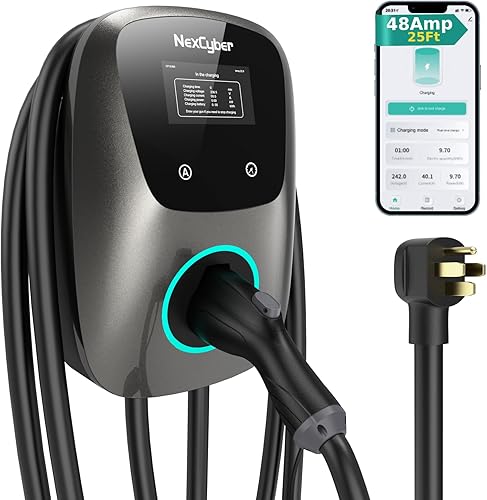
NexCyber Level 2 48A
The cheapest charger in this comparison that still delivers a genuine, adjustable 48A with ETL certification, a WiFi app, and a 25-foot cable. Nothing else here gives up less for the lower price tier.
See it on Amazon →Emporia Pro Level 2
Costs more than the NexCyber, but adds circuit-level energy monitoring and a more established support history. Worth the jump if you track usage closely.
Check it on Amazon →
Wallbox Pulsar Plus 48A
No NEMA 14-50 plug option, hardwire only, but a compact NEMA Type 4 enclosure built for a permanent outdoor mount.
See it on Amazon →Budget 48A Specs Compared
All three chargers deliver the same rated 48A output and use the J1772 connector. The differences that actually change the price come down to certification depth, app polish, and how the unit mounts.
| Charger | Amps | Smart | Plug | Price | Link |
|---|---|---|---|---|---|
| NexCyber Level 2 48A | 48A (16-48A adjustable) | WiFi app + plug-play mode | NEMA 14-50 | $$$ | View |
| Emporia Pro Level 2 | 48A | WiFi, App, energy monitoring | NEMA 14-50 / Hardwire | $$$$ | View |
| Wallbox Pulsar Plus 48A | 48A | WiFi, App, Alexa, Google Home | Hardwire only | $$$$ | View |
Price tiers are approximate. $ = under $50, $$ = $50 to 150, $$$ = $150 to 300, $$$$ = over $300. Tap any link for the current Amazon price.
Owner Experience With Budget 48A Units
Spec sheets only tell half the story. Here's what shows up repeatedly in verified-purchase Amazon reviews for the chargers in this comparison, pulled from the top-helpful reviews on each product page as of October 17, 2026.
NexCyber Level 2 48A (4.6-star verified-buyer average)
One switcher whose JuiceBox 40 died reports the NexCyber covering daily duty with room to spare, and likes that the onboard display shows everything worth checking without a phone. Certification comes up too: reviewers point to the ETL and FCC marks plus the integrated touchscreen for amperage control. It is a newer listing, so weigh the rating accordingly.
Emporia Pro Level 2 (4.8-star verified-buyer average)
Speed of installation leads the feedback, with buyers reporting a working charger within an hour or two of starting. Longer-term reviews describe drama-free day-to-day service as a home EVSE. The heavy, stiff power cord earns the standard caution, so check clearance before you pick a mounting spot.
Wallbox Pulsar Plus 48A (4.3-star verified-buyer average)
Owners consistently report a compact, well-built enclosure that mounts cleanly in a tight garage corner. The lower average next to the other two picks here tracks with a smaller, newer US installed base rather than any specific defect pattern; app-connectivity complaints show up occasionally but are not the dominant theme in the top-helpful reviews.
Jacob’s read on this category
"Cheap" and "budget" get used interchangeably in this market, and they aren't the same thing. A cheap charger cuts a certification or ships with no real support line. A budget charger just skips the brand markup and the extra app polish while keeping the electrical fundamentals intact. The NexCyber is budget, not cheap: same 48A ceiling, same ETL testing, smaller company behind it. That is a reasonable trade, but confirm the current listing shows ETL or UL certification before buying any 48A unit priced well under the category average, because that is the one corner a genuinely cheap charger actually cuts.
Why 48A Chargers Vary So Much in Price
A 48A Level 2 charger delivers up to 11.5 kW to a compatible EV, the practical ceiling for most home charging setups on a 240V circuit. That number is identical across the cheapest unit in this comparison and the most expensive one. The price gap comes from everything wrapped around that number: certification testing, app development, customer support staffing, cable quality, and brand marketing.
Certification is the one line item that should never get cut. ETL and UL are both nationally recognized testing labs; either listing means an independent lab verified the unit against safety standards for a 240V, high-amperage device sitting on your garage wall for years. A charger with no certification listed, regardless of price, is not a budget option. It's a liability.
Everything past certification is a genuine trade-off. A simpler app, a shorter cable, or a smaller brand with fewer support agents are real cost savings that don't compromise safety, which is exactly where the NexCyber sits relative to the pricier Emporia and Wallbox units here. If you want the full field of 48A options ranked rather than just the budget end, our 48A charger roundup covers the higher-end picks these three didn't need to compete against.
Charging Speed
All three chargers in this comparison are rated for 48A, so charging speed is a wash between them. On a compatible EV, that works out to roughly 30-40 miles of range added per hour, depending on the vehicle's onboard charger and battery size. None of the three price points buys you extra speed; the ceiling is set by the 48A rating itself, not by how much the unit costs.
The NexCyber's 16A to 48A adjustable range is useful if your electrical panel has less headroom than a dedicated 48A circuit needs. You can dial it down to fit the panel today and back up if you upgrade service later, without buying a second charger.
Smart Features
The Emporia Pro Level 2 and Wallbox Pulsar Plus both offer the deepest smart features in this group. Emporia's app leans into detailed energy-usage tracking; Wallbox adds Power Sharing across two chargers on one circuit plus Alexa and Google Home integration.
The NexCyber's app covers the fundamentals: scheduling, charging history, and a fully-charged notification, accessible through the WiFi app or directly on the unit's built-in touchscreen without needing a phone at all. It's not as deep as Emporia's monitoring or Wallbox's Power Sharing, but it handles the one feature most owners actually use daily: setting a schedule so charging lands during off-peak hours.
Installation
All three chargers need a dedicated 240V circuit with a 60A breaker. The NexCyber and Emporia both use a NEMA 14-50 plug, the same outlet type as an electric dryer, so either one is close to plug-and-play if your garage already has that outlet. The Wallbox Pulsar Plus 48A is hardwire-only, which means an electrician wires it directly to the breaker instead of using a plug, typically adding a bit to the labor cost but removing one point of failure at the outlet itself.
Running a new circuit for any of these usually costs $300 to $800 with a licensed electrician, depending on the distance from your panel and local labor rates. Don't factor in the federal Section 30C credit: it lapsed for chargers placed in service after June 30, 2026, and only installs completed by then can still claim the 30% (up to $1,000); utility and state rebates are the discounts still on offer. If you're weighing the plug-in-versus-hardwire decision more broadly than just this comparison, our NEMA 14-50 vs hardwire breakdown walks through the trade-offs in more depth, and our chargers under $300 guide is the place to look if 48A speed matters less to you than staying in the lowest price tier.
Spending the Least Without Regret
Get the NexCyber Level 2 48A if you want the lowest price that still delivers a genuine, certified 48A charge. It's the pick for a straightforward garage install where you don't need deep energy analytics or a smart-home ecosystem tie-in.
Get the Emporia Pro Level 2 if you track your electricity usage closely and want the most established support history of the three, and don't mind paying more for it.
Get the Wallbox Pulsar Plus 48A if you're set on a hardwire install, want Power Sharing for a future second EV, or need the tightest smart-home integration in the group.
FAQ
How the Cheap-48A Field Was Screened
For this comparison we started with every 48A charger in our verified product pool and dropped any without a genuine, adjustable 48A rating or third-party safety certification. That left three chargers spanning a real price range, from the mid-tier NexCyber up to the two premium picks. Amazon prices and stock were re-checked against the current listings on October 17, 2026, and each candidate got checked against the top-helpful verified reviews on its own product page (rating, distribution, and the first five reviews) before it made the cut. You can read more about our full process on the methodology page.
No manufacturer pays for placement here and we do not accept review units; the picks come from manufacturer spec sheets, certification listings, and the recurring themes in verified-buyer reviews.