Quick answer: after lining up every major Level 2 unit, the ChargePoint Home Flex takes the overall crown on adjustable amperage plus the best app. The Emporia Pro Level 2 is the alternative to hardwire when the panel is already busy, since it bundles load management, and Tesla drivers can skip the debate and hang the Tesla Wall Connector.
The Podium
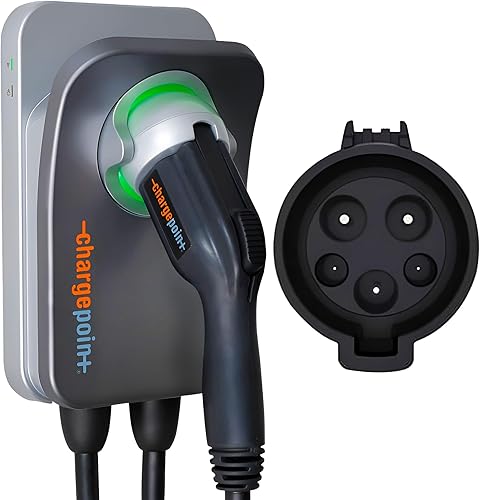
ChargePoint Home Flex
Adjustable amperage from 16A to 50A, a polished app, energy monitoring, and wide compatibility. The most versatile home charger on the market.
Check it on Amazon →Emporia Pro Level 2
48A charging with full WiFi and app control for less than the ChargePoint, with nearly identical specs. Hard to beat on specs per dollar.
See it on Amazon →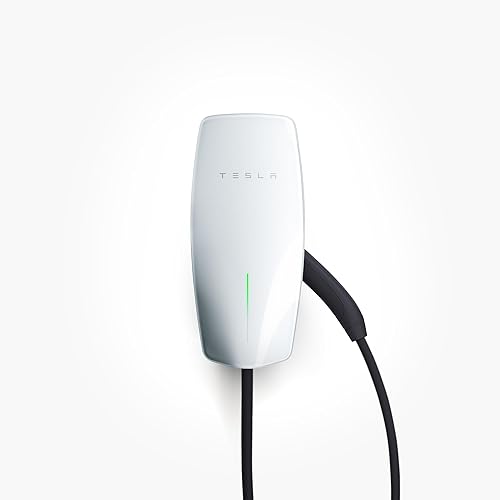
Tesla Wall Connector
Native NACS connector, the fastest Tesla charging speed at 44 mi/hr, and tight integration with the Tesla app and solar setups.
View on Amazon →The Master Spec Table
Click any column header to sort. Highlighted cells show the best value in each category.
| Charger | Amps | Speed | Cord | Plug Type | Smart | Price | Link |
|---|---|---|---|---|---|---|---|
| ChargePoint Home Flex | 50A | 37 mi/hr | 23 ft | NEMA 14-50 / Hardwire | WiFi, App, Alexa, Google | $$$$ | View |
| Emporia Pro Level 2 | 48A | 36 mi/hr | 25 ft | NEMA 14-50 / Hardwire | WiFi, App, Alexa, Google | $$$$ | View |
| Tesla Wall Connector | 48A | 44 mi/hr | 24 ft | Hardwire Only | WiFi, Tesla App | $$$$ | View |
| Grizzl-E Classic | 40A | 30 mi/hr | 24 ft | NEMA 14-50 | None | $$$$ | View |
| Wallbox Pulsar Plus | 48A | 36 mi/hr | 25 ft | Hardwire Only | WiFi, Bluetooth, App | $$$$ | View |
Price tiers are approximate. $ = under $50, $$ = $50 to 150, $$$ = $150 to 300, $$$$ = over $300. Tap any link for the current Amazon price.
Owner Sentiment Across the Lineup
Spec sheets don't tell you how a charger feels at the 18-month mark. These are the themes that repeat across the top-helpful verified Amazon reviews on each product in our table, summarized in our own words.
ChargePoint Home Flex (4.3-star verified-buyer average)
Verified owners say the day-to-day experience matches the price: a charger that looks good on the wall, charges the way the listing promises, and pairs with an app owners find genuinely easy for monitoring sessions. Be warned: prominent 1-star feedback flags firmware and connectivity headaches, so this is not a zero-risk pick.
Check price on Amazon →Emporia Pro Level 2 (4.8-star verified-buyer average)
Fast installs dominate the positive reviews, with owners reporting a charging car within a couple of hours of opening the box. Warranty coverage is a stated purchase reason for buyers wary of a mid-priced unit dying young. The heavy, stiff supply cord is the one recurring physical gripe.
Check price on Amazon →
Tesla Wall Connector (4.8-star verified-buyer average)
Owners confirm the headline speed in practice, reporting range recovery in the mid-40s of miles per hour at 48A. Dual-EV households also weigh in, with one reporting it charging a Model Y and a Toyota bZ side by side without issue.
Check price on Amazon →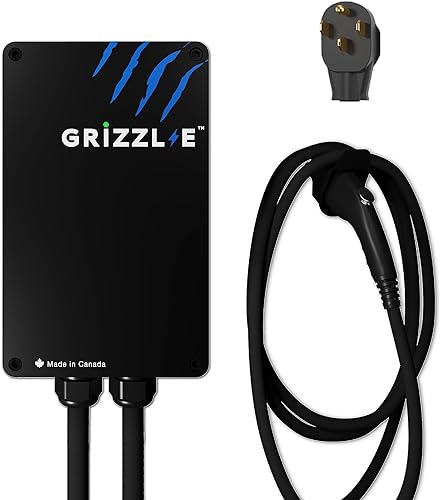
Grizzl-E Classic (4.6-star verified-buyer average)
Heat handling is the loudest theme: verified buyers describe the solid steel housing staying cool even through sustained 40A sessions. Two-year owners boil the appeal down to a charger with no radios, no displays, and nothing to configure, and they mean it as a compliment.
Check price on Amazon →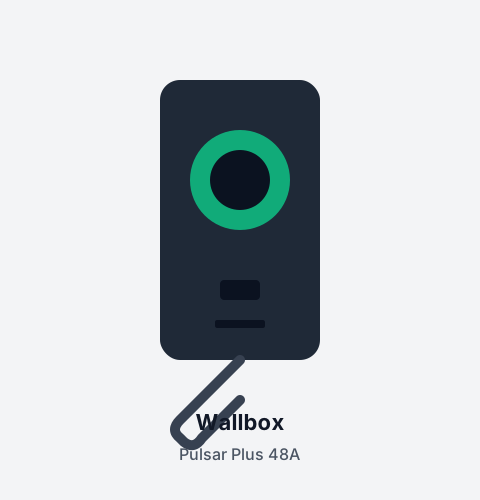
Wallbox Pulsar Plus (4.3-star verified-buyer average)
Owners who mounted it outside through northern winters credit the NEMA Type 4 enclosure with coming through unscathed. The dual-protocol design earns praise too: WiFi covers scheduling while Bluetooth keeps control local whenever the router blips. Hardwire-only at 48A is the main constraint to plan around.
Check price on Amazon →Jacob’s read on this category
Spec tables converge at this level, so the 18-month mark is where the five separate. In the verified-buyer record, Emporia’s wins are the boring ones, fast installs and a warranty buyers say they chose it for, while ChargePoint’s app polish comes with a one-star tail of firmware and connectivity complaints. The Grizzl-E and Wall Connector make the quieter bet: fewer features, less to break. The practical advice is to pick the failure mode you can live with, because at this tier you are choosing between software risk and feature scarcity, not between good and bad hardware.
Charging Speed Comparison
Two things decide how fast a Level 2 charger adds range: the charger's amperage and your car's onboard charger capacity. A 48-amp charger pushes up to 11.5 kW on a 240V circuit, roughly 36 miles of range per hour.
The Tesla Wall Connector tops our speed chart at 44 miles per hour when paired with a Tesla, because Tesla cars can accept higher power through the native NACS connector. For non-Tesla vehicles, the ChargePoint Home Flex at 50A leads with 37 miles per hour, and the Wallbox Pulsar Plus at 48A follows close behind at 36 mi/hr.
For most drivers commuting under 60 miles a day, even a 32-amp charger fully fills the battery overnight. The premium for 48A or 50A only really pays off on long-range EVs and electric trucks with large battery packs, like the Ford F-150 Lightning (131 kWh) or Rivian R1T (135 kWh).
Smart Features and App Control
The main reason to buy a smart charger is scheduling. Charging during off-peak hours can cut your electricity bill by 30 to 50% depending on your utility's rate structure. Smart chargers connect to home WiFi and give you app-based controls for scheduling, energy monitoring, and voice assistant integration.
The Emporia Pro Level 2 is the standout. It matches the smart features of pricier chargers: real-time energy monitoring, scheduled charging, and compatibility with both Alexa and Google Home. The ChargePoint Home Flex has the most polished app experience, with detailed charging history and Alexa integration.
The Grizzl-E Classic skips smart features entirely. No WiFi. No app. No cloud dependency. That's a deliberate choice, not a shortcoming. Fewer electronics means fewer failure points, and the Grizzl-E is one of the few chargers rated for extreme temperatures (-22°F to 122°F). For a full ranking built around hard-winter reliability, see our cold-weather charger guide. If you plug in every night at the same time, you don't need an app to tell you to do that.
Installation and Plug Types
You have two installation options: plug-in (NEMA 14-50 outlet) or hardwired (a permanent connection to your electrical panel). This choice affects what you pay and whether the charger can come with you if you move.
NEMA 14-50 plug-in chargers are the easiest to install. If your garage already has a 240V outlet (common for electric dryers or RV hookups), you can plug in and start charging the same day. It also keeps the charger portable. You take it when you move. The Emporia and Grizzl-E Classic both support this option.
Hardwired installations need a licensed electrician, but they look cleaner and are required by some local codes. The Tesla Wall Connector and the Wallbox Pulsar Plus are hardwire only. The ChargePoint Home Flex supports both plug-in and hardwired so you can choose based on your situation.
Professional installation usually runs $500 to $1,500 depending on your panel's capacity and how far the panel sits from the charger location. Check with your utility. Many offer $200 to $500 rebates for Level 2 charger installations.
Whichever route you take, the charger's current setting has to land at 80 percent of the breaker rating, and getting that wrong is the single most common reason a new install starts tripping the breaker mid-session.
Price and Value Analysis
Prices span budget to premium. The cheapest charger isn't automatically the best deal. What matters is features per dollar. And if two EVs will share the garage, the math changes again; our dual EV home charger guide covers power sharing versus two circuits.
The Emporia Pro Level 2 is the pick for a panel with little headroom. It matches the ChargePoint on amperage (48A) and smart features (WiFi, app, Alexa, Google), beats it on cord length (25 ft) and adds an Ethernet port, and it is the only unit here that ships with dynamic load management in the box. The ChargePoint's edge is adjustable amperage and the more polished app, at the same $$$$ tier.
Narrowing the Field to One
Federal Tax Credit: Now Expired
The federal Alternative Fuel Vehicle Refueling Equipment Tax Credit (Section 30C) ended for home chargers placed in service after June 30, 2026, under the July 2025 tax law. If your charger and circuit were installed and working by that date, you can still claim up to 30% of purchase and installation costs, capped at $1,000, on your return. For anything installed after the cutoff, the federal credit is gone. Plenty of states and utilities still offer rebates, so check those before you buy.
This applies to any charger on this list that you buy and professionally install. Our installation guide covers how to claim it, including the census tract eligibility rule added in 2023 and which utilities offer additional rebates.
How We Research
Level 2 is a huge category. It covers everything from 16A trickle units bolted to a rental garage to 80A monsters that need their own sub-panel. For this comparison we narrowed the field to chargers with published UL or ETL certification numbers, confirmed NEMA plug types against each manufacturer's own spec sheet, and re-checked Amazon pricing and stock against the current listings on October 17, 2026. Any unit that couldn't produce a UL listing or consistent 90-day availability got cut, even when owners loved it.
We then read the top-helpful verified reviews on Amazon for every product that survived the filter (those quotes live in the owner feedback section above). No manufacturer pays to appear here. Affiliate links exist, but they don't move a product up the table. Find a spec we got wrong? Tell us and we'll correct it.