Quick answer: the Emporia Pro Level 2 if you want app scheduling and energy tracking in the $$$$ tier; the Grizzl-E Classic if you want bulletproof hardware with zero app complexity and a lower price point.
Pick Your Camp
Emporia Pro Level 2
WiFi app with off-peak scheduling, energy monitoring, and 48A charging on a hardwired 60A breaker. If you want to shift charging to cheaper overnight hours, this is your move.
See it on Amazon →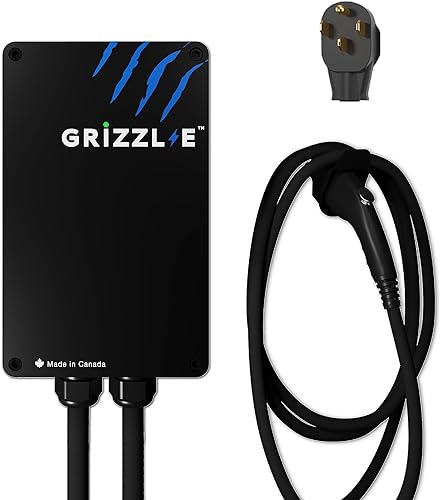
Grizzl-E Classic
Industrial cast-aluminum enclosure rated for -30°C to +50°C, adjustable from 16A to 40A via internal DIP switches, zero software to break. Simple, proven, NEMA 4 hardware that shrugs off weather.
Check availability on Amazon →Emporia vs Grizzl-E on Paper
Both chargers use the standard J1772 connector and support plug-in (NEMA 14-50) or hardwired installation. The key trade-off is software features versus hardware simplicity.
| Charger | Max Amps | Smart Features | Installation | Outdoor Rating | Price | Link |
|---|---|---|---|---|---|---|
| Emporia Pro Level 2 | 48A (hardwire) | WiFi app, scheduling, energy tracking | Plug or hardwire | NEMA 4 | $$$$ | View |
| Grizzl-E Classic | 40A | None (plug-and-charge) | Plug or hardwire | NEMA 4 | $$$$ | View |
Price tiers are approximate. $ = under $50, $$ = $50 to 150, $$$ = $150 to 300, $$$$ = over $300. Tap any link for the current Amazon price.
What Each Camp of Owners Reports
Spec sheets only tell half the story. Here's what shows up repeatedly in verified-purchase Amazon reviews on each product page.
Emporia Pro Level 2
Verified buyers describe finishing setup in under two hours and find the scheduling side of the app genuinely painless. The thick, low-flex power cord comes up again here, so mounting location matters. One reviewer flags a firmware update needed out of the box, so expect a few minutes of app setup and WiFi pairing. The overall tone across mid-to-high ratings is of a charger that quietly does what it promises, with occasional reports of app connectivity hiccups.
Grizzl-E Classic
Long-term owners describe a simple, durable unit with no Bluetooth, WiFi, or programming to manage, in an enclosure buyers repeatedly characterize as industrial-strength and well built. The 25-foot cable length gets mentions as a strong point, and owners report the case staying cool at the full 40A draw. The single complaint pattern that emerges is a preference for adjustable amperage, but the unit does support 16A, 24A, 32A, and 40A settings, set with an internal DIP switch (power off, open the panel, flip the switch), just not through an app.
Jacob's read on this category
This choice hinges on a single question: do you want to shift charging to cheaper hours? If your utility bills vary by time-of-use and you want to run at 2 AM instead of 6 PM, the Emporia's app scheduling pays for itself in a year or two on the bill savings alone. Both units also sit in our 40A charger roundup, and the Grizzl-E's other common opponent is covered in Grizzl-E vs ChargePoint Home Flex. If you live on a flat-rate plan or just plug in whenever your car is home, the Grizzl-E's simplicity and lower price make it the logical pick. Both will charge at 40A reliably for the next decade; the difference is whether you want WiFi intelligence or pure hardware durability.
Charging Speed & Range
The Emporia Pro delivers up to 48A on a hardwired 60A breaker, adding roughly 35 miles of range per hour to a vehicle with a 48A onboard charger. On a NEMA 14-50 outlet install, it steps down to 40A, matching the Grizzl-E Classic at roughly 30 miles per hour of range.
For most vehicle types and commute distances, overnight charging covers a full day's driving on either unit. A 60-mile commute takes about two hours on a 48A unit or roughly two-and-a-half hours at 40A. Since most home charging happens overnight, you'll wake up full either way.
The real-world difference: hardwired Emporia (48A) versus NEMA 14-50 Emporia or Grizzl-E (both 40A) amounts to about five miles per hour of charging speed. That translates to 30 minutes faster per full charge. Nice to have, not essential.
Smart Features & App Scheduling
The Emporia Pro shines here with a polished app that tracks energy use session-by-session, sets charging schedules to run at off-peak hours, and integrates with Alexa for voice control. If your utility plan charges less for night charging, this pays for itself in electricity savings. The app is intuitive and the scheduling engine is reliable.
The Grizzl-E Classic has zero app or smart features. You plug in when you want charging to start and unplug when it's done. If you need to set a schedule, you do it manually -literally timing when you plug the car in. For time-of-use electricity plans, this means you have to remember to plug in at 11 PM and unplug at 7 AM. Workable, but not automatic.
Software always carries risk: firmware updates, connectivity hiccups, cloud service changes. The Grizzl-E eliminates that surface area entirely. It will charge identically in five years as it does today.
Installation & Flexibility
Both chargers support NEMA 14-50 plug-in installation, so if you already have a 240V outlet in your garage, either one is basically plug-and-play. Both also support hardwired installation if you want a permanent, outlet-free setup.
The difference: the Emporia Pro supports hardwired 60A circuits, unlocking its full 48A output. The Grizzl-E tops out at 40A regardless of installation method, so hardwiring doesn't buy you extra speed.
Installing a new 240V circuit typically costs $300 to $800 with a licensed electrician, depending on your panel location and local labor rates. Note that the federal Section 30C EV-charger tax credit expired for residential installs completed after June 30, 2026, so new home installs no longer qualify. Check for state and local utility rebates, which are often still available.
Which Charger to Pick
Pick the Emporia Pro Level 2 if your utility offers time-of-use rates and you want to automate off-peak charging. The app scheduling and energy monitoring justify the price premium for households that can shift charging hours.
Pick the Grizzl-E Classic if you're on a flat-rate power plan, don't want to manage an app, or just want solid hardware at a lower price. Its industrial enclosure and zero software overhead make it rock-solid for set-it-and-forget-it charging.
FAQ
Fact-Checking This Matchup
For this comparison we cross-checked both chargers' spec sheets against their Amazon listings, verified J1772 compatibility (both match), and sampled the top-helpful verified reviews on each product page as of October 17, 2026. We focused on the 40A to 48A power band where the two diverge most meaningfully: the Emporia's smart features versus the Grizzl-E's hardware simplicity.
No manufacturer pays for placement here and we do not accept review units; the picks come from manufacturer spec sheets, certification listings, and the recurring themes in verified-buyer reviews.
Prices and availability reflect Amazon listings at time of writing. Confirm on the product page before purchase.