Quick answer: for most garages the Emporia Pro Level 2 wins this matchup on install flexibility and bundled load management, with a slightly lower price inside the same $$$$ tier. Choose the Wallbox Pulsar Plus 48A when you're committing to a hardwired, weather-exposed install, and look at the ChargePoint Home Flex only if adjustable amperage is the deciding spec.
Emporia or Wallbox First?
Emporia Pro Level 2
Full 48A charging with plug-in or hardwire flexibility. The app handles scheduling and energy tracking, PowerSmart load management ships in the box, and it sits a notch below the Wallbox 48A on price.
See it on Amazon →
Wallbox Pulsar Plus 48A
Hardwire-only 48A charger with NEMA 4 outdoor rating and power-sharing capability for multi-unit installations. Built for permanent, high-durability setups.
Check it on Amazon →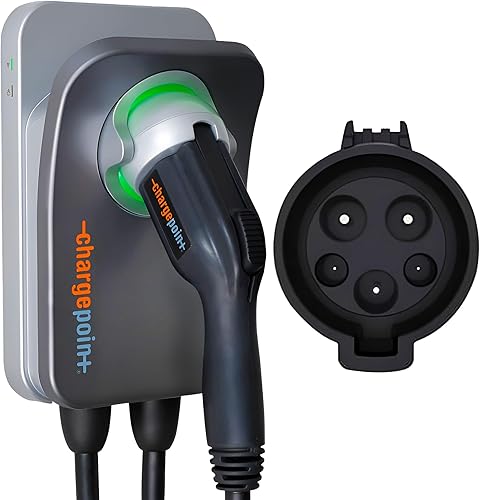
ChargePoint Home Flex
Dial amperage from 16A to 50A from your phone. The app is the most polished of any home charger, with tight integrations for Alexa and Google Home.
Check it on Amazon →Wallbox vs Emporia Spec Table
All three chargers support the J1772 connector and deliver full 48A power on a 240V circuit. The key differences are in installation type and app features.
| Charger | Amps | Installation | Smart Features | Price | Link |
|---|---|---|---|---|---|
| Emporia Pro Level 2 | 48A | NEMA 14-50 / Hardwire | WiFi, App, Scheduling | $$$$ | View |
| Wallbox Pulsar Plus 48A | 48A | Hardwire only | WiFi, App, Power Sharing | $$$$ | View |
| ChargePoint Home Flex | 50A | NEMA 14-50 / Hardwire | WiFi, App, Alexa, Google | $$$$ | View |
Price tiers are approximate. $ = under $50, $$ = $50 to 150, $$$ = $150 to 300, $$$$ = over $300. Tap any link for the current Amazon price.
Owner Reports, Wallbox vs Emporia
Real-world feedback from Amazon verified reviewers surfaces patterns you won't find on spec sheets. Pulled from top-helpful reviews as of October 17, 2026.
Emporia Pro Level 2 (4.8-star verified-buyer average)
Owners highlight fast installation with the NEMA 14-50 plug option, with reviewers reporting complete setups, mounting included, inside two hours. The app earns its praise for simplicity, and buyers a year or more in report scheduling behaving exactly as advertised without bugs. The power cord stiffness in cold weather comes up occasionally, so if you're in a climate below 20°F, route the cable carefully during winter months.
Wallbox Pulsar Plus 48A (4.3-star verified-buyer average)
Owners appreciate the heavy-duty build quality and NEMA 4 outdoor rating, describing hardware they expect to outlast the vehicle it charges. The hardwire requirement is the trade-off; installation costs run higher than plug-in units. The app is functional but less polished than competitors. Power sharing draws a consistent verdict from reviewers: unnecessary for a single-charger setup, valuable if a second charger is coming later.
ChargePoint Home Flex (4.3-star verified-buyer average)
The app receives the most consistent praise for design and functionality, with owners ranking it above every other charger app they've tried and singling out the detailed session history and per-session cost tracking. However, some 1-star reviews mention firmware issues causing temporary app disconnects. This is less common than in prior generations, but worth monitoring. The 23-foot cable is a practical perk that saves mounting the charger next to your parking spot.
Jacob's take on this comparison
The hardwire-vs-plug-in split is the real decision here. If your panel is 10 feet or closer to your parking spot and you want the flexibility to move the charger in the future, the Emporia is the smarter pick. If ChargePoint is still in the running, the three-way comparison lines all three up, and the Wallbox vs ChargePoint duel covers the hardwire-first pair. If you're permanently mounting and your electrician is already trenching a new circuit, ask for the hardwire option on either Emporia or ChargePoint and save $200. Wallbox shines if you plan to add a second charger within 5 years and want power-sharing between them; that's the only scenario where its hardwire-only stance becomes an advantage. Otherwise, you're paying more for installation complexity.
Installation: The Real Difference
Charging speed is identical across these three. The decision comes down to how you want it mounted and what electrical work your home already supports.
Emporia Pro and ChargePoint Home Flex both offer NEMA 14-50 plug-in as standard. If you already have a 240V outlet in your garage (a dryer outlet, for example), you can unplug the appliance and plug in the charger. No electrician needed. If you don't have one, a licensed electrician installs a 60-amp breaker and runs the circuit, typically $300 to $800 depending on distance and local labor costs.
Wallbox Pulsar Plus is hardwire-only. This means the electrician permanently connects the charger to your panel with THHN wire through conduit. Installation takes longer (typically 4 to 6 hours) and costs $500 to $1,200. The upside is you get a NEMA 4 outdoor rating, meaning the charger handles temperature swings and weather better than plug-in units. That matters if you live in a humid coastal area or anywhere with extreme temperature swings.
The federal Section 30C tax credit ended for chargers placed in service after June 30, 2026, under the 2025 tax law. If you completed your install by that deadline you can still claim 30% of the cost (up to $1,000) on your return; otherwise check your state and utility for active rebates.
Smart Features & Scheduling
All three offer WiFi and app-based scheduling to shift charging to off-peak hours. The user experience differs.
ChargePoint Home Flex has the most polished app in the category. Session-by-session energy tracking, cost per session, and tighter smart-home integrations with Alexa and Google Home set it apart. If energy monitoring and automating charging time is your priority, this is the cleanest interface.
Emporia Pro covers the same core features: scheduling, energy tracking, and remote control (both units are ranked in our Level 2 roundup). It does this at a slightly lower price than the Wallbox 48A, and adds PowerSmart load management the Wallbox sells as a separate Power Meter. The app is functional and updates reliably. It lacks the smart-home polish of ChargePoint, but most owners find it sufficient for setting a schedule and checking usage.
Wallbox Pulsar Plus includes a unique power-sharing feature. If you install two Wallbox chargers, they can share a single 60A circuit and automatically load-balance. This is valuable only if you're planning multi-charger setups. For a single charger, the app is functional but less polished than ChargePoint's.
Installation Gotchas to Know
Real installations surface three common issues across this class of chargers.
GFCI conflicts: The charger has an internal GFCI (ground fault detection). If your panel breaker is also GFCI-type, the two can fight each other and cause nuisance trips. Ask your electrician to use a standard breaker with the charger's built-in GFCI, or to disable the charger's GFCI if the breaker is GFCI-type. This isn't unique to these three, but it's worth mentioning to your electrician before they pull wire.
Outlet heat damage: Wallbox and Emporia both have NEMA 14-50 plug options. If you use an older outlet (over 10 years old), the contacts can loosen over time and develop resistance. At 48A continuous, this can cause the outlet to heat up. Before installation, have your electrician inspect the outlet. If it's old, upgrade it for $50.
Cold-weather cable stiffness: Below 20°F, the power cord on every charger in this list becomes less flexible. The Emporia reviewers mention this most. Route your cable loosely with slack in winter, or consider a heated cable cover if you're in a very cold climate.
Which One to Buy
Get the Emporia Pro if you want plug-in flexibility and a no-fuss app. The NEMA 14-50 option lets you start charging tomorrow if you already have an outlet, or tomorrow after the electrician runs a new circuit. Price is premium but fair.
Get the ChargePoint Home Flex if the app experience matters and you want adjustable amperage (16A to 50A) for a smaller electrical panel. Its smart-home integrations are the best in the category, and the 23-foot cable adds practical reach.
Get the Wallbox Pulsar Plus if you plan a permanent hardwire setup and may add a second charger within 5 years. The power-sharing feature and NEMA 4 outdoor rating justify the hardwire-only constraint only in that multi-charger scenario.
FAQ
How the Claims Were Verified
These three chargers represent the premium segment of home charging. We compared them on 48A capability, real-world reliability based on verified reviews, and how the installation decision affects long-term ownership. Each charger was verified on the live Amazon listing to confirm current ratings and certification status as of October 17, 2026. Prices and availability were confirmed the same day.
No manufacturer pays for placement here and we do not accept review units; the picks come from manufacturer spec sheets, certification listings, and the recurring themes in verified-buyer reviews.
Prices and availability reflect Amazon listings at time of writing. Confirm on the product page before purchase.