Quick answer: for a Tesla-only garage the Tesla Wall Connector is the obvious hang: native NACS, 48A, no adapters. A household mixing a Tesla with a J1772 EV is better served by the ChargePoint Home Flex, and the Emporia Pro Level 2 matches their 48A output and bundles load management for a panel that is already busy.
The Tesla Shortlist
If you own a Tesla Model 3 or Model Y and you want to charge at home quickly and without fuss, one of these three chargers will fit. We checked each one against Tesla's 11.5 kW onboard charger ceiling and looked at connector compatibility, app integration, and overall value.
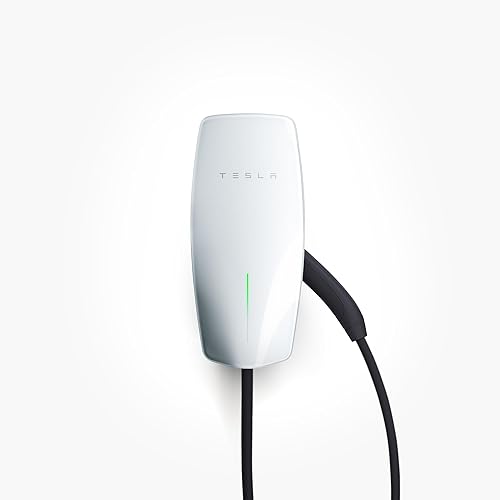
Tesla Wall Connector
The fastest home charging for any Tesla (44 mi/hr), a native NACS connector with no adapter, tight Tesla app integration, and power-sharing for multi-Tesla households.
View on Amazon →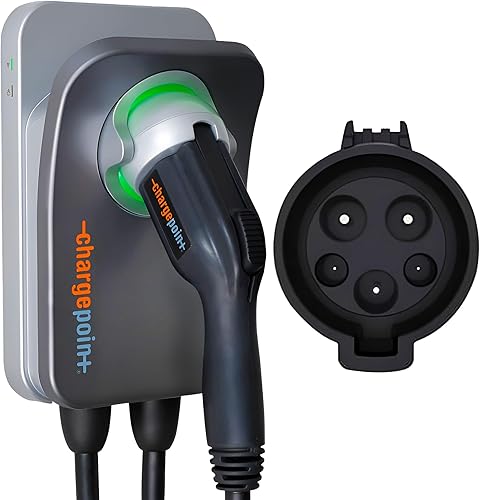
ChargePoint Home Flex
Amperage that dials from 16A to 50A, the best app of any third-party charger, and flexibility for the day you add a non-Tesla EV to the garage.
Check it on Amazon →Emporia Pro Level 2
Full 48A charging with WiFi, app control, and energy monitoring. That's less than most competitors with nearly identical specs.
See it on Amazon →Full Comparison Table: Tesla-Compatible Chargers
Every charger below works with the Tesla Model 3 and Model Y. The Tesla Wall Connector uses the native NACS plug. The others use J1772, which connects to your Tesla through a small adapter. Click any column header to sort.
| Charger | Amps | Tesla Speed | Connector | Smart | Plug Type | Price | Link |
|---|---|---|---|---|---|---|---|
| Tesla Wall Connector | 48A | 44 mi/hr | NACS (native) | WiFi, Tesla App | Hardwire Only | $$$$ | View |
| ChargePoint Home Flex | 50A | 37 mi/hr | J1772 (adapter needed) | WiFi, App, Alexa, Google | NEMA 14-50 / Hardwire | $$$$ | View |
| Emporia Pro Level 2 | 48A | 36 mi/hr | J1772 (adapter needed) | WiFi, App, Alexa, Google | NEMA 14-50 / Hardwire | $$$$ | View |
| Grizzl-E Classic | 40A | 30 mi/hr | J1772 (adapter needed) | None | NEMA 14-50 | $$$$ | View |
Price tiers are approximate. $ = under $50, $$ = $50 to 150, $$$ = $150 to 300, $$$$ = over $300. Tap any link for the current Amazon price.
Tesla Owners on Each Option
Spec sheets only tell half the story. Here's what repeats across verified-purchase Amazon reviews for the products in this comparison, summarized in our own words from the top-helpful reviews on each product page.
Tesla Wall Connector (4.8-star verified-buyer average)
Verified buyers back the spec claim up in practice, reporting real-world range recovery in the 44-miles-per-hour neighborhood on a 48A circuit. The recurring theme is charging that fades into the background: fast, consistent, and never thought about. One household reports it serving a Model Y alongside a Toyota bZ without issue, which matches what you'd expect from a NACS-native unit handling a NACS car.
ChargePoint Home Flex (4.3-star verified-buyer average)
The most helpful positive feedback, including a review from an auto-industry owner, describes carefully engineered hardware that a capable non-electrician can mount on an existing 14-50 outlet. The most helpful negative feedback is blunt about repeated firmware and connectivity failures. Tesla owners who expect that "just works" feel out of the Tesla app should be prepared for a rougher app experience here.
Emporia Pro Level 2 (4.8-star verified-buyer average)
Owners report going from unboxing to charging inside an afternoon on an existing dryer plug, which lines up with the plug-in NEMA 14-50 pitch. Long reviews describe reliable, set-and-forget daily service as a home EVSE. The stiff, thick power cord is the recurring caveat, so double-check mounting clearance before you drill.
Grizzl-E Classic (4.6-star verified-buyer average)
Buyers describe a deliberately basic, heavy-materials steel unit that stays cool at its maximum 40A draw, and owners years into ownership still praise the absence of Bluetooth, WiFi, or anything to program. For a Tesla owner who already does all their scheduling in the Tesla app, a dumb charger is honestly a fine pairing.
Jacob’s read on this category
For a Model 3 or Model Y that lives in one garage, the Wall Connector’s case writes itself: native NACS with no adapter dangling from the port, power sharing if a second Tesla arrives, and control inside the app the car already uses. The third-party case is just as clean: a J1772 unit plus the adapter keeps the household ready for a non-Tesla second car. My tiebreaker: garages change brands faster than chargers wear out, so any realistic chance of a non-Tesla in the next five years points to the J1772 route. If the answer is Tesla-forever, take the Wall Connector at 48A and stop shopping.
Understanding Tesla Charging: NACS vs J1772
If you are shopping for a home charger for your Tesla, the single most important thing to understand is the connector type. Tesla vehicles use the NACS (North American Charging Standard) port, a compact plug Tesla originally designed and has put on every car it's built.
Before 2024, people informally called it the "Tesla connector" because only Tesla used it. In late 2022, Tesla opened the standard and renamed it NACS. Since then Ford, GM, Rivian, Hyundai, BMW, Mercedes, and most other automakers have announced plans to adopt NACS on new models through 2025 and 2026. The Tesla Wall Connector is quietly turning into a universal home charger.
The older standard, J1772, has been the default Level 2 connector for non-Tesla EVs in North America since 2010 (our Level 2 roundup ranks that whole field). It's a bulkier plug. Every J1772 charger on the market (ChargePoint, Emporia, Grizzl-E, Wallbox, and others; each link opens that brand's head-to-head against Tesla's own unit) will work with your Tesla, but you'll need an adapter. Here's what that looks like in practice.
- Pre-2024 Tesla Model 3 and Model Y: These vehicles use the Tesla proprietary connector (physically identical to NACS). Tesla included a J1772 adapter in the box with most of these vehicles. If you have that adapter, any J1772 charger works by plugging the adapter into the J1772 handle, then plugging into your car.
- 2024+ Tesla Model 3 and Model Y: These use the officially standardized NACS port. Tesla no longer includes a J1772 adapter in the box, but you can purchase Tesla's first-party adapter for about $50, or buy a third-party J1772-to-NACS adapter (typically $20 to $50 depending on amperage rating). Once you have the adapter, any J1772 charger works identically.
Bottom line: every charger we compare here works with every Tesla Model 3 and Model Y. The Tesla Wall Connector plugs in directly with no adapter. Everything else needs a simple, cheap adapter that adds about two inches to the plug.
Tesla Wall Connector vs Third-Party Chargers
This is the real decision for most Tesla owners. The Tesla Wall Connector is the obvious default, but third-party chargers have genuine advantages depending on your setup.
Reasons to choose the Tesla Wall Connector
- Fastest charging speed: At 44 miles of range per hour, the Wall Connector runs 19% to 47% faster than any third-party charger on this list when paired with a Tesla. The reason: it talks directly to the car over the native NACS connection, without the signaling overhead of a J1772 adapter.
- No adapter needed: You plug in directly. Nothing to lose, break, or forget when you move.
- Tesla app integration: The Wall Connector shows up natively in the Tesla app next to your vehicle, Powerwall, and solar. Charging status, schedules, and energy usage all live in one place.
- Power sharing: Got two or more Teslas? You can install multiple Wall Connectors on a single circuit and they'll share power automatically. No other charger does this without a separate load-management device.
- Clean aesthetic: The Wall Connector's slim white design was built to match Tesla's industrial design language. It looks like it belongs on the wall next to the car.
Reasons to choose a third-party charger
- Multi-brand compatibility: If your household has a Tesla plus a non-Tesla EV (or might someday), a J1772 charger works with everything out of the box. The Tesla Wall Connector's NACS plug only works natively with Tesla and the newest NACS-equipped vehicles.
- Plug-in installation: The Tesla Wall Connector is hardwire-only, which means you need an electrician. The Emporia Pro, ChargePoint Home Flex, and Grizzl-E Classic can all plug into an existing NEMA 14-50 outlet with zero installation cost.
- Price: The Emporia Pro Level 2 sits in the same $$$$ tier as the Wall Connector but bundles PowerSmart load management and an Ethernet port, and the linked listing is the 48A hardwired unit (Emporia sells a separate 40A NEMA 14-50 plug-in SKU for a garage that already has the outlet).
- Portability: Plug-in chargers come with you if you rent, move, or want to take a charger to a second home. A hardwired Wall Connector stays bolted to the wall.
- Adjustable amperage: The ChargePoint Home Flex adjusts from 16A to 50A, so you can match the charger to your panel's capacity without replacing the unit. The Tesla Wall Connector also allows amperage adjustment, but only through the Tesla app after it's installed.
Charging Speed Comparison for Tesla
Charging speed at home isn't just about the charger. It's capped by your car's onboard charger, the component that converts AC from the wall into DC for the battery. The Tesla Model 3 and Model Y both have an 11.5 kW onboard charger. That's the ceiling, no matter what you bolt on the garage wall.
Here's what that looks like in practice.
- 48A charger at 240V = 11.52 kW. This matches the onboard charger almost exactly. A 48A charger maxes out what the Model 3 and Model Y can accept. Going higher (like a 50A or 60A charger) won't charge your Tesla any faster, because the car's onboard charger is the bottleneck.
- 40A charger at 240V = 9.6 kW. About 83% of maximum speed. You give up roughly 6 miles of range per hour versus a 48A unit. For most overnight charging, it's still plenty.
- 32A charger at 240V = 7.68 kW. About 67% of maximum. Fine for daily commutes under 50 miles, but you'll notice the slower rate if you arrive home with a nearly empty battery.
The Tesla Wall Connector hits 44 miles of range per hour, higher than the 36 mi/hr you get from a third-party 48A charger, because of how Tesla's native NACS protocol handles power delivery. When the car and charger talk to each other directly over NACS, the whole system runs more efficiently than through a J1772 adapter. The adapter adds a small amount of signaling overhead, and the J1772 protocol itself has slightly different power negotiation characteristics.
In practice, the difference between 36 and 44 miles per hour rarely matters for overnight charging. Plug in at 8 PM and unplug at 7 AM, and that 11-hour window at 36 mi/hr gives you 396 miles of range. That's far more than the Model 3's 341-mile or the Model Y's 310-mile battery. The Wall Connector's speed edge matters most if you're working with a tight charging window (arriving home late, leaving early) or if you often need to top up quickly between trips during the day.
Do You Need a Tesla-Specific Charger?
Short answer: no. Any Level 2 EV charger with a J1772 connector will charge your Tesla Model 3 or Model Y at home. You just need a J1772-to-NACS adapter (or the J1772-to-Tesla adapter for pre-2024 models), which typically runs $20 to $50 depending on amperage rating.
There's no risk of damage, no compatibility issue, and no warranty concern with using a third-party charger. Tesla's own support documentation says the car is designed to work with any standard Level 2 EVSE (Electric Vehicle Supply Equipment).
The Tesla Wall Connector does have genuine advantages that go beyond marketing gloss. Faster charging (44 vs 36 mi/hr), native app integration, no adapter to deal with, and multi-unit power sharing are all real functional wins. Whether they justify the premium depends on your specific setup, which we break down in the next section.
Which Charger Should You Get for Your Tesla?
After comparing every Tesla-compatible home charger on the market, here are our picks for the most common situations Model 3 and Model Y drivers find themselves in.
Frequently Asked Questions
How We Picked These for Tesla
Every charger here was evaluated against what a Model 3 or Model Y can actually pull at home. That's an 11.5 kW onboard charger ceiling, so we ignored any unit that only delivers speed gains a Tesla can't use. The Tesla Wall Connector is the obvious NACS-native pick, but we also looked hard at J1772 chargers that pair with the included (or typically $20 to $50) J1772-to-NACS adapter. Amazon prices and stock were re-checked against the current listings on October 17, 2026, and each product was checked against its top-helpful verified reviews before it made the shortlist.
No manufacturer pays for placement and we do not take review units. If a charger is slower, pricier, or flakier than the alternatives for a Tesla specifically, the page says so.