Quick answer: the bokman Portable Level 2 & Level 1 is our top portable pick, the only true toss-it-in-the-trunk unit here; the Grizzl-E Classic is the relocatable plug-in wallbox alternative if you want 40A speed and don't mind unplugging and remounting it between locations.
Portable Picks First
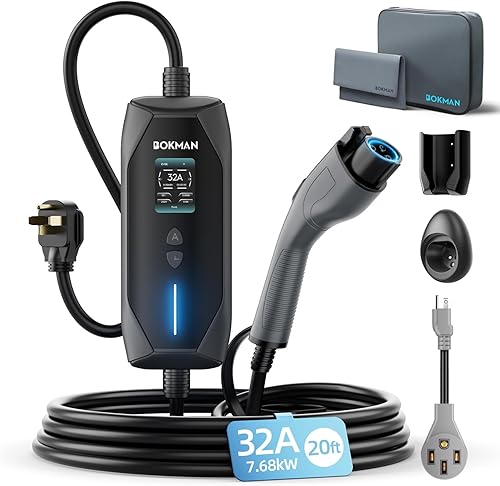
bokman Portable Level 2 & Level 1
Dual-voltage charging from 120V and 240V outlets in one compact unit. Adjustable 6 to 32A, a 20-foot cord, an IP65 weather rating, and 7 pounds to carry.
Check price on Amazon →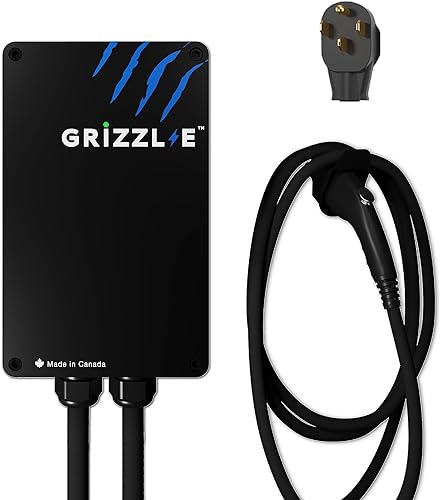
Grizzl-E Classic
40A charging, a 24-foot cord, and a rugged extreme-temperature build. It lives on a wall and plugs into a NEMA 14-50, so it relocates between homes; it just isn't a charger you keep in the trunk.
See it on Amazon →Portables and Rivals Side by Side
Click any column header to sort. Highlighted cells mark the best value in that category. One honesty note on the lineup: only the bokman is a true carry-it-with-you unit (it also holds its own against a wall unit in our Autel MaxiCharger vs bokman Portable matchup). The other three are plug-in wallboxes that mount to a wall and plug into a NEMA 14-50, which makes them easy to relocate between homes but not chargers you toss in the trunk. That split is the whole argument in our bokman Portable 32A vs Grizzl-E Classic head-to-head, where the trunk-friendly unit gives up about five miles of range per hour to the cast-aluminum one.
| Charger | Max Amps | Speed | Cord | Plug Options | Weight | Price | Link |
|---|---|---|---|---|---|---|---|
| bokman Portable L2 & L1 (true portable) | 32A | 25 mi/hr | 20 ft | NEMA 14-50 / NEMA 5-15 | 7.0 lbs | $$$ | View |
| NexCyber Level 2 48A (plug-in) | 48A | 36 mi/hr | 25 ft | NEMA 14-50 | 9.5 lbs | $$$ | View |
| Emporia Pro Level 2 (plug-in) | 40A | 30 mi/hr | 25 ft | NEMA 14-50 | 10.2 lbs | $$$$ | View |
| Grizzl-E Classic (plug-in wallbox) | 40A | 30 mi/hr | 24 ft | NEMA 14-50 | 11.5 lbs | $$$$ | View |
Price tiers are approximate. $ = under $50, $$ = $50 to 150, $$$ = $150 to 300, $$$$ = over $300. Tap any link for the current Amazon price.
Road-Tripper and Renter Feedback
Portable and relocatable chargers get dragged between outlets, garages, and homes, so the feedback that matters covers wear, heat, and whether the plug still feels right at month six. The themes below summarize, in our own words, what repeats across the top-helpful verified Amazon reviews.
bokman Portable L2 & L1
The bokman holds a 4.8-star verified-buyer average. It pairs a dual-voltage plug kit (NEMA 14-50 plus NEMA 5-15 adapter, adjustable 6 to 32A) with the lowest price and lightest body in this comparison, which is exactly the combination a trunk charger needs. If you want a longer track record, the Grizzl-E is the more established name for roughly double the price, in a very different form factor.
Grizzl-E Classic (4.6-star verified-buyer average)
Owner feedback centers on the steel enclosure holding its temperature through full 40A sessions and on the complete absence of anything to pair, program, or update. That reads less like travel gear and more like dependable garage hardware, which is exactly how to treat this unit: a wallbox you can unplug and take to the next house, not a charger that rides along.
Emporia Pro Level 2 (4.8-star verified-buyer average)
Verified buyers report reaching a first charge within a couple of hours of delivery on an existing outlet. The note that matters most for anyone planning to move it around: owners repeatedly describe the inlet cord as thick and stiff, which is a bigger deal when you're re-coiling it regularly than when it hangs on a wall.
NexCyber Level 2 48A (4.6-star verified-buyer average)
Cord reach is the standout theme, with owners who mounted the unit inside a garage reporting the 25-foot cable comfortably serving a car parked outside. Buyers using the app describe it as easy for status checks and off-peak charge timers, and the onboard touchscreen covers amperage without a phone.
Jacob’s read on this category
A portable charger is a tool, not a compromise, provided you buy it for the job it actually does. The speed gap is real: most portables stop at 32A, around 25 miles of range per hour, against 40 to 50A for wall units, and for a commute under 60 miles that gap vanishes overnight. What never vanishes is the use case, since renters, two-home households, and road-trippers get a kind of value no wallbox can offer: the charger moves when you do. Pick amperage from your daily miles and plug type from the outlets you already have; everything after that is cable management.
Why Consider a Portable EV Charger?
Not everyone has a garage with a dedicated 240V circuit and room for a wall-mounted charger. Portable EV chargers solve a real problem: how do you reliably charge an EV when your living situation, travel schedule, or budget doesn't allow for a permanent install?
Renters and apartment dwellers hit the most obvious wall. Most landlords won't approve a hardwired charger install, and the ones who will often don't want to pay for the electrical work. A portable charger that plugs into an existing 240V outlet in a shared garage or laundry room gives renters access to Level 2 speeds with zero permanent modifications. When you move, the charger moves with you.
Road trippers and frequent travelers benefit from keeping a charger in the trunk. Public fast-charging networks have gotten much better, but coverage gaps still show up in rural areas and small towns. A portable Level 2 charger lets you top off overnight at RV parks, campgrounds, and anywhere with a 240V outlet. Plenty of EV drivers who have sat waiting for the one occupied DC fast charger in town have learned the value of carrying their own backup.
Multi-location charging is another strong use case. Split time between a primary home, a vacation place, or a partner's apartment? One portable charger serves all of them. Way cheaper than buying and installing a wall unit at each address.
Backup and emergency charging rounds it out (the Level 1 vs Level 2 explainer covers how far a 120V cord actually gets you). Even owners with a permanent home charger often keep a portable unit as insurance. Panels fail. Breakers trip. Power goes out. A portable charger that works on a standard 120V outlet (Level 1) is a slow but functional safety net when the primary setup is down.
Portable vs Wall-Mounted: Key Differences
Picking between a portable and a wall-mounted charger comes down to a short list of tradeoffs. Neither one wins across the board. Understanding the differences helps you grab the right tool for your situation.
Charging speed is the main gap. Most portable chargers top out at 32 amps (about 25 miles of range per hour on 240V), and a few reach 40 amps. Wall-mounted chargers commonly deliver 40 to 50 amps (30 to 37 miles per hour). For commuters driving under 60 miles a day, a 32A portable charger fully tops off the battery overnight. The speed difference only matters for long commutes, large-battery trucks, or charging two vehicles off one outlet in a single night.
Installation cost heavily favors portable chargers. A plug-in portable requires zero electrical work if you already have a compatible 240V outlet. Unbox, plug in, charge. A wall-mounted hardwired install usually runs $500 to $1,500 for the electrician, breaker, and wiring. If you rent or plan to move within a few years, the zero-install cost of a portable is hard to ignore.
Durability and weather resistance lean slightly toward wall-mounted units built for permanent outdoor installation. That said, several units in this comparison (including the plug-in Grizzl-E Classic) carry NEMA 4 enclosure ratings and run reliably from -22°F to 122°F. Most portable chargers are rated for outdoor use, but you don't want the control box sitting in standing water or direct snow either way.
Smart features are more common on wall-mounted chargers. Most portable units skip WiFi and app control to keep the design simple, light, and cheap. If you need scheduled charging to take advantage of time-of-use electricity rates, go with a wall-mounted smart charger or one of the few smart portable models (the Emporia is the standout). That said, many modern EVs already do charge scheduling through the car's own app, which removes the need for a smart charger entirely.
Flexibility is the portable charger's defining advantage. Move it between homes. Take it on a trip. Lend it to a friend. Toss it in the trunk as backup. A wall-mounted charger stays on the wall.
What to Look For in a Portable Charger
Portable EV chargers look similar at a glance. The details matter. Here's what to check before buying.
Amperage determines charging speed. Portable chargers range from 16A to 40A. A 16-amp unit on a 240V circuit gives you about 12 miles of range per hour. A 32-amp unit jumps to roughly 25. A 40-amp unit reaches about 30. For most people, 32A is the sweet spot on speed and cost. Only go with 16A if you plan to use 240V workshop outlets (NEMA 6-20) that top out at 20 amps.
Plug adapters decide where you can charge. Most portable chargers ship with a NEMA 14-50 plug, the standard 240V, 50-amp outlet at RV parks and in many garages. Not every 240V outlet is a 14-50. Look for chargers that include or sell adapters for NEMA 14-30 (older dryer outlets), NEMA 6-20 (workshop outlets), NEMA 10-30 (legacy dryer outlets), and NEMA 5-15 (120V household outlets for Level 1 charging). More adapters, more places you can charge. The bokman Portable L2 & L1 ships with both a NEMA 14-50 and a NEMA 5-15 adapter out of the box.
Cord length decides where you can park. Most portable chargers give you 21 to 25 feet of cord. Sounds like a lot until you realize your outlet might be on the far side of the garage. Measure the distance from your most likely outlet to the vehicle's charge port before you buy. Every foot matters in tight garages and shared parking areas. The NexCyber and Emporia lead at 25 feet, with the Grizzl-E at 24.
Weight and a carrying case matter for travel. If the charger lives in your trunk, every pound counts against efficiency and cargo space. The lightest models in our comparison weigh 7 to 9 pounds. A decent carrying bag protects the connector, keeps the cord tidy, and stops the unit from rattling around back there. Some chargers include a bag; others sell one separately.
Safety certifications are non-negotiable. Any charger you buy should be UL-listed or ETL-certified. Those marks mean the product was tested for electrical safety by an accredited lab. All four chargers in our comparison carry a recognized certification. Avoid no-name brands that lack these markings, regardless of how cheap they are.
Connector type must match your vehicle. All chargers in this comparison use the J1772 connector, which works with nearly every non-Tesla EV. Tesla owners (see how the bokman stacks up against Tesla's own unit in Tesla Wall Connector vs bokman Portable) need a J1772-to-NACS adapter (typically $20 to $50 depending on amperage rating) or a charger with a native NACS connector. Starting in 2025, several automakers (Ford, GM, Rivian, Hyundai) adopted the NACS port, so check your vehicle's charge port before buying.
Which Portable Charger Should You Get?
The right portable charger depends on your specific charging situation. Here are our picks by use case.
If you only buy one portable charger, make it a 32A or 40A unit with a NEMA 14-50 plug. That covers the widest range of charging situations. The bokman includes both NEMA 14-50 and NEMA 5-15 adapters in the box, giving you Level 1 and Level 2 capability in a single unit. This combo handles roughly 95% of the charging scenarios you'll run into at home, on the road, or at someone else's house.
How We Research
For the true-portable slot we required a light, sub-8-pound body, adjustable amperage so the unit works on whatever outlet the road throws at you, and an included plug adapter kit; only the bokman cleared that bar. The plug-in wallboxes in the table are included for the relocation use case (renters and multi-home households), and we label them as plug-in units rather than calling them travel chargers. We verified NEMA 14-50 and NEMA 5-15 adapter availability, current stock, and price tiers against the live Amazon listings on October 17, 2026.
Owner reviews decided close calls. The feedback sections above summarize, in our own words, the themes that repeat across the top-helpful verified Amazon reviews on each product; we do not reproduce review text. No manufacturer pays us. Affiliate links earn us a small commission when you click and buy, but they don't change our rankings. Spot an error? Let us know.