Quick answer: an exposed mount is home turf for the Grizzl-E Classic; its NEMA Type 4 steel enclosure shrugs off blizzards and driven rain. The Emporia Pro Level 2 survives outside while costing like an indoor unit, and the ChargePoint Home Flex is the safe default when you want weather resistance plus the polished app.
Weather-First Picks in Brief
Not every EV charger is built for the outdoors. Most units marketed as "outdoor rated" carry a NEMA 3R enclosure, which handles rain and sleet and not much else. If your charger will sit on an exposed driveway wall, bake in Texas summers, or survive a Minnesota January, the ratings matter a lot more than the marketing copy. These are the three chargers that stood out once we compared every spec.
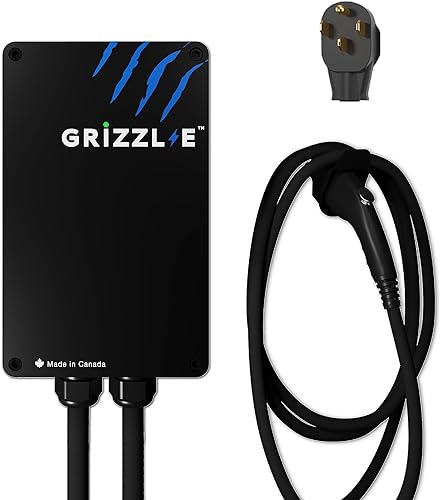
Grizzl-E Classic
The only charger here with a NEMA 4 rating and the widest temperature range (-22°F to 122°F). Built in Canada for Canadian winters. No smart features. Just a tank.
See it on Amazon →Emporia Pro Level 2
NEMA 3R rated, 48A output, full WiFi and app control. Nothing else comes close on price for a weather-rated smart charger.
See it on Amazon →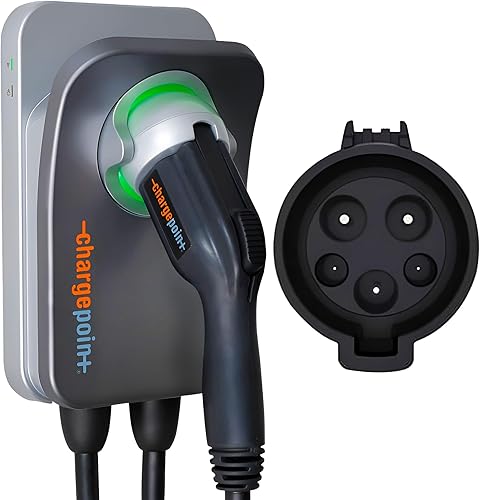
ChargePoint Home Flex
Adjustable 16A to 50A, NEMA 3R, a polished app with energy monitoring, and the longest track record of outdoor residential installs in the country.
Check it on Amazon →Outdoor Ratings and Specs Table
Every charger below is rated for outdoor installation by the manufacturer. Click any column header to sort. Highlighted cells mark the best value in that category.
| Charger | IP/NEMA Rating | Temp Range | Amps | Price | Link |
|---|---|---|---|---|---|
| Grizzl-E Classic | NEMA 4 | -22°F to 122°F | 40A | $$$$ | View |
| ChargePoint Home Flex | NEMA 3R | -22°F to 122°F | 50A | $$$$ | View |
| Emporia Pro Level 2 | NEMA 4 | -22°F to 122°F | 48A | $$$$ | View |
| Wallbox Pulsar Plus | NEMA Type 4 | -13°F to 122°F | 48A | $$$$ | View |
Price tiers are approximate. $ = under $50, $$ = $50 to 150, $$$ = $150 to 300, $$$$ = over $300. Tap any link for the current Amazon price.
Verified Buyers on Outdoor Survival
For outdoor chargers, the reviews that matter are the ones written a year in, after real weather. The themes below are drawn from the top-helpful verified Amazon reviews on each unit and retold in our own words.
Grizzl-E Classic (4.6-star verified-buyer average)
Verified buyers describe a solid steel box that holds its temperature through maximum-load 40A sessions, and owners a couple of years in emphasize that nothing about it has ever needed pairing, updating, or programming. Dead-simple is the whole point of this charger, which matters more on an exposed outdoor wall than on an indoor one.
ChargePoint Home Flex (4.3-star verified-buyer average)
Positive reviews describe exactly what you'd hope for: a good-looking wall unit delivering fast, consistent charging session after session. Read past that, though: prominent 1-star feedback details firmware trouble on a replacement unit, which is worth knowing before you buy.
Emporia Pro Level 2 (4.8-star verified-buyer average)
Same-day installs are the headline of the top reviews, with buyers reporting a working charger within an hour or two of starting. The caution that matters here: owners describe the inlet cord as thick and reluctant to bend. On an outdoor wall with a tight cable run, plan ahead.
Wallbox Pulsar Plus (4.3-star verified-buyer average)
Weather resilience anchors the feedback: owners report the NEMA Type 4 sealing carrying the unit through a full Vermont winter with no overhead cover, where earlier chargers had needed improvised rain shields. Multiple reviews praise the assembled-in-USA build and the WiFi+Bluetooth combo for outdoor reliability when WiFi range gets spotty.
Jacob’s read on this category
Outdoor placement promotes the enclosure rating from footnote to deciding spec. NEMA 3R covers the under-an-eave install, but a fully exposed wall or a pedestal wants NEMA 4 territory, where windblown dust and hose-directed water are part of the test. That lens sorts this group fast: the Grizzl-E’s steel case that stays cool under a full 40A load is the default for ugly exposures, and the smart picks earn their slots once the mounting spot gives the electronics some shelter. Decide where the unit will live first; the right charger falls out of that answer.
Understanding IP and NEMA Ratings
The single most important spec for an outdoor EV charger is its enclosure rating. It tells you what the unit can actually survive. Two rating systems exist, and manufacturers use them interchangeably, which causes a lot of confusion.
NEMA ratings are the North American standard. NEMA 3R is the baseline for outdoor use. It protects against falling rain, sleet, and external ice formation. Think "mounted under an eave" protection. NEMA 4 goes further, adding resistance to windblown dust, splashing water, and hose-directed water. That's the "mounted on an exposed wall with nothing above it" standard.
IP ratings (Ingress Protection) are the international equivalent. IP44 maps roughly to NEMA 3R, and IP66 maps roughly to NEMA 4. Some manufacturers list both. When they conflict, trust the NEMA rating for North American installations, because that's what UL testing certifies against.
Among the chargers in our comparison, the Grizzl-E Classic, Wallbox Pulsar Plus, and Emporia Pro Level 2 all carry NEMA Type 4 ratings. The ChargePoint Home Flex carries NEMA 3R. In practice, NEMA 3R is plenty for most outdoor installations, especially if the charger is mounted under any kind of overhang: a carport, a garage soffit, even a small rain shield. NEMA 4 matters when the charger will be fully exposed with zero overhead cover.
One critical note. The NEMA rating covers the charger enclosure, not the electrical connection. If you're using a NEMA 14-50 plug outdoors, you need a separate weatherproof outlet cover rated for "in-use" conditions, meaning the cover stays closed while the plug is inserted. A standard flip-up outlet cover is not enough for outdoor use with a permanently connected charger.
Temperature Extremes: Which Chargers Handle Cold?
Temperature range is the spec most people ignore until their charger stops working on a February morning. Every unit has a rated operating window, and once the ambient falls outside that window, the charger might refuse to start, throttle its output, or suffer permanent damage to internal components. If sub-freezing performance is your priority, our cold-weather EV charger guide ranks units by their rated winter tolerance.
The Grizzl-E Classic owns cold weather with a -22°F lower limit. That covers everywhere in the continental U.S. and most of inhabited Canada. The company is based in Ontario and designed the unit specifically for harsh winters. If you live somewhere that regularly sees -20°F, this is the only charger on our list unambiguously rated for your conditions.
The ChargePoint Home Flex and Emporia Pro share a -22°F to 122°F window. The Wallbox Pulsar Plus rates slightly tighter at -13°F to 122°F. Both windows cover the vast majority of North American climates. You'll only run into trouble in the coldest corners of Minnesota, Wisconsin, the Dakotas, and northern Canada.
A practical tip. Whichever charger you pick, mounting it on a north or east-facing wall cuts heat exposure in summer (our hot-climate charger guide goes deeper on derating and cable life in desert heat). Stuck with a south or west-facing wall? A small shade structure or awning adds real protection and extends the life of any unit.
Mounting and Installation Outdoors
Outdoor installation adds complexity that indoor garage installs don't have. You're dealing with weather sealing, longer conduit runs, and code that shifts by municipality. Here's what to plan for.
Conduit and wiring. Outdoor runs need weather-rated conduit (typically schedule 40 PVC or rigid metallic conduit). It protects the wiring from UV exposure, physical damage, and moisture. Your electrician will size this based on wire gauge and distance from the panel. Expect $3 to $8 per linear foot for conduit, on top of the wire cost.
Mounting surface. Exterior walls need the right anchors. Stucco, brick, and concrete block all want different fastener types. For wood-sided homes, seal around the mounting bracket so water doesn't wick behind the siding. Every charger in our comparison ships with a wall-mount bracket, but the Grizzl-E Classic and Wallbox Pulsar Plus include weatherproof mounting hardware (gaskets, hose-tight fittings) in the box.
Electrical code. The 2023 NEC requires GFCI protection on all outdoor EV charging circuits. Most of these chargers have built-in GFCI, but your inspector may still require a GFCI breaker at the panel. Check with your local authority having jurisdiction (AHJ) before the electrician starts. A failed inspection means paying the electrician twice.
Outlet versus hardwire. For outdoor installs, hardwiring is usually the better choice. A hardwired connection with a properly sealed weatherproof junction box resists moisture better than a plug-and-outlet connection. If you need a plug (because you want the charger to move with you), get a commercial-grade weatherproof in-use outlet cover rated for wet locations. Not the cheap flip-up kind.
Professional outdoor installation usually runs $800 to $2,000, depending on the distance from your panel to the charger location and any panel upgrades needed. That's $200 to $500 more than a typical garage install, mostly from conduit and the extra sealing work.
Do You Need a Pedestal Mount?
If your charging spot is a driveway or parking pad with no adjacent wall, a pedestal mount solves it. A pedestal is a freestanding steel post (typically 3 to 4 feet tall) with a mounting plate on top for the charger. Conduit runs underground from your panel to the base.
Not every charger has a manufacturer-approved pedestal option. Among our four outdoor picks, official pedestals are available for the ChargePoint Home Flex (the most polished) and the Grizzl-E Classic (heavy-duty post mount). The Wallbox Pulsar Plus and Emporia require a universal pedestal bracket or a custom fab, which works but adds a step.
The hidden cost of pedestal installations is the trenching. Running conduit underground from your panel to the pedestal means digging a trench (typically 18 to 24 inches deep, per code), laying conduit, and backfilling. If the run crosses a paved driveway, you're cutting and patching concrete. Budget $500 to $1,500 for trenching alone, depending on distance and surface type.
Our take. If you have any wall within 25 feet of your parking spot (garage wall, house exterior, fence post, shed), mount the charger on the wall and use the cable to reach the vehicle. Every charger in our comparison has at least a 23-foot cord. A wall mount is cheaper, easier, and more secure than a pedestal in almost every case.
Which Outdoor Charger Should You Get?
After comparing every outdoor-rated charger on enclosure ratings, cold tolerance, amperage, and price, here's where each one makes sense.
Bottom line. For most people mounting a charger outside, the ChargePoint Home Flex is the best all-around pick. It handles cold. It handles heat. It adjusts amperage to match your electrical capacity, and ChargePoint has more outdoor installations in the field than anyone else. Live somewhere with moderate winters and a panel that is already busy? The Emporia Pro is NEMA 4 rated and bundles load management. Live where winter gets genuinely brutal (northern plains, mountain passes, Canadian prairies)? The Grizzl-E Classic is the only charger in the lineup built for that reality.
How We Research
Outdoor rating is where we spent the most time on this comparison. NEMA 3R is the absolute minimum we considered; NEMA 4 and IP66 enclosures earned priority in the ranking. We cross-checked every manufacturer ingress protection claim against reviewer photos posted 12+ months after install, specifically looking for corrosion near the J1772 plug, water pooling inside the control box, and UV fading on the cable jacket. Amazon stock and pricing were re-checked against the current listings on October 17, 2026.
Only long-term reviews count for this category. A 30-day 5-star review doesn't tell you whether the enclosure gasket will still seal after its first freeze-thaw cycle. We don't take manufacturer money. Affiliate links pay us if you click and buy, but they never change the ranking. Spot a spec error? Email us and we'll fix it.