Quick answer: a 48A EV charger needs a 60A breaker and 6 AWG copper wire at minimum, and the full 48A only lands on the car if the charger is hardwired; on a NEMA 14-50 plug the same unit must be dialed back to 40A. That logic favors the Wallbox Pulsar Plus 48A, which only installs hardwired, while the Emporia Pro Level 2 covers both install paths and the ChargePoint Home Flex dials anywhere from 16A to 50A.
Bottom Line for a 48A Circuit
Wallbox Pulsar Plus 48A
Hardwire-only by design, so there's never a question about whether the receptacle can carry the load. Wired straight to a 60A breaker, it delivers the full 48A every time, with a compact NEMA Type 4 outdoor-rated enclosure.
View on Amazon →Emporia Pro Level 2
Flexible install path: hardwire it to a 60A breaker for the full 48A, or wire it to a NEMA 14-50 outlet and cap it at 40A in the app. Either way you get WiFi scheduling and energy tracking.
See it on Amazon →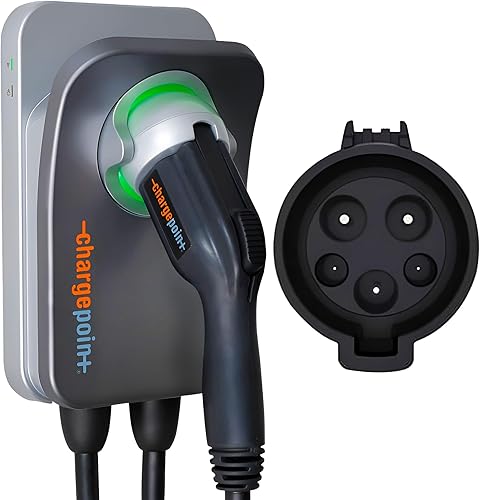
ChargePoint Home Flex
Software-adjustable from 16A to 50A, so if your panel only has room for a smaller circuit today, you can install this unit now and open it up later without swapping hardware.
Check it on Amazon →Chargers That Fit a 60A Circuit
All three chargers can deliver 48A, but only one of them removes the NEMA 14-50 question entirely by being hardwire-only. "Full Output Needs" shows what it takes to actually get 48A out of each unit rather than a derated 40A.
| Charger | Max Amps | Full Output Needs | Breaker | Smart | Price | Link |
|---|---|---|---|---|---|---|
| Wallbox Pulsar Plus 48A | 48A | Hardwire only | 60A | WiFi, App | $$$$ | View |
| Emporia Pro Level 2 | 48A | Hardwire (or 40A via NEMA 14-50) | 60A | WiFi, App | $$$$ | View |
| ChargePoint Home Flex | 50A adjustable | Hardwire (or 40A via NEMA 14-50) | 60A | WiFi, App, Alexa, Google | $$$$ | View |
Price tiers are approximate. $ = under $50, $$ = $50 to 150, $$$ = $150 to 300, $$$$ = over $300. Tap any link for the current Amazon price.
What Installers and Owners Run Into
Spec sheets don't cover how a unit behaves once it's actually bolted to a wall and wired to a real circuit. Here's what shows up repeatedly in verified-purchase Amazon reviews for the chargers in this comparison.
Wallbox Pulsar Plus 48A (solid early verified-buyer reports)
Owners who hardwired the Pulsar Plus describe a straightforward electrician install with no plug or receptacle to fuss over. The compact enclosure gets called out repeatedly as easier to mount in a tight garage corner than bulkier competitors, though a few reviewers note the companion app is thinner on scheduling detail than Emporia's or ChargePoint's.
Emporia Pro Level 2 (4.8-star verified-buyer average)
Verified buyers describe getting from box to first charge inside a morning, and long-run reviews rate it a steady daily EVSE. The one recurring physical note is a supply cord with real heft and little flex, so check clearance before you pick a mounting spot.
ChargePoint Home Flex (4.3-star verified-buyer average)
A reviewer with an auto-industry background rates the hardware as thoughtfully built and reports mounting it on an existing 14-50 outlet without hired help. The 1-star reviews are loud though, led by accounts of repeated firmware and connectivity failures, so the app side isn't bulletproof.
Jacob’s read on this category
The detail almost nobody mentions before their electrician shows up: a NEMA 14-50 receptacle is only rated for 40A of continuous load, even though the plug itself is stamped 50A. That 80% derating is standard NEC practice for any receptacle-and-cord combination, not a defect in the outlet. If you want the full 48A your charger advertises, hardwiring straight to the breaker is the only way to get it. Plug-in installs are still fine, and honestly fine for most driveways, but set the amperage to 40A in the app and stop pretending the extra 8A exists.
Why a 48A Charger Needs a 60A Breaker
The National Electrical Code classifies EV charging as a continuous load, meaning the equipment runs at full draw for three hours or more at a stretch. Continuous loads have to be sized at 125% of their rated current, not 100%. Do the math on a 48A charger and you get 60A exactly, which is why every 48A-rated home unit specifies a 60A breaker in its install manual, no exceptions and no rounding down.
This isn't a manufacturer being conservative. It's the same rule that governs every continuous electrical load in a home, from baseboard heaters to shop equipment. A breaker sized to the charger's exact rated amperage would trip under normal, expected use, not because something failed.
Wire Size for a 60A Circuit
A 60A breaker needs a minimum of 6 AWG copper conductor for a typical residential run. Longer distances between the panel and the charger location call for heavier gauge, often 4 AWG copper, to keep voltage drop in check over the extra length. Aluminum wire needs to be upsized further still to carry the same current safely. None of this is a DIY judgment call. A licensed electrician pulls a permit, checks your specific run length and conduit fill, and sizes the actual wire for your house, not a generic online chart.
Hardwire vs. NEMA 14-50 at 48A
Here's the part most buying guides skip: a NEMA 14-50 receptacle is rated for 50A, but the 80% continuous-load rule caps what you can actually pull through it at 40A. Wire a 48A-rated charger to a 14-50 outlet and leave it set to 48A, and you're running the receptacle past its safe continuous rating even though the breaker upstream is sized correctly. The fix is simple: either hardwire the charger directly to the 60A breaker, skipping the receptacle entirely, or dial the charger down to 40A in its settings if you want the plug-in flexibility of a NEMA 14-50. For a deeper look at which install path fits your situation, our NEMA 14-50 vs. hardwire comparison covers the cost and flexibility tradeoffs in more depth.
The Wallbox Pulsar Plus 48A sidesteps this entire question by shipping hardwire-only. There's no receptacle to derate and no setting to remember to change, which is exactly why it's the simplest way to get a true 48A install.
Smart Features
All three chargers here offer WiFi and an app, but they differ in depth. ChargePoint's app is the most polished of the group, with session-by-session history, per-session cost tracking, and tight Alexa and Google Home integration on top of the amperage dial. Emporia covers the core scheduling and energy-monitoring basics well and is the only one of the three with dynamic load management in the box, which is the feature that matters most when a 60A circuit is pushing a panel's limit. Wallbox's app is functional for scheduling and monitoring, though a notch thinner on the extras than the other two, which tracks with its hardwire-first, no-frills positioning.
Installation
Whichever charger you pick, the electrical work looks the same on the panel side: a dedicated 60A double-pole breaker and correctly sized copper wire run to the charger location. Where the chargers differ is the last few feet. The Wallbox Pulsar Plus 48A only supports a hardwired connection, so your electrician terminates the wire directly into the unit. The Emporia Pro Level 2 and ChargePoint Home Flex can go either way, terminating into a NEMA 14-50 receptacle for future flexibility or hardwiring for the full rated output.
Most electricians quote $300 to $800 for a new 240V circuit, depending on the distance from the panel and local labor rates. The federal Section 30C credit won't soften that anymore; it ended for chargers placed in service after June 30, 2026, and only pre-deadline installs can still claim the 30% (capped at $1,000). Ask your utility about rebates, and check with your local building department about permit requirements before work begins; a new 60A circuit is not something to skip inspection on.
Sizing Decision: Which Unit Fits
Get the Wallbox Pulsar Plus 48A if you already know you're hardwiring and want a compact unit with zero ambiguity about reaching the full 48A.
Get the Emporia Pro Level 2 if you want the flexibility to hardwire now or fall back to a NEMA 14-50 plug later, and a charger that can throttle itself when the panel load calculation is tight.
Get the ChargePoint Home Flex if your panel has limited headroom today, since you can install it, dial the amperage down, and open it back up to 50A later without new hardware.
FAQ
The Verification Work Behind This Page
We shortlisted only chargers rated for a true 48A output, then checked each one's install documentation for whether it supports hardwire, NEMA 14-50, or both, since that detail changes what a buyer actually needs to ask their electrician for. If you want the full field of 48A-capable chargers ranked rather than just these three, that roundup covers more ground. Amazon prices and stock were re-checked against the current listings on October 17, 2026, and each candidate got checked against the top-helpful verified reviews on its own product page before it made the cut.
No manufacturer pays for placement here and we do not accept review units; the picks come from manufacturer spec sheets, certification listings, and the recurring themes in verified-buyer reviews.