Quick answer: if more than one EV brand parks in your driveway, or ever will, the Tesla Universal Wall Connector earns its higher price by ending the loose-adapter problem for good. If every car that will ever charge there uses a J1772 port, the Grizzl-E Classic delivers nearly the same speed for less money and skips the app entirely.
Adapter or No Adapter: The Verdict
Tesla Universal Wall Connector
Full 48A charging with a built-in J1772 adapter riding the same cable as the NACS handle. The premium buys convenience for any household that charges more than one connector standard.
See it on Amazon →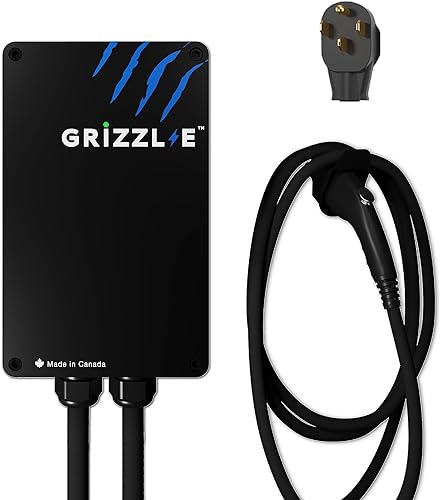
Grizzl-E Classic
40A through a single fixed J1772 handle, amperage set with internal DIP switches, no app or WiFi to configure. The straightforward pick for a single-connector household.
See it on Amazon →NACS Adapter vs No Adapter, Spec by Spec
The two chargers land close on raw charging speed. Everything else about them, connector, install method, and control, pulls in opposite directions.
| Charger | Amps | Connector | Smart Features | Install Type | Price | Link |
|---|---|---|---|---|---|---|
| Tesla Universal Wall Connector | 48A | NACS + built-in J1772 adapter | WiFi, Tesla app | Hardwired only | $$$$ | View |
| Grizzl-E Classic | 40A | J1772 only | None | NEMA 14-50 plug-in | $$$$ | View |
Price tiers are approximate. $ = under $50, $$ = $50 to 150, $$$ = $150 to 300, $$$$ = over $300. Tap any link for the current Amazon price.
What Owners of Each Say About Daily Use
Spec sheets only tell half the story. Here is what shows up repeatedly in verified-purchase Amazon reviews for each product, retold in our own words rather than quoted.
Tesla Universal Wall Connector
Owners buying this specifically for a mixed-EV garage describe the swap between the NACS handle and the built-in J1772 adapter as the entire reason they paid more than a standard charger costs. The most common friction point is not charging speed, it is the initial pairing to home WiFi and the Tesla app, which a few owners in weak-signal garages describe as fiddly the first time through.
Grizzl-E Classic (4.6-star verified-buyer average)
Reviews read like a hardware spec sheet: buyers describe a no-frills steel box that stays cool at its full 40A draw, and multi-year owners keep reaching for words like simple and durable for a unit with no radios or programming to maintain. The recurring caveat from owners who also drive a Tesla is that they keep a NACS adapter clipped to the cable, since the Grizzl-E itself only speaks J1772.
Jacob’s read on this category
The deciding question is not about the charger at all: it is whether they can honestly say no other EV brand will ever plug in there. A one-car, one-brand household almost never needs the Universal's flexibility and will be happier banking the savings. Anyone hosting a rotating cast of rental EVs, a partner's different car, or a future upgrade they have not committed to yet will use that built-in adapter more than they expect, and losing a cheap adapter dongle at the worst moment is a real annoyance the pricier unit designs away.
NACS, J1772, and Why the Adapter Question Matters
Every EV sold in North America charges at home through one of two plug standards: Tesla's NACS or the older J1772 standard used by most other brands. A charger built around one handle cannot physically plug into a car expecting the other without an adapter somewhere in the chain. The Tesla Universal Wall Connector solves this by building the adapter into the unit itself, a fixed cable that ends in a NACS handle with a J1772 adapter permanently attached, ready to fold back when a Tesla needs the bare NACS plug. The Grizzl-E Classic ships with a single fixed J1772 handle and nothing else, which is exactly what most non-Tesla EVs need and nothing more.
Neither approach is wrong. It comes down to how many connector types actually show up in your driveway over the years you own the charger, not just the car you drive today.
Charging Speed on a Properly Sized Circuit
The Tesla Universal Wall Connector tops out at 48A on a 60A breaker, and Tesla also supports dialing it down to 40A, 32A, 24A, or 16A to match a smaller breaker if your panel cannot spare a full 60A circuit. The Grizzl-E Classic is fixed at 40A. In practice that gap is small: a 48A charger adds roughly 44 miles of range per hour on a vehicle that can accept it, while a 40A charger lands closer to 35 to 37 miles per hour depending on the car's onboard charger. Almost no daily driving pattern notices the difference between those two numbers, since both refill a normal commute in well under the time most people spend asleep.
Smart Features and the Case for Skipping Them
The Tesla Universal Wall Connector runs on WiFi and the Tesla app, which handles remote monitoring, scheduling around off-peak electricity rates, and firmware updates. Once the initial setup is done, day-to-day charging does not require opening the app at all, since the car simply charges when it is plugged in unless a schedule says otherwise.
The Grizzl-E Classic has no app, no WiFi radio, and no cloud account of any kind. Amperage is set once with internal DIP switches and stays there until you change it by hand. For buyers who find a fully app-free charger more appealing than one more device tied to a phone, that is a feature, not a gap. It also means one less thing that can lose connectivity, need a firmware update, or get bricked by a discontinued app years down the road.
Installation and What It Costs to Get Either One Running
The Grizzl-E Classic plugs into a NEMA 14-50 outlet, the same style used by electric dryers and RV hookups. If your garage already has one wired for a 40A or 50A breaker, installation is close to plug-and-play. The Tesla Universal Wall Connector is hardwired only, with no plug-in cord option, so an electrician's visit is not optional even if you already have a compatible outlet sitting on the wall. For a side-by-side look at what that install-type tradeoff means for cost and flexibility more broadly, see our plug-in versus hardwire breakdown.
Running a new 240V circuit typically runs $300 to $800 with a licensed electrician, depending on the distance from your panel and local labor rates. One budgeting note: the federal Section 30C credit is gone for new installs, since it ended for chargers placed in service after June 30, 2026 (installs completed by that date can still claim 30%, up to $1,000, at tax time). Check your state and utility for rebate programs instead. Both chargers carry a NEMA 3R rating for outdoor or garage installation, though neither is built for direct salt-air exposure on a coastal property.
Which One to Put on Your Wall
Get the Tesla Universal Wall Connector if your household charges more than one EV brand today, or is likely to within the next few years. The built-in adapter removes a real daily annoyance for a mixed-EV garage, and the dial-down amperage options make it fit a wider range of electrical panels than a fixed-amperage unit.
Get the Grizzl-E Classic if every car that will charge there uses a J1772 port and you would rather not pay for flexibility you will never use. It is nearly as fast, plugs into an outlet you may already have, and never asks you to open an app. If a Tesla does join the driveway later, a standalone NACS adapter costs far less than the price gap between these two chargers, and it can be found on our Grizzl-E Classic versus Connect comparison alongside the WiFi-equipped version of this same charger, for buyers who want DIP-switch simplicity today with an upgrade path to an app later.
FAQ
How We Verified This Adapter Tradeoff
We checked the Tesla Universal Wall Connector's connector claims, amperage dial-down options, and NEMA 3R outdoor rating directly against Tesla's own installation documentation rather than secondhand summaries, since a wrong connector claim in a comparison like this one is the kind of error that sends a reader home with the wrong charger. The Grizzl-E Classic's DIP-switch amperage setting and app-free operation were confirmed against the same product listing and specifications used across every other Grizzl-E Classic mention on this site, so the claims stay consistent from page to page. Price tiers reflect the current Amazon listings checked on October 17, 2026.
No manufacturer pays for placement here and we do not accept review units; the picks come from manufacturer spec sheets, certification listings, and the recurring themes in verified-buyer reviews.