Quick answer: own only a Tesla and don't plan to add another brand? The Tesla Wall Connector is the NACS-only unit built for that garage. Drive a Ford, Hyundai, Kia, Rivian, or any other non-Tesla EV, and the industry-standard J1772 handle on the NexCyber Level 2 48A is what your car actually uses. Mixing a Tesla with a J1772 car under one roof calls for a built-in adapter instead; our Tesla Universal Wall Connector comparison covers that scenario head to head.
The Right Plug, Ranked
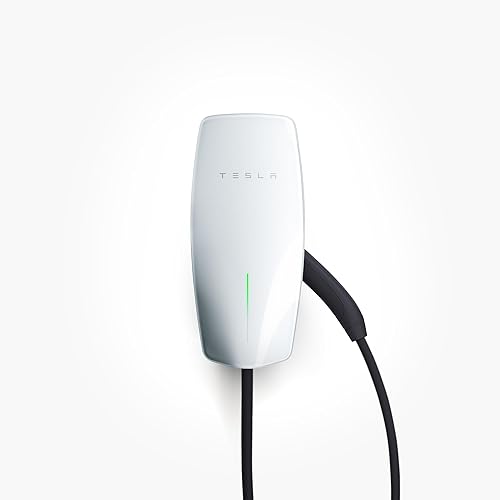
Tesla Wall Connector
The native choice for a single-brand Tesla household, delivering 48A through the same NACS handle Tesla's Superchargers use.
See it on Amazon →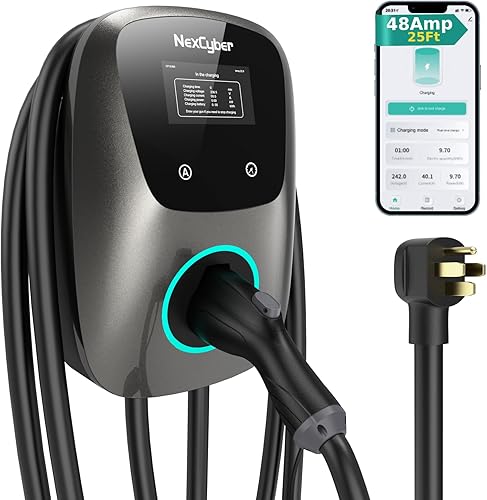
NexCyber Level 2 48A
The J1772 plug every non-Tesla EV was designed around, delivering the same 48A ceiling as Tesla's own hardware from a NEMA 14-50 outlet.
See it on Amazon →NACS vs J1772 vs Both, Side by Side
Both chargers land on the same 240V circuit; what changes is the handle plugged into the car. For a unit that carries both plugs in one handle, see our Tesla Universal Wall Connector comparison.
| Charger | Connector | Amps | Smart | Install | Price | Link |
|---|---|---|---|---|---|---|
| Tesla Wall Connector | NACS only | 48A | WiFi, Tesla app | Hardwire | $$$$ | View |
| NexCyber Level 2 48A | J1772 | 48A (adjustable 16–48A) | WiFi, app, touchscreen | NEMA 14-50 | $$$ | View |
Price tiers are approximate. $ = under $50, $$ = $50 to 150, $$$ = $150 to 300, $$$$ = over $300. Tap any link for the current Amazon price.
Owners on Living With Each Connector
Spec sheets explain what a plug does. Here's what shows up repeatedly in verified-purchase Amazon reviews for the chargers in this guide, retold in our own words rather than quoted.
Tesla Wall Connector (4.8-star verified-buyer average)
Verified buyers describe a clean, fast install for anyone already running a NEMA 14-50 or comfortable hardwiring, and the review pattern is unusually consistent about the unit simply doing its one job well. The recurring caveat is the one this guide is built around: it is a Tesla-only handle, and reviewers who bought it expecting broader compatibility were the ones who left disappointed.
NexCyber Level 2 48A (4.6-star verified-buyer average)
The J1772 story in these reviews is about unceremonious compatibility: owners plug in whatever non-Tesla EV is in the driveway and it simply charges, with several describing it replacing an older unit that died without changing anything else about their setup. The onboard touchscreen draws repeated mentions for showing charge status and setting amperage without opening the app, and buyers point to the ETL and FCC marks as the reassurance that let them pick a smaller brand. It's a newer listing, so weigh the star average accordingly.
Jacob’s read on this category
The plug question gets treated like a brand-loyalty debate online, but it's really just a compatibility check. Look up what's parked in your garage today, and probably for the next several years, before you look at price or app features. A one-Tesla household that buys the Universal version pays for an adapter it will never touch, and a mixed-brand household that buys the standard NACS-only unit ends up leaning on a loose adapter that has a way of disappearing right when you need it. Get the plug question right first; everything after that is a normal charger comparison.
NACS, J1772, and CCS: What Actually Differs
NACS, formalized industry-wide as SAE J3400, is Tesla's connector design. It's slimmer than J1772, and the same port handles both Level 2 AC charging at home and DC fast charging on the road, which is part of why other automakers have been adopting it for new vehicles. J1772 is the older five-pin standard, and it's what nearly every non-Tesla home charger, and nearly every non-Tesla EV, is built around. If your car isn't a Tesla, its charging port is almost certainly J1772.
CCS adds two DC fast-charging pins below a J1772 plug, letting one port handle both Level 2 AC at home and DC fast charging in public. It matters for a road trip, not for a wall-mounted home charger; none of the units in this guide do DC fast charging, so CCS compatibility simply isn't something to shop for here.
One thing that trips up first-time buyers: connector type and amperage are two completely separate specs. A charger's plug tells you which car it fits. Its amp rating tells you how fast it charges that car. Don't let a high amp number talk you into a connector your car can't use.
Does Plug Type Change Charging Speed?
No. NACS and J1772 are both AC connectors for home charging, and neither one is inherently faster than the other. Speed comes down to the charger's amp rating and the ceiling set by the car's own onboard charger, the same math that applies across every amp tier; our amperage tier breakdown walks through that ceiling car by car. The Tesla Wall Connector reaches 48A through its NACS handle, and the NexCyber reaches the same 48A through J1772. Identical speed, different plug: exactly the point this guide keeps making.
Smart Features
The Tesla Wall Connector connects to WiFi and hands scheduling, monitoring, and firmware updates off to the Tesla app. The NexCyber pairs a WiFi app with an onboard touchscreen, so charge status and amperage adjustments are available at the unit itself without pulling out a phone.
Neither unit's smart layer changes the connector math. Scheduling, energy tracking, and amp adjustment are conveniences on top of the plug decision, not reasons to buy a handle your car can't use.
Installation
Connector type has no bearing on how a charger gets installed. Both of these need a dedicated 240V circuit, and the choice between a NEMA 14-50 outlet and a permanent hardwire is a separate decision from NACS versus J1772; our plug-in vs hardwire breakdown covers that trade-off in detail. The Tesla Wall Connector is built for hardwiring. The NexCyber runs from a standard NEMA 14-50 outlet, the same one a dryer uses.
Whichever connector you land on, running a new circuit for a hardwired install often means pulling a permit; our permit guide walks through when that new circuit needs a permit versus when it doesn't. Section 30C, the federal EV-charger tax credit, ended for installs placed in service after June 30, 2026; work finished by that date can still claim 30% of the install cost up to $1,000, but anything after it should look to state and utility rebate programs instead.
Which Connector to Buy
Get the Tesla Wall Connector if every car that will ever charge in this garage is a Tesla. It's the native NACS handle at the full 48A a Tesla's onboard charger can accept, without paying for adapter hardware you'll never use.
Get the NexCyber Level 2 48A if you drive a non-Tesla EV. J1772 is the plug your car already has, and this unit delivers it at the full 48A from a standard NEMA 14-50 outlet, with ETL certification behind it. If you're weighing Tesla's own hardware for a Tesla household instead, our Tesla Wall Connector vs Mobile Connector comparison breaks down that decision.
Charging a Tesla and a J1772 EV from one wall unit? That's the built-in-adapter scenario, and it deserves its own comparison rather than a footnote here: our Tesla Universal Wall Connector vs Emporia Pro comparison weighs the one-handle-both-plugs approach against a J1772-native alternative head to head.
FAQ
How We Verified Every Connector Claim
For this guide we cross-checked each charger's connector claim against its own Amazon listing and, for the Tesla unit, against Tesla's published Wall Connector specifications. The J1772-versus-NACS distinction only matters if it's exactly right for the ASIN being linked, so we confirmed the NexCyber's J1772 handle, NEMA 14-50 plug, and ETL certification against its current listing on 2026-08-10 rather than assuming them from a product name, and re-verified the Tesla Wall Connector's NACS-only handle the same day.
No manufacturer pays for placement here and we do not accept review units; the picks come from manufacturer spec sheets, certification listings, and the recurring themes in verified-buyer reviews.