Quick answer: add up your daily miles first. Drive under about 30 to 40 miles a day and leave the car plugged in overnight, and the Level 1 cord in the trunk genuinely covers it for free. Cross that line, or need the car topped up mid-day, and Level 2 stops being optional: the Emporia Pro Level 2 is the 48A pick for a J1772 car on a 240V circuit, the Tesla Universal Wall Connector is the one to hardwire if a Tesla and a non-Tesla EV will ever share the garage, and the Grizzl-E Classic gets you the same speed for less if an app isn't a priority.
The Upgrade Decision, Boiled Down
Emporia Pro Level 2
Full 48A charging, roughly seven times what a Level 1 outlet delivers, plus WiFi scheduling for off-peak rates. The default first move for a J1772 car ready to leave Level 1 behind.
See it on Amazon →Tesla Universal Wall Connector
The built-in NACS-to-J1772 adapter means the same hardwired unit serves a Tesla and a non-Tesla EV without a loose dongle to lose. WiFi and the Tesla app handle scheduling.
See it on Amazon →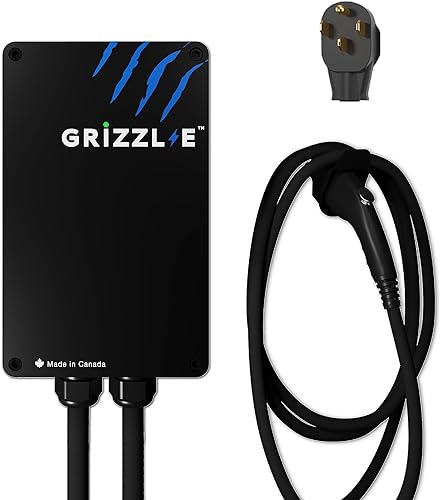
Grizzl-E Classic
40A with no app, no WiFi, and no firmware to manage, just a durable steel box that leaves Level 1 speeds far behind for the lowest price of this group.
See it on Amazon →
Grizzl-E Classic Connect
Same 40A hardware as the Classic with an optional WiFi app layered on. It charges fine with no connection at all, so the smart layer is there if a future upgrade calls for it.
See it on Amazon →Level 1 Baseline vs Four Level 2 Options
The first row is what already came with your car. Everything below it is what a 240V upgrade buys.
| Charger | Level | Amps | Range Added | Smart | Plug | Price | Link |
|---|---|---|---|---|---|---|---|
| Cord that ships with the car | Level 1 | 12A/120V | ~4 mi/hr | None | Standard wall outlet | Included | N/A |
| Emporia Pro Level 2 | Level 2 | 48A | 36 mi/hr | WiFi, App | NEMA 14-50 / Hardwire | $$$$ | View |
| Tesla Universal Wall Connector | Level 2 | 48A | 36 mi/hr | WiFi, Tesla app | Hardwire only | $$$$ | View |
| Grizzl-E Classic | Level 2 | 40A | 30 mi/hr | None | NEMA 14-50 | $$$$ | View |
| Grizzl-E Classic Connect | Level 2 | 40A | 30 mi/hr | Optional WiFi app | NEMA 14-50 | $$$$ | View |
Price tiers are approximate. $ = under $50, $$ = $50 to 150, $$$ = $150 to 300, $$$$ = over $300. Tap any link for the current Amazon price.
What Buyers Say After Making the Jump From Level 1
Spec sheets don't capture what it's actually like living with these chargers day to day. Here's what shows up repeatedly in verified-purchase Amazon reviews, paraphrased into our own words rather than quoted.
Emporia Pro Level 2 (4.8-star verified-buyer average)
Verified buyers repeatedly describe same-morning installs measured in minutes rather than days, and long-form reviews rate it a dependable daily home EVSE that makes Level 1 charging feel obsolete within the first week. The recurring caution is a stiff, heavy-gauge power cord, so check clearance before you pick a mounting spot.
Tesla Universal Wall Connector (4.6-star verified-buyer average)
Owners in mixed-EV households describe the built-in adapter as the whole reason they bought it, no more juggling a separate NACS-to-J1772 dongle between cars. Setup feedback skews positive for anyone comfortable with a hardwire install; buyers who expected a plug-in unit are the source of most of the lower ratings.
Grizzl-E Classic (4.6-star verified-buyer average)
Reviews read like a hardware spec sheet: buyers describe a no-frills steel box that stays cool at its full 40A draw, and multi-year owners keep reaching for words like simple and durable for a unit with no radios or programming to maintain. The industrial, all-metal build is the through-line across the 4-and-5-star write-ups.
Grizzl-E Classic Connect (4.4-star verified-buyer average)
Owners consistently report the same rugged build as the standard Classic, with the app treated as a bonus rather than a requirement. The most common feedback is that the WiFi setup is a minor extra step during install but stays out of the way once it's connected, and charging continues normally even if the app or network goes down.
Jacob’s read on this category
The Level 1 to Level 2 decision is really a decision about your worst day, not your average one. Most days, a short commute recovers overnight on either option. The gap shows up on the day you drive further than usual, forget to plug in the night before, or need the car ready again in two hours instead of ten. If that scenario happens more than a couple times a year, the math on a 240V circuit pays for itself in time saved alone, well before you factor in the lower per-kWh cost most utilities charge for a dedicated circuit's off-peak rate plan.
What "Level 1" and "Level 2" Actually Mean
The levels describe voltage and hardware, not a brand or a speed guarantee. Level 1 runs on a standard 120V household circuit, the same one powering a lamp or a phone charger, and it's why every EV ships with a cord that needs nothing but an outlet. Level 2 runs on a 240V circuit, the same voltage as an electric dryer or oven, and requires either a dedicated NEMA 14-50 outlet or a hardwired connection installed by an electrician.
That voltage jump is the entire reason for the speed difference. A Level 1 cord typically pushes around 1.4 to 1.9 kW into the battery. A Level 2 charger like the ones in this comparison pushes anywhere from 7.6 kW up to 11.5 kW, depending on its amperage and what the car's onboard charger can accept. For a deeper look at how amperage maps to charging speed across the full range of Level 2 hardware, see our EV charger amperage explained guide.
The Actual Speed Gap, in Miles Per Hour
Level 1 adds roughly 3 to 5 miles of range per hour, depending on the car's efficiency. A 48A Level 2 charger like the Emporia Pro or Tesla Universal Wall Connector adds around 36 miles per hour on a car that can accept the full rate, and a 40A unit like the Grizzl-E Classic adds about 30. That's a 6x to 9x jump over Level 1, not a marginal improvement.
Put in daily terms: refilling 40 miles of driving takes about 8 to 13 hours on Level 1, versus roughly 70 to 80 minutes on a 40 to 48A Level 2 charger. The Level 1 number still fits inside an overnight window for most households, which is exactly why so many EV drivers delay the upgrade longer than they expected to.
When Level 1 Genuinely Doesn't Need an Upgrade
It's worth saying plainly: plenty of owners never need Level 2 at all. Short commuters, plug-in hybrid owners with small battery packs, and anyone parked at home for 10+ hours a night rarely outrun what a wall outlet delivers. If your daily round trip stays under about 30 to 40 miles and you're not adding a second EV to the household, spending $600 to $1,200 on hardware and installation buys convenience, not necessity.
The calculus flips the moment your routine gets less predictable: a longer commute, errands that add unplanned miles, a household with two EVs sharing one outlet, or a plug-in schedule that occasionally slips past midnight and still needs the car ready by 7am. Those are the situations where the range Level 1 adds overnight stops reliably covering what got used during the day.
What the Upgrade to Level 2 Actually Costs
All four Level 2 chargers here need a dedicated 240V circuit rated for their amperage. If your garage already has a NEMA 14-50 outlet, wired for a dryer or an RV, the Emporia Pro, Grizzl-E Classic, and Grizzl-E Classic Connect are effectively plug-and-play with no electrician needed. The Tesla Universal Wall Connector is hardwire-only, so it always requires a licensed installer.
Running a brand-new circuit from your panel typically costs $300 to $800 with a licensed electrician, more if your panel sits far from the parking spot or needs a capacity upgrade to add the extra load. One budgeting note: the Section 30C federal EV charger credit ended for equipment placed in service after June 30, 2026, though installs completed by that date can still claim 30% of the cost up to $1,000. For anything newer, check your state energy office and local electric utility, many still run their own rebate programs for home Level 2 installs. Readers weighing a hardwire versus a plug-in NEMA 14-50 setup can dig deeper in our NEMA 14-50 vs hardwire install comparison.
Which Way to Go
Stay on Level 1 if your daily driving stays under roughly 30 to 40 miles and the car has 10+ hours to sit plugged in overnight. There's no reason to spend money solving a problem you don't have yet.
Get the Emporia Pro Level 2 if your commute or schedule has outgrown Level 1 and you want the fastest realistic upgrade at a fair price, with app-based scheduling for off-peak electricity rates.
Get the Tesla Universal Wall Connector if a Tesla and a non-Tesla EV will ever share the same charger, now or down the road. The built-in adapter removes the single biggest headache of mixed-brand households.
Get the Grizzl-E Classic if you've decided Level 2 is worth it but don't want to pay for or manage an app. It delivers real Level 2 speed with nothing to configure.
Get the Grizzl-E Classic Connect if you want that same simplicity today with the option to turn on WiFi scheduling later without buying new hardware.
FAQ
How We Verified This Comparison
Range-per-hour figures here come from each charger's rated amperage matched against typical EV onboard-charger efficiency, cross-checked against the manufacturer spec sheet for each product rather than a single generic assumption. Amazon prices, stock status, and star ratings were re-checked against the live listings on October 17, 2026, and each candidate was checked against its own product page's rating distribution before being included.
No manufacturer pays for placement here and we do not accept review units; the picks come from manufacturer spec sheets, certification listings, and the recurring themes in verified-buyer reviews.