Quick answer: both of these put out 48A and 11.5 kW, so stop shopping on speed. The Wallbox Pulsar Plus 48A is the one to wire in if any car in the household plugs in with J1772, or if the charger is going on an exposed exterior wall, because its enclosure is rated a step higher. The Tesla Wall Connector earns its place in a driveway that is NACS from here on, where a native handle and a longer factory warranty beat a universal connector you do not need.
Two 48A Hardwires, One Real Fork

Wallbox Pulsar Plus 48A
The Pulsar Plus is adjustable from 6A all the way up to 48A, ends in J1772, and carries a NEMA Type 4 enclosure rating under UL 50E. It is listed to UL 2594 and UL 2231. That combination makes it the safer buy for a household whose next car is an open question and for any install that is not under a roof. It sits in the premium tier, so check the current price before you commit.
Check it on Amazon →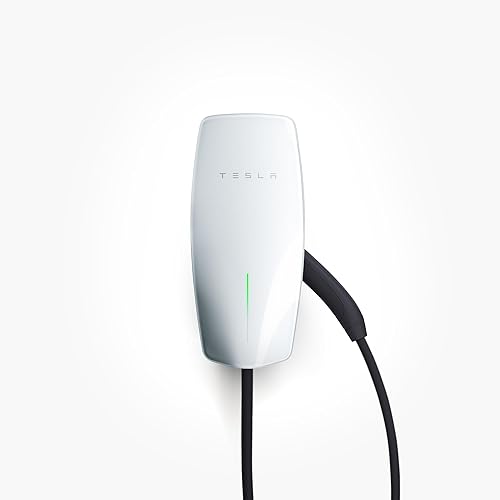
Tesla Wall Connector
The Gen 3 unit pushes the same 11.5 kW through a native NACS handle on a 24-foot cable, hardwired to the panel, in a NEMA 3R enclosure. Tesla backs it with a four-year residential warranty, a year longer than Wallbox's three. It holds a 4.8-star average from verified Amazon buyers. Premium tier as well, so tap through for today's figure.
See it on Amazon →Pulsar Plus vs Wall Connector, Row by Row
Read this table from the right-hand columns inward. The amperage and power rows are identical, so they decide nothing. The connector, enclosure and warranty rows are where the two units actually part company.
| Charger | Amperage | Connector | Install | Cable | Enclosure | Warranty | Price | Link |
|---|---|---|---|---|---|---|---|---|
| Wallbox Pulsar Plus 48A | 6A to 48A adjustable | J1772 | Hardwire | 25 ft | NEMA Type 4 | 3 years | $$$$ | View |
| Tesla Wall Connector | Up to 48A | NACS | Hardwire only | 24 ft | NEMA 3R | 4 years | $$$$ | View |
Price tiers are approximate. $ = under $50, $$ = $50 to 150, $$$ = $150 to 300, $$$$ = over $300. Tap any link for the current Amazon price.
The Handle Is the Whole Decision
Everything else in this comparison is a preference. The connector is a hard physical constraint. The Gen 3 Tesla Wall Connector terminates in a NACS handle with no built-in J1772, so a Mustang Mach-E, an Ioniq 5, an ID.4 or an R1T simply cannot dock with it. There is no adapter sold for that direction that Tesla supports on a home unit, which means a non-Tesla EV arriving in the driveway turns a NACS-only charger into a replacement job rather than an accessory purchase.
The Pulsar Plus runs the other way, and that direction is the forgiving one. It ends in J1772, which every non-Tesla EV sold in North America accepts, and a Tesla charges from it using the J1772 to NACS adapter that came in the car. If the connector naming still feels slippery, our rundown of how NACS, J1772 and NEMA plugs actually differ untangles which end goes where.
Worth being honest about the cost of that flexibility: the adapter is one more thing dangling off the handle, it adds a little bulk at the charge port, and it is a part that can be dropped on concrete or walk off. Tesla owners who have no plans for a second brand of EV are not wrong to prefer the clean native handle.
Why the Speed Row Is a Tie
Both units are rated to 48A on a 240V circuit, which is 11.5 kW. That is the practical ceiling for home Level 2 charging in North America, and it is also more than several popular EVs can take: a car with a 7.7 kW or 9.6 kW onboard charger will draw its own limit no matter which of these you hang on the wall. Shopping these two on charging speed is shopping a row where both answers are the same number.
What does move is the amperage floor. The Pulsar Plus is adjustable from 6A, which is a genuinely wide range if you are sharing a strained panel or want to keep a long overnight charge gentle. The Tesla unit is also set to a lower current at commissioning time to match the breaker it lands on, so neither one forces you to find a full 60A circuit. Which brings up the number most buyers miss.
A 48A charger is a continuous load, so code requires the breaker to be sized at 125 percent of the draw. Forty-eight amps times 1.25 is 60A, and a 60A circuit is a real ask in an older panel. We walk through the arithmetic and the common panel outcomes in the guide to sizing the breaker for a 48A charger. If the panel cannot spare it, dialing the charger down to 40A on a 50A circuit costs you about eight miles of range per hour and saves a service upgrade.
Apps, Scheduling and Multi-Unit Setups
Wallbox runs the Pulsar Plus through the myWallbox app over Wi-Fi or Bluetooth, with scheduling, session history and energy tracking, plus Alexa and Google voice control. The Bluetooth path matters more than it sounds: a charger that can be reached locally still takes a schedule change when the home router is down or the garage sits at the far edge of Wi-Fi coverage.
Tesla's unit is Wi-Fi connected and managed from the Tesla app, and its headline extra is power sharing, which lets multiple Wall Connectors coordinate on one circuit so two cars can charge without tripping the breaker. For a household planning a second Tesla on the same feed, that is a real reason to stay in the Tesla ecosystem rather than mix brands. Check each listing for the current sharing limit, since published figures vary by generation.
Neither app is a reason to buy on its own. Both do the one thing that saves real money, which is shifting the session into off-peak hours, and plenty of owners set that schedule in the car instead and never open the charger app again.
Installation: Hardwired Either Way
This is the part of the matchup most comparison pages get wrong, because the Pulsar Plus family includes a plug-in option. That option belongs to the 40A model. The 48A Pulsar Plus covered here is built for hardwiring, and the Tesla Wall Connector is hardwire-only by design. Choosing between these two is not a choice between permanent and portable: both mean conduit, a dedicated breaker, and in most jurisdictions a permit and an inspection. If a plug-in unit is what you actually want, our roundup of hardwired versus plug-in high-output chargers lays out what you give up in each direction.
Here is the install detail worth knowing before you pick a spot on the wall. The Tesla unit carries a NEMA 3R rating, which covers water falling vertically: rain, sleet, snow. NEMA Type 4, which the 48A Pulsar Plus holds under UL 50E, adds windblown dust and hose-directed water to that list. Under a deep soffit or inside a garage, the distinction is academic and both will last. On an exposed gable wall that takes driving rain off a prevailing wind, or on a wall you spray down when you wash the car, the Type 4 enclosure is the one actually rated for the abuse. Mounting height and a small drip edge matter more than most people expect either way, and that is true of every charger that lives outdoors.
One more practical note: the cables are 25 feet for the Wallbox and 24 feet for the Tesla, close enough that cable length should not drive the decision. Where the charge port sits on your car and which way you back into the garage will do more for daily convenience than that extra foot.
What Owners Report After the Install
Verified buyers of the Tesla Wall Connector consistently describe it as the uneventful choice: it gets wired in, it charges at full rate, and it drops out of mind. Its average sits at 4.8 stars with verified Amazon buyers. Recurring themes in the feedback are the tidy handle holster, the cable being stiff in deep cold, and the occasional Wi-Fi reconnection fuss that owners resolve from the app.
Pulsar Plus owners most often praise how compact the unit is on the wall, which is the smallest body of any 48A charger most of them have handled, and the adjustable current range when a panel is tight. The complaints cluster around app setup rather than charging: owners describe a commissioning process that wants patience, and a few report needing a second pass to get the unit onto home Wi-Fi. Its verified-buyer average is 4.3 stars. Across both units, the reports that end badly are almost always install problems, undersized wire or a loose lug, not the charger itself.
Which One Goes on Your Wall
Wire in the Wallbox Pulsar Plus 48A if the household is mixed-brand now or might be later, if the charger is going on an exposed exterior wall, or if you want the wider 6A to 48A range for a panel that is close to full. J1772 plus the adapter in a Tesla's glovebox covers every EV on sale in North America, which is why it is the lower-regret buy for most driveways.
Choose the Tesla Wall Connector if every car that will park there takes NACS, you want a native handle with nothing hanging off it, and especially if a second Tesla is coming to the same circuit, where built-in power sharing is a genuine advantage. The extra year of warranty is a real tiebreaker between two units that otherwise charge identically.
Both land in the same premium price tier, so this one is not settled by cost. It is settled by which handle your cars take and how much weather the wall sees.
FAQ
Is the Tesla Wall Connector faster than the Wallbox Pulsar Plus?
No. Both units are rated to 48A on a 240V circuit, which works out to the same 11.5 kW. Neither one will add range faster than the other, because the ceiling is set by your circuit and by the car's onboard charger rather than by the box on the wall. If a sales page implies one of these is the quicker charger, it is comparing the 48A model against a lower-amp version of the other unit.
Can the Wallbox Pulsar Plus charge a Tesla?
Yes. The Pulsar Plus ends in a J1772 connector, and every Tesla sold in North America ships with a J1772 to NACS adapter in the car. You fit that adapter on the handle and charge normally. Most owners leave it attached to the cable rather than storing it in the frunk. The reverse does not work: the Gen 3 Tesla Wall Connector has a NACS handle and no built-in J1772, so a Ford, Hyundai, Kia or Rivian cannot plug into it at all.
Can either of these be plugged into a NEMA 14-50 outlet?
Not at 48A. The Tesla Wall Connector is hardwire-only by design. On the Wallbox side, the plug-in option belongs to the 40A Pulsar Plus, not the 48A model covered here, which is built for hardwiring. Both of these chargers mean a permanent connection to the panel and an electrician, so there is no plug-it-in-tonight path with either one.
What breaker does a 48A charger need?
A 60A circuit. EV charging counts as a continuous load, so the breaker has to be sized at 125 percent of the charger's draw, and 48A times 1.25 lands at 60A. If the panel cannot spare 60A, both units can be commissioned at a lower current during install instead, which is a far cheaper answer than a service upgrade.
Does the enclosure rating actually matter for a garage install?
Inside a dry garage, no. The difference shows up on an exterior wall. The Tesla unit carries a NEMA 3R rating, which covers falling rain, sleet and snow. The Pulsar Plus 48A is rated NEMA Type 4 under UL 50E, which adds windblown dust and hose-directed water. On a sheltered wall under an overhang both are fine; on an exposed wall that takes driving rain off a prevailing wind, the Type 4 enclosure is the one built for it.
How We Checked This Pair
Both chargers were screened against the manufacturers' own published specifications rather than retail listing copy, which is where most of the bad numbers in this category come from. Amperage, power, connector type, cable length, enclosure rating and warranty term were each confirmed per unit, and the Wallbox hardwire-only detail was checked against the Pulsar Plus spec sheet specifically because the 40A sibling model is the one that accepts a plug. Price tiers were reviewed on 2026-10-12 and are published as durable brackets rather than figures that go stale within the week. Star averages are reported only where they reflect the verified-buyer average on the live listing. We buy and install chargers ourselves and take no manufacturer payment for placement.
Prices and availability reflect Amazon listings at time of writing. Confirm on the product page before purchase.